Call Now
Mail Us
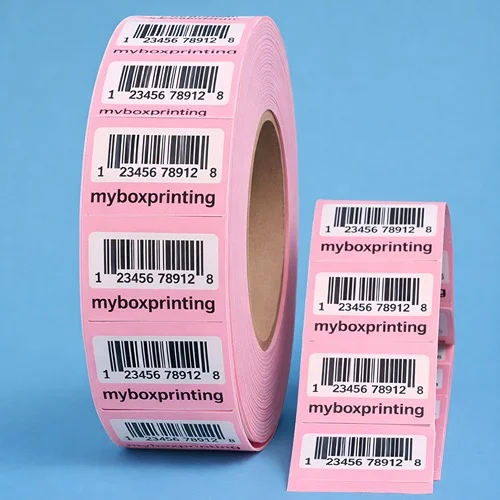
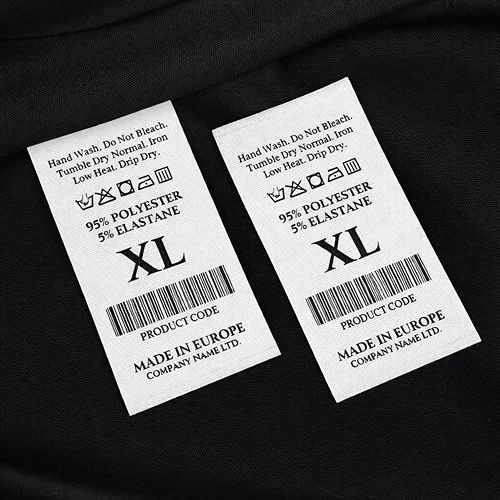
Barcode clothing labels are apparel tags with the barcodes printed on them. These labels provide information about the clothing item and identify each item uniquely at a single scan. Whether at a warehouse, in-store, or at POS, these labels are designed to improve traceability, tracking, and management free of human errors. At MyBoxPrinting, we provide you with custom barcode clothing labels in durable materials printed with advanced printing techniques. We make sure your clothing labels are strong enough to withstand the warehouse and in-store rigor, as well as environmental factors. Customize these labels in bulk to enjoy lower wholesale rates with significant discounts. Contact us today! ...read more read less
| Dimensions | All Custom Sizes & Shapes |
|---|---|
| Printing | CMYK, PMS, No Printing |
| Paper Stock | 10pt to 28pt (60lb to 400lb) Eco-Friendly Kraft, E-flute Corrugated, Bux Board, Cardstock |
| Quantities | 100 - 500,000 |
| Coating | Gloss, Matte, Spot UV |
| Default Process | Die Cutting, Gluing, Scoring, Perforation |
| Options | Custom Window Cut Out, Gold/Silver Foiling, Embossing, Raised Ink, PVC Sheet. |
| Proof | Flat View, 3D Mock-up, Physical Sampling (On request) |
| Turn Around Time | 4-6 Business Days , Rush |
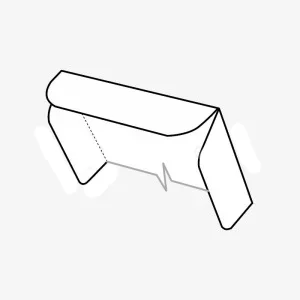
This style of folding cartons has three tab locks on the top lid that tuck in to close the box. These flaps tuck into the holes for closing the product without the need for any adhesive or glue.
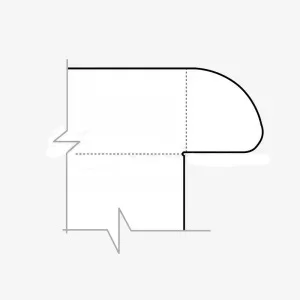
Cherry locks, also known as friction locks or snap locks, contain two ear-shaped flaps. These flaps help to lock the box without the need for any adhesive or glue.
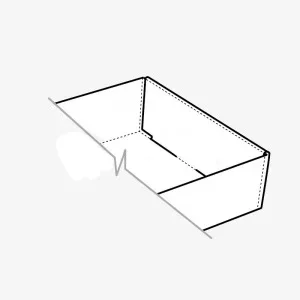
A Roll End Tray is also known as a walker lock tray or tray with self-locking ends. The tray folds over the side walls, and the small tabs fit into the slot, ensuring a secure closure without any adhesive.
The tear strips are the kind of perforated line or strips you can pull to open a box without the need for any tool. The removed tear strip also leaves a mark that the box was opened.
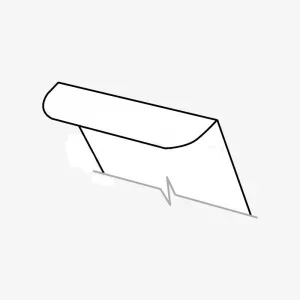
The tuck top lid is hinged to the box base that contains a flap on the top. The flap tucks into the slot to secure the box. This style is commonly used for folding cartons, corrugated boxes and mailer boxes.
Perforation in packaging contains small holes or cuts that facilitate easy opening, product ventilation, moisture control, and portioning. It makes it easy to tear the material.
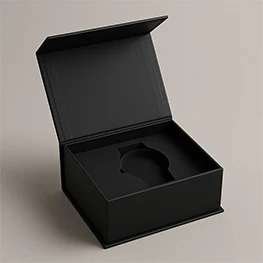
Black Kraft
It is a clean and attractive solid black color. That is depicting a touch of luxury. It is eco-friendly yet printable. Mostly foil printings are a perfect option for them.
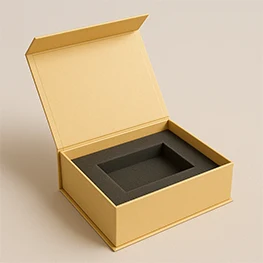
Card Stock
This is thicker than normal paper and is used for making postcards. Cardstock paper can be coated or uncoated.
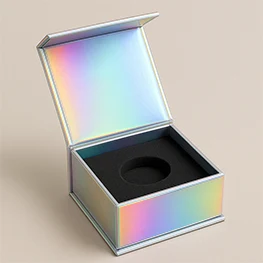
Holographic
These are famous and widely used in the cosmetic and apparel industry. It gives 3D effects from any angle to create attractive packaging.
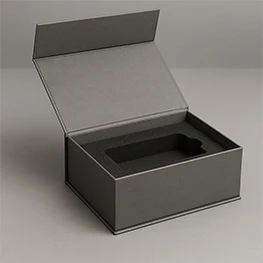
Grey Chipboard
It is made from recycled material, also known as uncoated recycled paperboard. This is mainly used for its sturdiness and thickness.
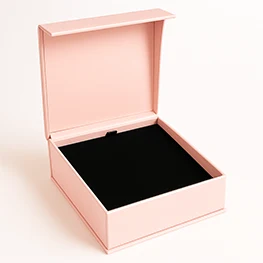
Mettalic
Metallic paper features a high-gloss metallic look, with excellent printability features, strong fold and tear-resistant, and is specifically used for premium packaging.
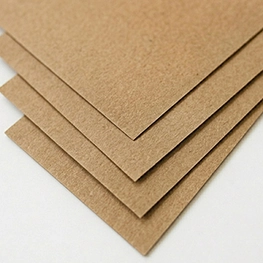
Natural Brown Kraft
It is popular among those with eco-conscious brands and organic products. This material offers a rustic, earthy look. which gives them a feel of nature and sustainable packaging.
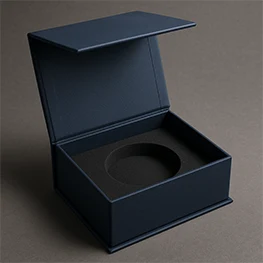
Textured Material
These papers have an uneven texture that is appealing. Mostly, these surfaces work great for embossing and debossing purposes.
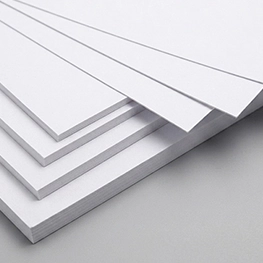
White Kraft
The strength of Kraft and a clean, natural appearance are a great combination. White Kraft is often used where brands want an eco-friendly appearance but with a bright, printable surface.
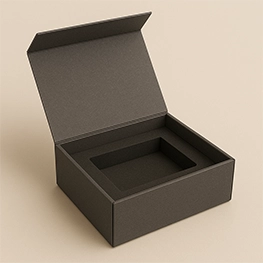
Bux Board
Bux Board is a thick type of paperboard made from recycled paper stock. It is an eco-friendly and durable material for the packaging of fragile and retail products. Available in thicknesses of 10pt to 28pt.
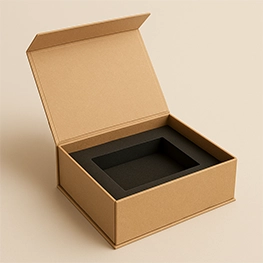
Cardboard
Cardboard is a durable material made from paper pulp or recycled fibres. It is a budget-friendly material ideal for e-commerce products, shipping boxes, and product packaging. Available in thicknesses of 10pt to 28pt.
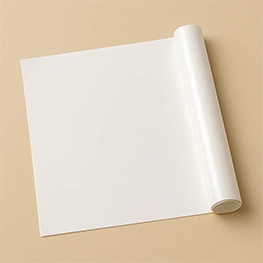
Coated Paper
Coated paper is a paper material treated with a coating to improve its smoothness, brightness, and printable surface. The coating for this material is made from clay, chalk, or other materials. Ideal for premium product packaging and food packaging.
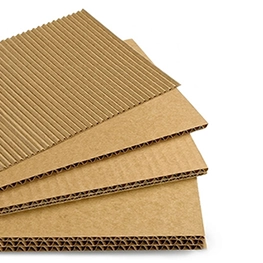
Corrugate Cardboard
Corrugated Cardboard is a triple-layered material made by corrugating a layer between the two cardboard layers. The inner layer may be Kraft, recycled paper, or test paper. It is sturdy enough for the packaging and shipping of heavyweight items.
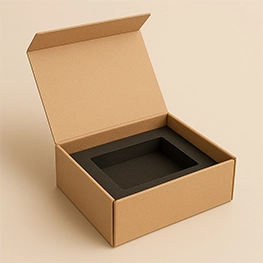
Paper Board
Paperboard is a durable paper-based material thicker than paper. This material is made from virgin wood fibres or recycled materials, ideal for product packaging.
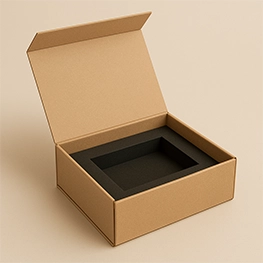
Rigid Stock
Rigid Stock is a luxury material resulting from the blending of card stock and paper stock. It is a high-quality, non-bending, and sturdy material for the packaging of luxury and limited-edition products like watches, jewelry, and gift items.
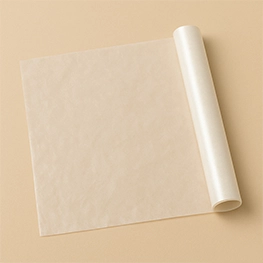
Wax Paper
Wax Paper is made from cellulose that has a food-safe coating resistant to fats and oils. This paper material is ideal for food packaging and take-out orders to prevent grease and oil from spoiling the carry bags.
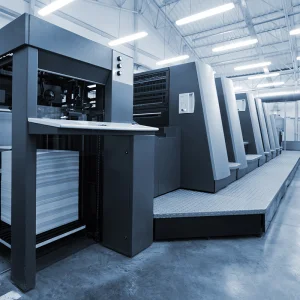
Offset Printing
Offset lithography is a three-step method of commercial printing. It works on the principle that oil and water repel each other. It uses three cylinders. It transfers the image from the printing plate to the rubber plate, then to the paper.
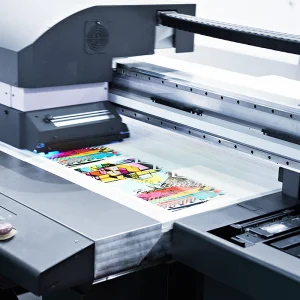
Digital Print
Digital Printing is a modern printing process that does not use a printing plate. It transfers the image directly onto the paper using CMYK inks. It is Ideal for printing on cardstock, folding cartons, fabrics, plastic, and synthetic substrates.
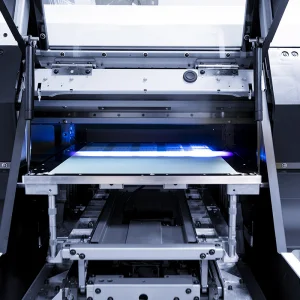
UV Print
UV printing is a fast digital printing technique that uses high-intensity UV lamps to dry and cure the ink. This technique is ideal for 3D printing on cylindrical objects like cups and bottles. The ink does not smudge on the paper.
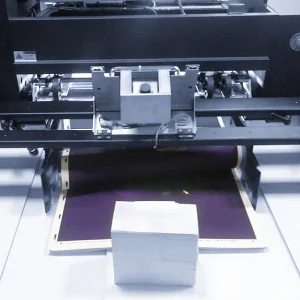
Scodix Digital Enhancement
This printing technique applies premium and high-quality digital embellishments and finishes to printed materials. It creates 3D effects, foiling, and metallic textures directly onto the paper without using plates or molds. Best for packaging, business and greeting cards, and book covers.
Water-based Inks
Sustainable and responsible alternative to traditional solvent-based inks. The water-based inks use water as the main solvent. They are made from water, acrylic resins, and organic solvents that quickly absorb into the fabric. They produce rich, high-quality, and colorful prints.
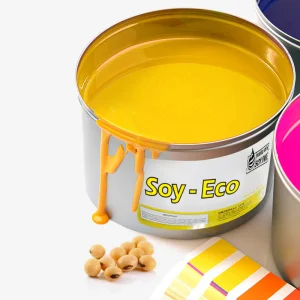
Soy/Vegetable Based Inks
Vegetable inks are renewable and recyclable inks made with vegetable oil, soybean oil, or corn oil. They are an eco-friendly alternative to petroleum-based inks that reduce the VOCs (Volatile Organic Compounds) in the air while printing.
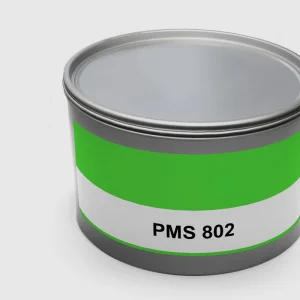
Fluorescent Color Inks
The fluorescent color inks make the printing glow extra bright. The special ink has tiny glowing bits that make the designs pop on the substrates. The main fluorescent colors for inks include pink, green, orange, yellow, and blue.
Oil Based Inks
Oil based inks are composed of soybean, vegetable, or mineral oils, hydrocarbons, and pigments. These inks are famous for their vibrant colors, excellent adhesion, longevity, and rich color output. They are great for printing on folding cartons, mailers, and paper bags.
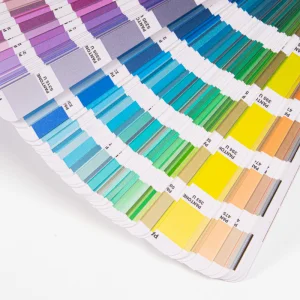
Pantone
Inks based on the PMS, which is a standardized color reproduction system. These inks are pre-mixed spot colors resulting from a precise ink formula. Each color is assigned a PMS number on the Pantone color chart. Best for company logos.
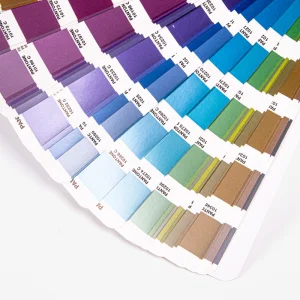
Pantone Metallic
Pantone metallic inks are special printing inks that add a metallic shine to the printed materials. These inks contain fine metal flakes like aluminum and brass to ensure an eye-catching metallic effect in packaging.
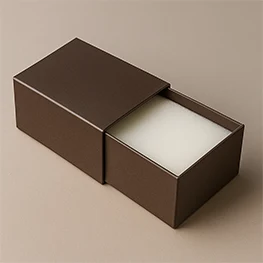
Anti Scratch Lamination
BOPP (biaxially oriented polypropylene) lamination, which resists scratches, scuffs, and fingerprints. Provides a smooth finish with added protection for boxes that are handled heavily.
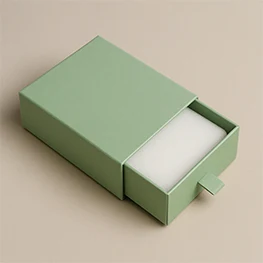
Aqueous Coating
A fast-drying, water-based finish that provides light protection and a clean surface feel. Comes in gloss or matte, this eco-friendly coating is great for boxed printed pieces and also resists fingerprints and minor scuffs.
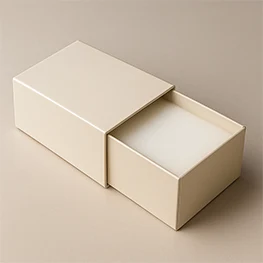
Lamination Finishing
A thin film is layered onto the surface of the box to improve durability and moisture resistance. Perfect for protecting full-color designs and maintaining box integrity through shipping or retail handling.
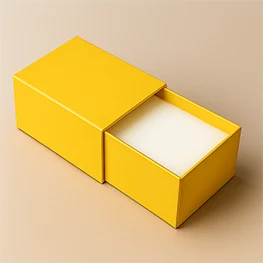
Matte Lamination
Adds a velvet touch to your packaging, leaving a soft matte surface that feels premium to the touch. This is ideal for brands that are interested in a more physical, elegant unboxing experience where shine and glare have been removed.
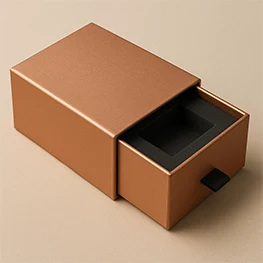
Soft Touch Coating
Adds a velvet touch to your packaging, leaving a soft matte surface that feels premium to the touch. This is ideal for brands that are interested in a more physical, elegant unboxing experience where shine and glare have been removed.
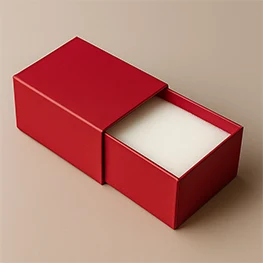
Soft Touch Silk Lamination
It combines the soft-touch feel of a paper with the durability of lamination. It is available in matte or satin and provides a luxurious finish, making it a great option for retail and subscription packaging.
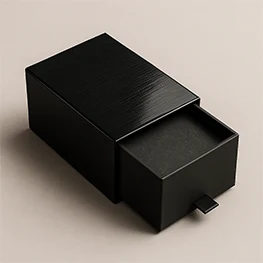
Spot Glass UV
Gloss coating is applied to specific areas of the print, contributing contrast and focus. Commonly used on logos or text to create shine against a matte background. Coating is UV cured to allow for durability.
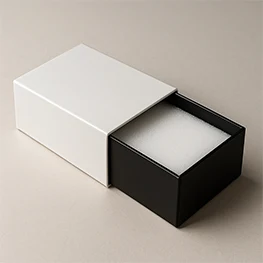
Varnish
A clear coating that adds shine, smoothness, and print protection. It can be applied with CMYK presses and comes in gloss, satin, or matte finishes. Great for making colors pop and keeping expenses low.
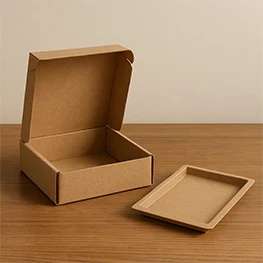
Natural Kraft Paperboard Insert
Inserts or compartments made of 100% recyclable material that offer cushioning in the shipping boxes. This material is a blend of virgin and recycled paper pulp that gives a natural brown color. Available in thickness from 12 pt. to 28 pt.
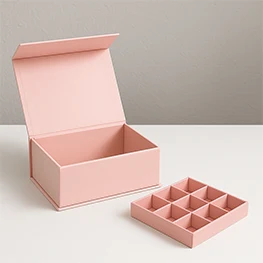
Folding Carton Box Divider Inserts
These inserts are custom-fitted to secure products in place, protect fragile products that need extra protection. They are made from paperboard, which makes them great for cosmetics, pharmaceuticals, and food packaging.
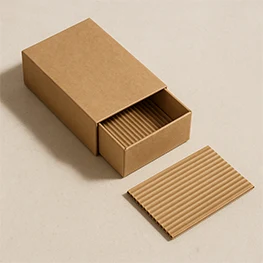
Natural Kraft Corrugated Insert
These inserts are made from unbleached Kraft corrugated material. They keep the things in place in the packaging and offer a cushioning effect. These inserts are best for organizing fragile items, foods, electronics, and glassware.
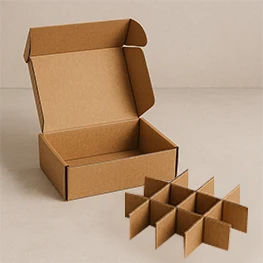
Corrugated Box Divider Inserts
These inserts are made of durable corrugated cardboard to divide the interior space of the box. These dividers keep the products in their place, separate from each other, and protect fragile items.
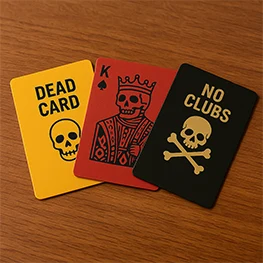
PVC Patching Cards
PVC patching cards are made from Polyvinyl chloride, which is a waterproof material. They are suitable for outdoor application. They allow Pantone color matching and 3D design elements that deliver temporary information.
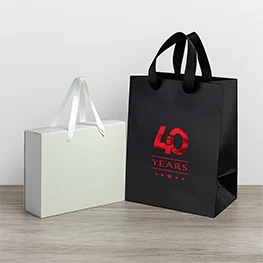
Ribbon Handles
Ribbon handles are soft and fabric straps that are added to the paper bags carrying paper bags and add a stylish look. The ribbons are of cotton or satin material, perfect for shopping bags, gift bags, and other types of packaging.
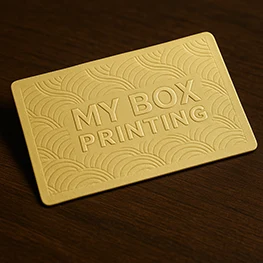
Embossing
Embossing raises the branding and design elements on the surface of packaging. The customer can touch and feel the raised elements. This leaves a lasting impression on their sensory memory about your brand.
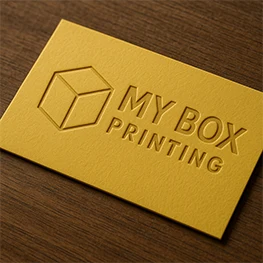
Debossing
Debossing is the opposite of embossing. In this technique, the design and branding elements are imprinted into the packaging. The imprinted design makes the customers interested in the packaging.
More Orders, More Savings! Get 30% Off On Bulk Orders !
It’s the 22nd century, where there is no room for manual management of apparel and clothing items, whether in stores or warehouses. Everything is now digitalized with the help of clothing barcode labels, POS, and barcode scanners. Your customers just carry the items they want to purchase to the cashier counter, and everything is tracked just by a scan. The cashiers no longer need to enter details into the system manually to update the record.
These apparel tags, printed with barcodes, simplify the inventory tracking, sales record updating, and inventory management. But how? These labels are affixed to the clothing items and accessories that include information such as SKU, size, price, and style number. On scanning, all this information is fetched, and the record is updated accordingly.
At MyBoxPrinting, you can get custom printed barcode clothing labels at wholesale rates lower than the market. Customize them in different materials and with advanced printing techniques that do not let the barcodes fade for a long time. Improve operational efficiency, make inventory tracking and warehouse management fast, or speed up the billing at POS with our custom clothing labels. Get an instant quote today!
No matter what the industry is, labeling is important for every industry for efficient management and tracking. The apparel and clothing industry uses clothing barcode labels or garment barcode labels for inventory tracking, speeding up billing at POS, and warehouse management. Instead of manual management, which can cause a lot of errors in tracking, traceability, and record-keeping, labels cause no human errors. Besides these, the barcode clothing labels offer you the following benefits:
During the process of clothing production, there is a need for accurate tracking of the raw materials, such as fabrics and accessories. For this purpose, the clothing labels are used that record information such as the source, quantity, batch, and other required information.
The workers on the production line can scan these labels to fetch the necessary details and update records. This helps you to reduce costs and prevent wasting materials.
Gone are the days when traditional manual inventory management was used, which was time-consuming. It was labor-intensive and full of human errors. The barcode labels have made life easier as they automatically record each piece of clothing and improve the accuracy by counting each item accurately.
In addition to inventory tracking and management, real-time monitoring of inventory data becomes efficient. The companies can easily track inventory shortages or backlogs. This helps them to find ways to optimize their inventory efficiently with no errors.
The clothing barcode labels can be printed in all barcode formats. The most suitable format for the clothing industry is the Code 39 symbology. These clothing labels are printed with code 39 symbology. This implies that black text is used on the white surface, which makes scanning faster and more accurate.
The barcode labels help you to identify each product uniquely, even with the same SKUs. With inventory tracking through barcode labels, there is no room for any theft, and return management is improved.
In clothing stores, you will find the barcode labels everywhere: at the sales, return, counter, inventory, and other areas. These labels help the sales staff to speed up the sales procedure by quickly extracting the required information while scanning them.
Labels automate data collection and real-time tracking of sales data, which eliminates the chances of errors. The headquarters can make informed and better decisions for optimizing inventory and sales.
When there is a crowd of customers in the store, manually entering each product detail is labor-intensive and time-consuming. The barcode labels automate data collection with just a scan, and billing becomes faster. In this way, customers are satisfied and freed faster. Without labels, the billing process will be full of errors and time-consuming.
The clothing labels are made from durable materials that can withstand the external factors (sunlight, moisture, or dust) or warehouse rigors. These factors may cause the barcodes to fade, which will create issues for data recording and traceability. The clothing labels are made from weather-resistant and UV-resistant materials that make them suitable for in-store and warehouse handling.
Technology innovates continuously; similarly, the barcode labels and scanning technologies are innovating. Now, RFID technology barcode labels are being introduced in the clothing industry, which eliminates the need for going to a scanner. You can scan your clothing item from a far distance as well, which makes scanning and data recording even faster.
The custom barcode clothing labels must be compatible with the innovative technology that will give you a competitive edge over others.
Barcode labels are not limited to in-store and warehouse management only. They are also used during logistics and distribution. The clothing item you are going to ship is assigned a clothing barcode label that the logistics staff scans to quickly obtain the key information.
The key information includes shipping information, the order address, or the recipient information. This helps the logistics staff to accurately complete sorting, packaging, and delivery during the shipment process.
The barcode labels and apparel tags indicate that you are a credible brand up-to-date with the advancement and current trends. This gives you a competitive edge over others, as you are an efficient and credible brand.
Real-time tracking and accurate data recording are very important processes in supply chain management. Manual tracking can create many mistakes in the data recording and tracking. The labels help enterprises to monitor all the links of the supply chain, discover, and solve potential problems. Data analysis becomes easy, which helps in the supply chain efficiency improvement and reduces inventory costs.
When you visit a clothing store, you might have noticed that different brands use different types of clothing labels. Some are attached via hang tabs, some are sewn, and some are heat-sealed labels. They all serve the same purpose but are different in application. The popular types of barcode clothing labels include:
The iron-on labels are the ones that are applied to the clothing items when the iron is pressed on. The labels are affixed with a stationary pressure (by a home iron) on the clothing item. The iron-on labels can be washed, dried, and reused.
Heat-sealed barcode labels, as the name suggests, are the labels that can be applied to clothing and garments with heat and pressure. They are made from nylon material and use resin ink that can resist chemicals. They are an alternative to sewn-in labels, so you will not need to stitch them because of the heat-activated adhesive.
Based on application or type of adhesive, they are categorized into the following types:
These are the labels backed with little stickiness that allows you to reposition their placement before you apply heat sealing.
The standard heat seal labels are non-adhesive, which you can wash or dry. On washing or cleaning, the barcodes will not fade. The barcodes printed are crisp, which improves scanning.
These labels are dedicated to displaying information about the garment to customers. They are a non-adhesive type of clothing label that is pinned to the garment or clothing item through the tag hole. This method requires no heat activation or sewing.
The dry cleaning or laundry has a lot of garments from different individuals, which can be mixed or not properly labeled. For such industries where restoration is needed, temporary barcode labels are used. They are non-adhesive labels, so they can be applied to clothing and garments in different ways. A string, a pin, a tagging gun, or a staple can be used to affix them.
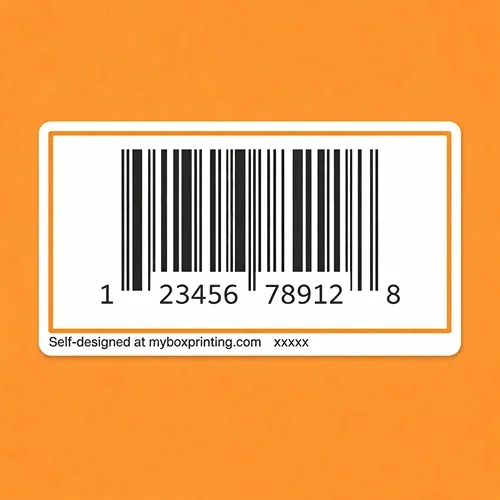
Not all businesses need pre-printed barcode labels. Some businesses need blank labels that they can print themselves with their own barcodes and details. You can print additional information, such as invoice number, customer name, location, or details of garments.
Colored heat-activated barcode labels are the best alternative to paper labels. Instead of standard barcode labels designed in a black and white theme, you can also add colors, which makes sorting efficient.
These are the long-lasting labels printed using the thermal printers. The thermal printers use heat to transfer ink from a ribbon to the label surface. These labels are UV-resistant and resist moisture and chemicals, which makes them better for inventory and asset tracking.
The direct transfer labels are heat-sensitive labels that are of good quality. They are designed for temporary use as they start fading when exposed to UV light or heat. They are printed using the direct thermal printer, which does not use ribbons for ink transfer. These labels are used for logistics and distribution.
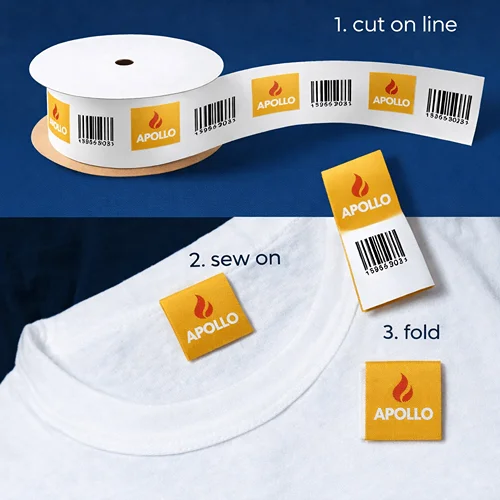
The name itself tells that these are the fabric labels that are stitched into the clothing items or garments. They are made from fabrics such as satin, nylon, or woven polyester. These labels use thermal transfer or inkjet printing techniques that support Code 128, QR, and DataMatrix.
All these types of clothing barcode labels are available at MyBoxPrinting. You can customize any of these labels at wholesale rates in different materials of your choice.
There is no universal format for barcodes. Different formats are designed for barcodes worldwide to meet different needs. The barcodes are generally categorized into two formats: linear labels and 2D labels. The linear labels are for retail and inventory management, while 2D barcode formats support detailed information storage.
Linear barcodes, also known as 1-D barcodes, are the ones that fit in a single row. They are the standard and widely used barcode format for the retail industry and inventory management.
| 1-D / Linear Barcodes For Clothing Labels | |
|---|---|
| Format | Use |
| UPC-A (Universal Product Code) | Standard 12-digit code for retail items and clothing at POS |
| EAN-13 (European Article Number) | International apparel exports |
| Code 128 | Longer strings of alphanumeric data are used in warehouse tracking |
| Code 39 | Encoded numbers and letters for Internal tracking |
2D barcodes refer to codes that store information in both horizontal and vertical dimensions. The 2D stores detailed information in a smaller space.
| 2D Barcodes For Clothing Labels | |
|---|---|
| Format | Use |
| QR Codes (Quick Response Codes) | A way to link consumers to websites, care instructions, or traceability information in apparel items. |
| Data Matrix | Compact codes used for small items when you have a limited space on labels. |
| GS1 Digital Link (QR) | Replacement of the traditional UPC/EAN with a modern QR code, which directly links you to the product information |
We produce custom labels that can accommodate all types of the above-mentioned barcodes. Whether you want standard linear barcodes or modern two-dimensional barcodes (GS1 Digital Link, QR, and Data Matrix).
The length of the barcode and the size of the items determine the sizes and dimensions of the clothing labels. The small items have limited space, so the barcode used for them may be two-dimensional or one that can be fitted in a small space. Anyhow, the clothing barcode labels are available in three sizes:
Note: These are the sizes for a single clothing label, not for label rolls.
The 2-inch labels can handle barcodes of 13 to 14 characters in a single line or 16-17 characters in two lines. This size of labels is used in retail and asset tracking, product branding and merchandising, inventory, and permanent textile tracking.
The 3.25” labels can deal with two types of barcodes: one barcode of 21-22 characters with a single line of text, while another barcode of 7-28 characters, either with a single line or two lines of text. This size is preferred for logistics and distribution, product branding, inventory, and asset tracking.
This size is the largest size of clothing labels that can contain the necessary information. This size is used for shipping and e-commerce orders that contain the shipping and recipient information.
Don’t need the above mentioned sizes? Looking for custom sizes and dimensions for your clothing labels? Don’t go somewhere else, as we offer custom sizes and dimensions of your choice that meet your business needs. Just share your requirements with us and relax!
The clothing barcode labels are manufactured keeping in mind that they will have to withstand washing, dry cleaning, and manufacturing processes. Therefore, the right choice of materials is necessary to meet the business needs. For clothing labels, durable and weather-resistant materials are used. The common materials used for barcode clothing labels are mentioned below:
The paper material is a recyclable and eco-friendly material made up of paper pulp. Paper is not a very durable material for labels, but it is best for temporary uses. This material can be either coated or uncoated and used for in-store inventory tagging or price tags.
We recommend paper material for use cases when you don’t need it for the long term. Use this material for price tags and in-store inventory tracking.
Cardboard is a more durable material that can be used for product packaging and labels. This material is made from paper pulp, which makes it more durable than the paper labels.
We recommend this material for price tags and branding information because they are resistant to environmental factors that can make it fade. In addition, they can be easily recycled when discarded.
Tyvek is made from high-density polyethylene fibers, which makes it an exceptionally durable and tear-resistant material. This material is waterproof and is suitable for washing and dry cleaning.
We recommend this material for hangtags and industrial garment labeling because it will prevent the labels from fading or tearing. You can use them for warehouse management as well.
Polyester, also termed "PET," is a synthetic polymer material. This material is used for clothing labels, as it is moisture-resistant and protects against abrasions. They offer better readability and fine details.
We recommend this material for garment labeling because it can resist environmental factors and chemicals. Use this material to create labels for warehouse management.
Satin is a smooth and glossy fabric material that is made of polyester or nylon. This material is used for clothing labels to prevent skin irritation as it is sewn into the garments. It is used with high-end items and clothing accessories, such as undergarments, formal wear, and infant clothing.
This material is highly recommended for fabric labels sewn in infant clothing and comfy clothes.
Nylon is a tear-resistant fabric material that feels like paper. It is a smooth synthetic fibre and a heat-resistant material suitable for printed care, bags, and clothing items like sportswear and denim. This material is also recommended for clothing labeling because of its tear-resistance properties.
Vinyl is a weather-resistant material that can be used with adhesive to stick on your garments. It offers excellent durability, so we recommend it for labeling workwear, rainwear, and industrial garments as care tags, branding, identification, and care instructions.
Synthetic paper is made from plastic polymer materials such as PET, nylon, and polypropylene. The plastic polymers make this material durable, tear-resistant, and weather-resistant. It has a similar texture to paper, but it’s suitable for long-term use.
We recommend this material for branding labels, price tags, and wash-care labels.
Polypropylene is a plastic-based synthetic material used to design durable label alternatives to paper and traditional fabric tags. We recommend this material for labeling clothing where comfort and durability are needed. Use them for labeling activewear, sportswear, and children’s clothing.
MyBoxPrinting is the choice of 500+ businesses who want their brand to reach new heights through custom packaging solutions. Our clients enjoy expert advice and get the best packaging that meets their business needs perfectly. We offer you custom barcode clothing labels in different materials, sizes, and designs that perfectly perform the intended job while highlighting your business. Be our customers to enjoy the following perks:
Wholesale Rates With Significant Discounts: Our packaging solutions are available at wholesale rates lower than the market, with significant discounts applied at bulk orders.
Customer Support: Our customer support team is always here to facilitate your queries on working days from Monday to Friday.
Custom Sizes and Materials: We provide you with custom labels in custom sizes, shapes, and materials of your choice.
Advanced Printing Techniques: We make sure the output is up to the mark with the help of advanced offset and digital printing techniques.
Free Graphic Design Support: Get expert design advice during the design process from our experienced team of graphic designers. Get assistance free of cost.
Endless Customization Options: We have endless customization possibilities for you to make sure your brand gets the attention it deserves.
Fast Turnaround Time: Your standard orders are processed in just 8 to 10 business days, while rush orders are processed in 4 to 6 working days.
No Shipment Charges: Enjoy free shipping on all orders across the USA.
Are you looking for a reliable supplier who can provide you with durable and high-quality clothing labels at affordable rates? Don’t go somewhere else, as we provide you with barcode clothing labels in high-quality materials and with proper customization that adds value to your brand name. Our clients enjoy wholesale rates with bulk discounts, fast turnaround, and US-wide free shipping.
Want to get barcode clothing labels that withstand the warehouse and in-store management with no compromise on tracking? Get custom barcode clothing labels now!
Order a Sample Kit Order a MyBoxPrinting Sample Kit to see our premium materials and print quality firsthand.
FAQ's Explore answers to some relevant questions about creating a custom box. If you've any query, feel free to contact us!
UPC stands for Universal Product Code, which is a 12-digit barcode used for marking retail products. This helps in the identification of retail products by facilitating tracking through scanning at POS. The relevant information, including the product name, manufacturer name, and price, is fetched on scanning.
Yes, you can add text to your label, but there are some considerations. The text must be in a font size that can fit inside the size of the label. There must be adequate space for adding text to the label. You can also go for modern QR codes that can provide the customer information on a single scan.
This depends on the printing technique and the material quality. The print on temporary tags lasts for 5 months, while the permanent barcode labels last 5 years. Labels designed in materials like vinyl, PET, PP, and other weather-resistant materials last longer than traditional paper labels
If you want labels with a sticky back, we can customize the adhesive clothing labels for you. They will allow you to simply peel off the back and stick the label on the garment. Our heat-seal labels are available with a tacky bag that allows you to reposition them before heat activation.
The thermal printed labels last 12 to 24 months without fading. But after some years, the thermal labels will also start fading. To make them last longer, store them in cool and dry places.
According to the Federal law, the clothing items must contain clothing labels that list the necessary information. The information includes fiber content, the country of origin, and the manufacturer's information responsible for any harm.
Customer Reviews See why clients trust us through their honest, real feedback read MyBoxPrinting reviews
Related and Inspiring Product Discover products that inspire and elevate your business.