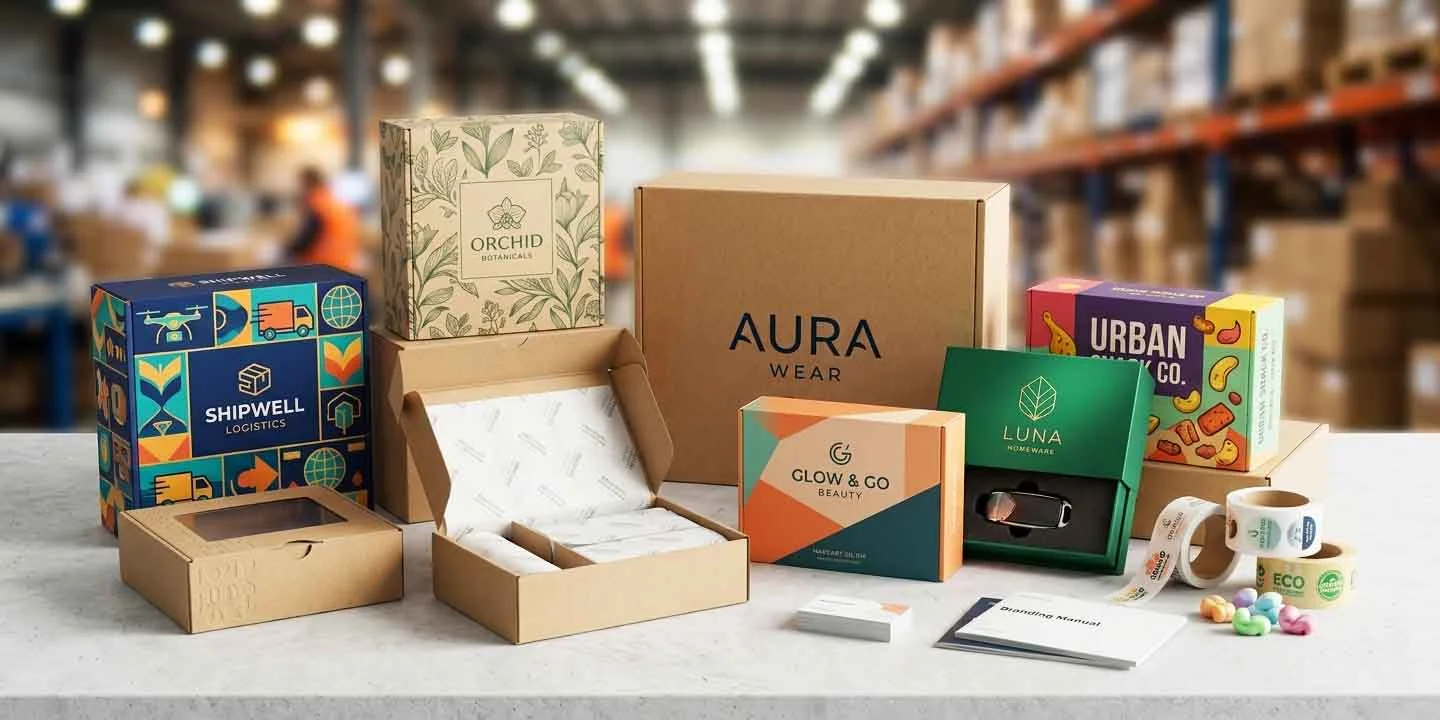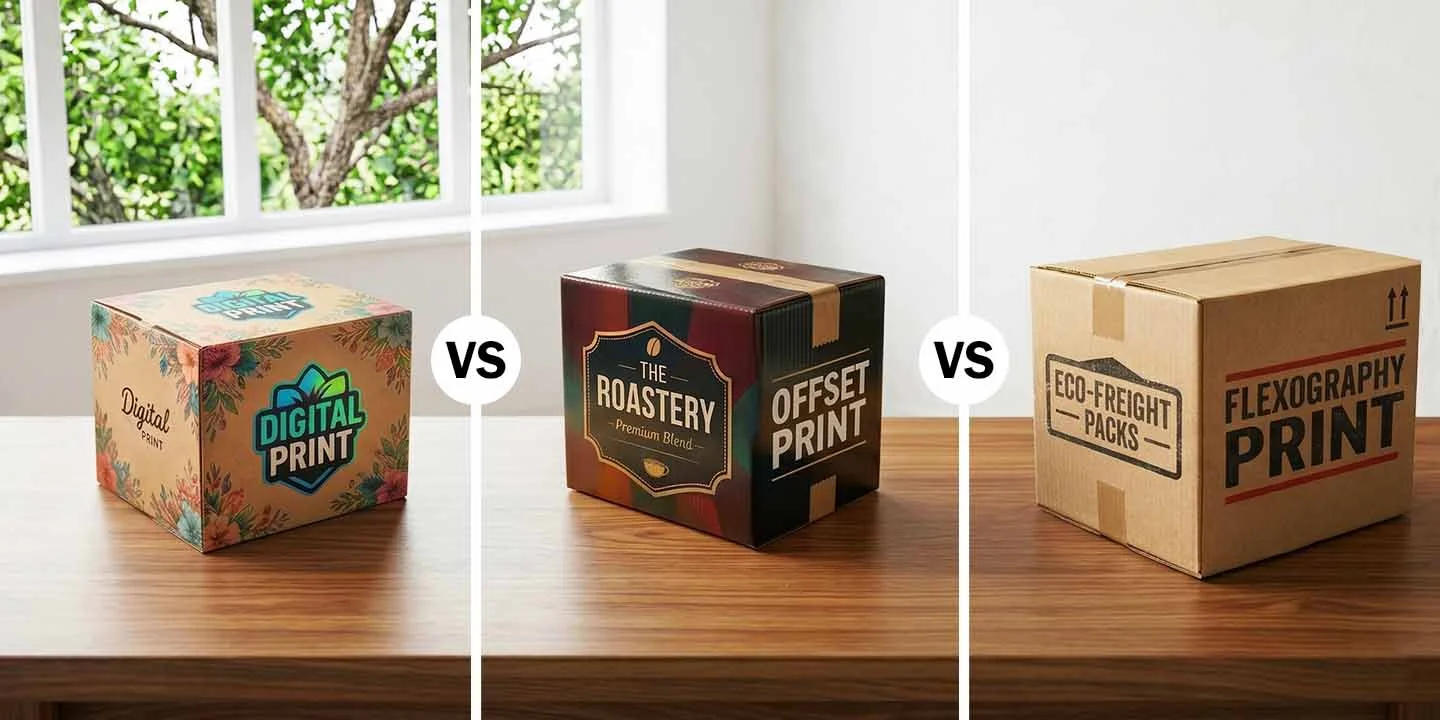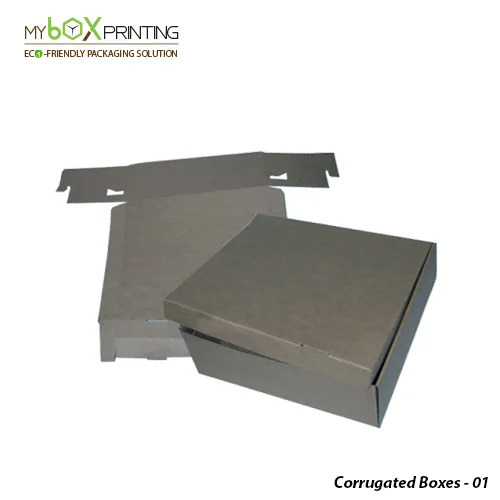
Corrugated cardboard boxes are found everywhere. You see them on the retail shelves, as food packaging, and most primarily as shipping boxes. But the main question is, what is corrugated cardboard?
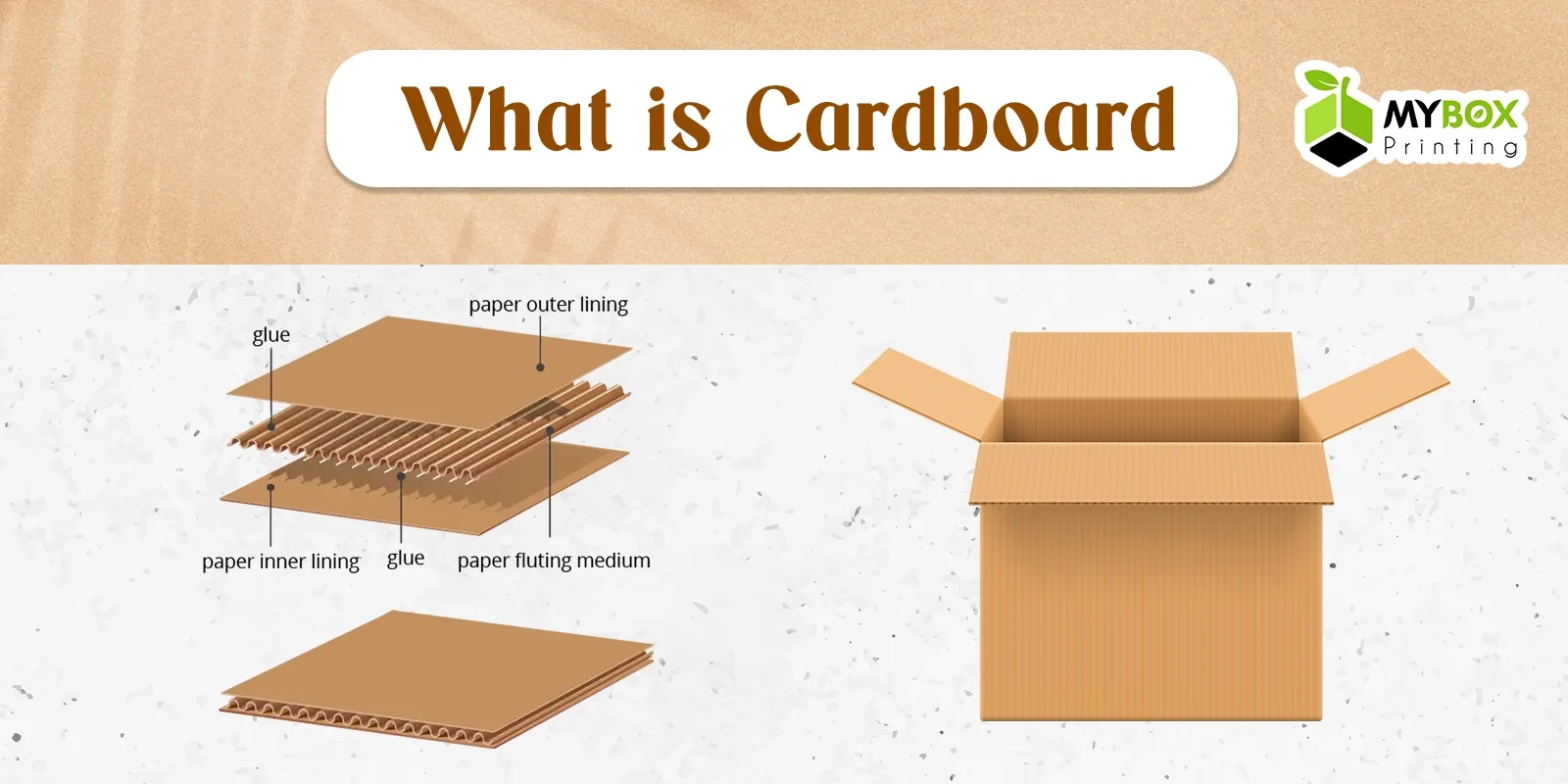
It usually has three layers; the two outer ones are liner boards, whereas the inner sandwiched one is a fluted layer. This structural wavy design is the main reason behind its durable nature and protective features. The material absorbs the shock and also acts as an insulator. That is why it is the top choice for delivering e-commerce products.
If you want to know more about them, then continue reading. In this blog, you will find information about everything you need to know about corrugated cardboard. We’ll start from the basics and then discuss its uses, types, and benefits for custom box packaging.
You’ll also find the quick history section and why the material is a sustainable choice. At the end, you’ll also get a recommendation about how to find the perfect box. If you have any other questions, you can find answers in the FAQ section.
Let’s first clear what corrugated cardboard actually is. It is derived from the combination of wood pulp and recycled paper material. That is why it is highly sustainable. But the main thing that defines it is its multiple layers. There is a middle fluted layer that is sandwiched between the two smooth layers.
This design provides the structural integrity to the corrugated cardboard. Even the glue used to keep the boxes together is plant-based. The starch-based glue firmly holds the boxes together.
This design enables them to stay intact. The multi-layer also provides thermal insulation. It also acts as a cushion and is resistant to shocks. These features make the corrugated cardboard an excellent choice for packaging.
A lot of common people and even business professionals get confused between cardboard and corrugated cardboard. When we say cardboard, it simply means a single layer. It is basically a thick sheet, also known as paperboard. But on the other hand, corrugated cardboard has multiple layers, the middle one being fluted. The design of such material actually makes it the top choice for packaging.
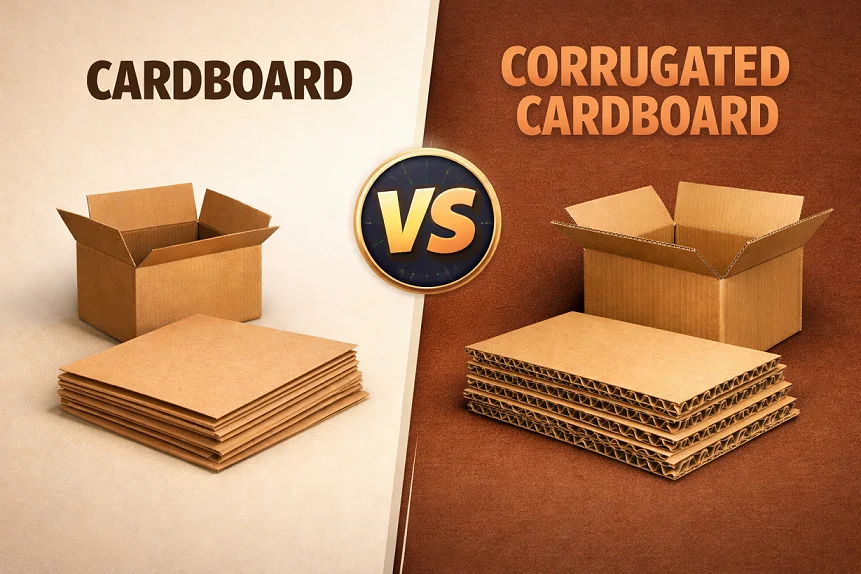
To clear the confusion, here is a table that represents the difference between cardboard and corrugated cardboard.
| Cardboard vs Corrugated Cardboard Comparison | ||
|---|---|---|
| Feature | Cardboard | Corrugated Cardboard |
| Structure | Single Layer | Multi-layer |
| Strength | Moderate | High |
| Cushioning | Minimal | Excellent |
| Weight & Capacity | Light, Low Capacity | Slightly Heavier, High-capacity |
| Durability | Less Durable | Very Durable |
| Shipping Use | Limited | Ideal |
| Common Uses | Retail Boxes | Shipping Boxes |
Due to its impressive design, the corrugated cardboard box finds its application across various industries for many purposes. Some of its major benefits are mentioned below:
The boxes made of corrugated cardboard stay intact during the logistics. They resist the shock when trucks pass through bumps. This protects the inside components. Also, if there is light moisture, it gets absorbed in the fluted layer. So it does not pass on to products.
As the e-commerce field is booming, these corrugated cardboard shipping boxes help to deliver the products in a secure manner.
Way beyond its strength, the corrugated box is an affordable option and also recyclable. Due to this reason, it is used for the packaging of retail boxes and product display.
You’ll find it commonly in shoe boxes and tab lock boxes. The heavy products, such as electronics, are also packed in corrugated boxes.
The great thing about corrugated cardboard boxes is that they are approved by the FDA (Food and Drug Administration). So, for this reason, they can also be used for fast food packaging.
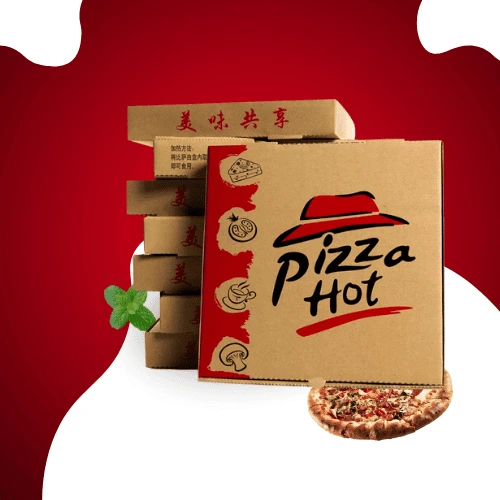
The common box used for pizza is, in fact, a corrugated box. The beverage carriers are also made of this material. There are various food products for which such packaging can be used.
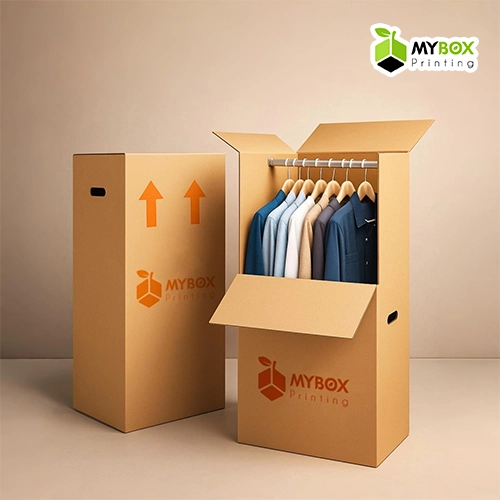
As the corrugate material cardboard is protective, so for this reason it is used to move heavy and fragile items.
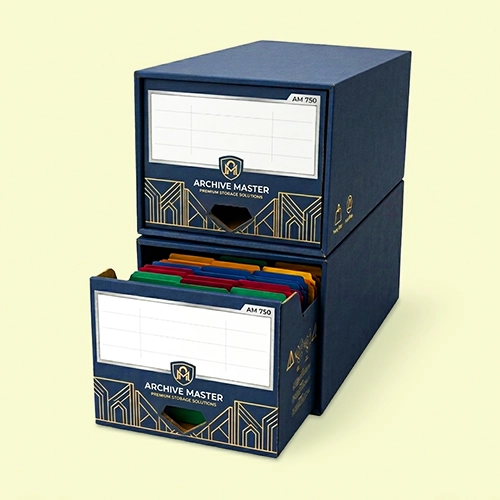
People also use moving and shipping boxes to protect and store the products. Be it documents, official files, books, furniture, or electronic devices, everything can fit in such packaging.
The corrugated packaging is able to hold heavyweight without tearing apart, so they are also used to box the industrial products such as mechanical parts and automotive components.
The cartons can also be used to package and ship electronic items.
It is not just the packaging where you’ll find this material. The corrugated cardboard also makes its way to the creative and art field.
They are used for art and crafts. People also use them for DIY activities to design their own boxes and other creative projects.
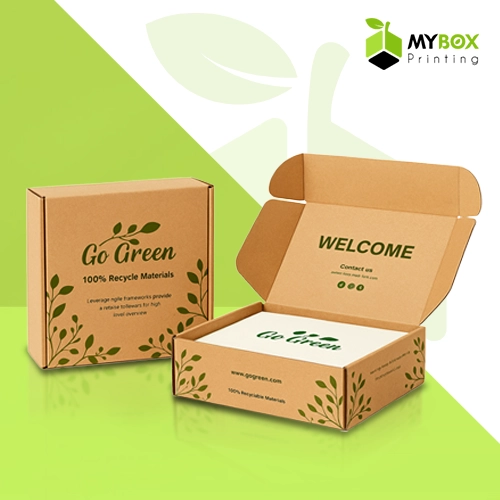
The thing that makes the corrugated cardboard a good option is its recyclable nature. The used material is recycled and reused by many industries to make new boxes.
They are also reused by people at home or businesses to store or transport the products.
Besides this, you can find the use of corrugated cardboard boxes in many industries, such as food, cosmetics, jewelry, and many more.
Corrugated material cardboard proves to be of so much value for the packaging industry. Its usual three-layer design makes it much stronger and sturdy for shipping purposes. It is also able to pack products in a secure way. Here are some of the great benefits of this material:
The middle fluted layer makes the boxes able to resist shocks. So during shipping, when bumps come, then the products stay protected. They do not shatter due to vibrations.
If there is a hot or cold fluctuation, it takes a while for the heat to transmit or be released from the product. That is all science. In simple words, they help to maintain the temperature.
The corrugated boxes can be easily folded. They can also be cut into any shape. So for this reason, they have an easy manufacturing process and can be customized.
Although this material usually comes with three layers, it is generally much lighter in weight. This makes it easy to carry the packaging boxes around. So they prove beneficial for logistics, where boxes need to be moved repeatedly.
Owing to the flexible nature, the corrugate boxes can be customized any way you like. They can be made in any size and shape. The other features, like embossing, laminations, and spotting, can also be applied to them.
The corrugated material is derived from plant-based and recycled sources. So it does not release any harmful waste into the environment.
The material is certified by the EPA and FSC. Boxes made up of corrugated cardborad are also approved by the FDA as one the best food packaging materials. Many industries require specific standards for shipping. The corrugated boxes generally meet those expectations.
On top of so many benefits provided by this material, they are very affordable. Their cost-effective nature makes them the top choice for business owners to invest in these boxes. They help to increase the ROI for the startups and larger enterprises.
So, due to all these special features, no doubt the corrugated cardboard becomes the top choice for packaging for small businesses, even established stores.
Corrugated cardboard is, in fact, one of the most sustainable packaging materials that is available today. It is renewable and also recyclable. It is actually made from plant-based paper that is sourced from trees. If the sourcing is done through FSC-certified practices, then it can be a great thing. On top of that, this material supports ESG (Environmental, Social, and Governance) goals.
The material has about 90% recovery rate. This supports a circular economy. When it comes to environmental effects, it breaks down naturally. During the manufacturing process, it does not leave behind any carbon footprint.
So in short, the corrugated cardboard is an environmentally friendly option for packaging. When businesses choose such packaging, they play their part in social responsibility. This improves the brand recognition as well as reputation.
When it comes to types, corrugate boxes are divided into many categories that are based on the flute type. To make it easier for you to understand the type and height, and for what purposes it suits, a simple table is presented below:
| Corrugated Flute Types Comparison | ||
|---|---|---|
| Flute Type | Flute Height | Characteristics |
| A Flute | ~4.7mm | Excellent cushioning, good stacking strength |
| B Flute | ~2.5mm | High puncture resistance, great for printing |
| C Flute | ~3.6mm | Most common. It balances cushioning and strength |
| E Flute | ~1.2mm | Very thin. It is ideal for retail boxes and fine printing |
| F Flute | ~0.75mm | Ultra-thin, used for small retail packaging |
The thickness of the corrugated cardboard for the boxes also matters greatly. The thickness can affect the capacity of the packaging. It can also affect the properties of the material.
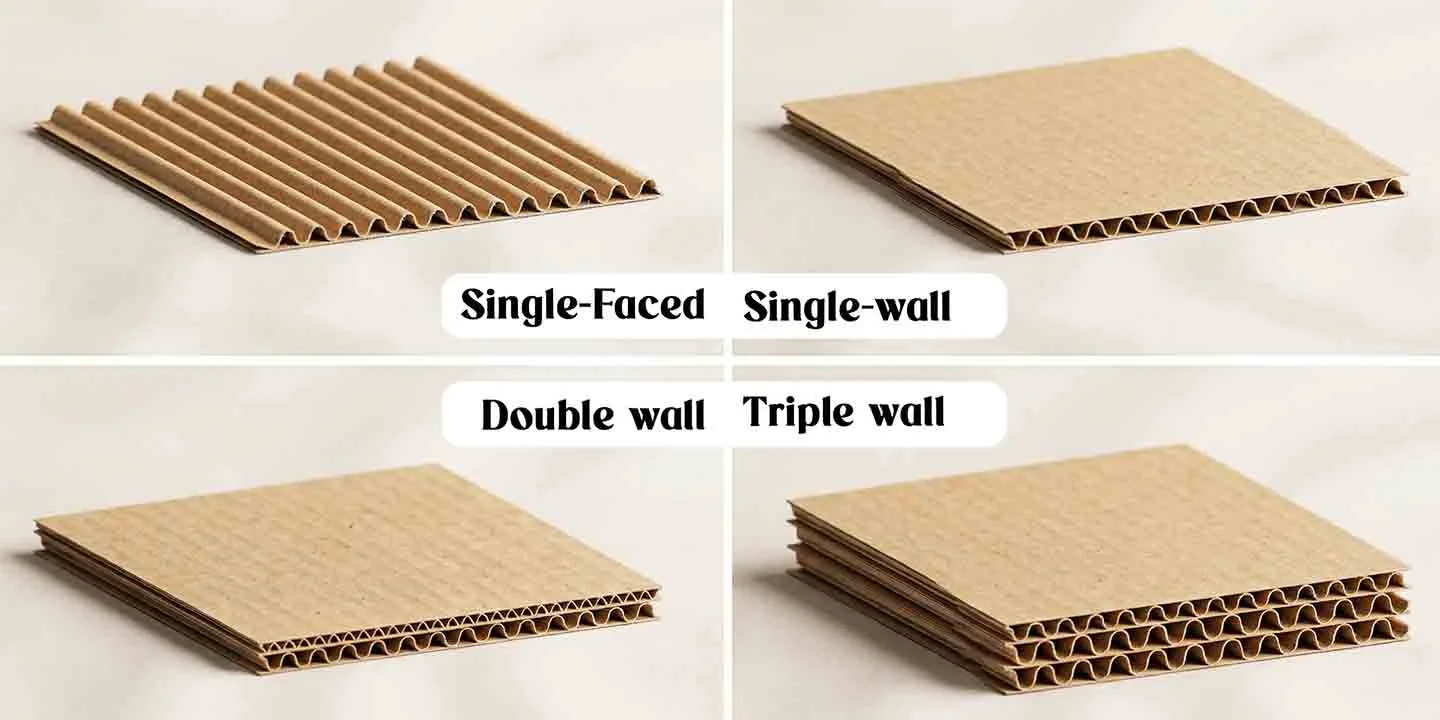
So that you can get an idea about corrugated box thicknesses, here is a simple comparison table:
| Corrugated Board Types Comparison | |||
|---|---|---|---|
| Type | Structure | Thickness (Approx.) | Best For |
| Single Face | One liner + one fluted layer | 0.8 mm to 1.5 mm | Wrapping, padding, and light protection |
| Single Wall | Two liners + one fluted layer | 3 mm to 5 mm | Standard shipping boxes |
| Double Wall | Three liners + two fluted layers | 5 mm to 8 mm | Heavy or fragile items |
| Triple Wall | Four liners + three fluted layers | 10 mm to 15 mm | Industrial shipping, pallets |
A lot of people who are interested in buying the material ask the simple question, "How is corruagated cardboard made? So, the steps are mentioned below, which explain how the manufacturing actually takes place:
The manufacturing begins by mixing wood chips or recycled paper with water. This is done to make them break down into a soft fiber pulp. Sometimes the chemicals are also added to clean and even strengthen the pulp. Mostly, the modern corrugated cardboard uses a high percentage of recycled material.
Once the pulp is prepared, it is then spread onto a large screen to form a sheet. After that, excessive moisture is removed by pressing and heating. Now, the sheet is dried in order to form liner paper and medium paper. At last, the liner paper becomes the flat layers. Whereas the medium one is used for fluting.
Step 3: Corrugating
So, in the next step, the medium paper is actually passed through the heated corrugating rollers. These rollers, in fact, have ridges, and with that, they shape the paper into a wavy pattern. The heat actually helps the paper hold its structure. This fluted layer highly provides strength as well as cushioning.
Next, the fluted medium is put between the flat liner sheets. To bond these layers together in a firm way, as a starch-based adhesive is applied. Further, the pressure and heat are applied to make the structure more firm. In this way, a complete corrugated cardboard is made.
Now, to make a complete box shape, the sheets are put into cutting machines. The machine trims the boards into particular sizes. Furthermore, score lines are added, which help the box to fold much more easily. After these steps, the structure is formed, which can be assembled into the final box.
After that, boxes can be printed with varied colors. The add-on features, like the coating and laminations, are also applied. The die cutting also happens for custom shapes and designs. This step is done to finalize the packaging for retail and shipping usage.
So this is the whole process of cardboard box manufacture. As the process is completed, the boxes are stacked over each other and transported to the actual site or where they are required.
Since we’re discussing everything about corrugated cardboard, let’s also have a look at its history. So the idea for it actually came into being in 1856, when two English inventors used the fluted paper for a lining of tall hats. Later in 1871, an American known as Albert Jones patented the corrugated paper to be used for wrapping fragile items like bottles.
Just a few years later, in 1874, Oliver Long improved the design. He added liner sheets to both sides of the corrugation. This is when the actual corrugated cardboard was invented. In the early 20th century, manufacturers started to replace wooden crates with corrugated material boxes. They did so because such boxes were lighter and also easier to ship. [Report Credits: NYTimes]
Their demand grew much more during the Second World War. As of today, they are found all around, from shipping boxes to food packaging and retail cartons. It will stay popular due to its recyclable and sustainable nature.
Although the corrugated cardboard offers great protection for the packaging, but some concerns may affect its effectiveness. Here are some of the things you need to be careful of:
Moisture Sensitivity: The material can lose its strength when it is exposed to humid conditions. It can also break down when in contact with water. To solve this simple problem, you can add a protective coating to protect the boxes.
Pest Risk: Insects and rodents can actually feed on the boxes if they are left unattended in storage places for a while. You can resolve this thing by storing the boxes in a well-ventilated place that is cool and dry. You can also use non-toxic pesticides such as peppermint oil.
Compression: If boxes are stacked on top of each other, they can become compressed. This can make them lose their shape as well as strength. So to prevent that, you can place heavier boxes below, and on top of them, place lighter boxes. In storage, you can consider to use shelves instead of stacking them above each other.
Ink & Coating Concerns: The inks on the boxes can affect the recycling nature of corrugated boxes. So, if you are considering choosing recycled material, make sure that they do not have toxic synthetic inks.
So there are some potential concerns that you can face with corrugated packaging. But the good news is that they can be managed much more easily.
In order to choose the right type of corrugated cardboard, you first need to understand your particular packaging needs. Take into account the size as well as the weight of your item. You can choose single wall cardboard for lighter products. Whereas the double or triple wall choice can be used for much heavier items. The storage conditions also affect the state of the boxes. So if you have to place your boxes in humid conditions, then you must go for aqueous coating on your packaging.
What else matters is the flute type. If you need more cushioning, then go for larger flutes. However, the smaller flutes provide a much smoother surface for printing.
You also need to consider your budget and how much you can invest in the packing. If you own luxury stores, then it is recommended to opt for additional features for boxes, such as laminations, spotting, and many more.
Another factor that can help you have consistent box quality and save money is to buy boxes in bulk. By doing so, you get them at wholesale rates, which is much less than the full per unit cost.
Now, since most of the things are clear about what corrugated cardboard is and its features. The next important question everyone asks is where to buy one. You can find boxes on various online e-commerce stores. But they lack a personal touch and cannot be customized.
The great thing is that you can order custom corrugated boxes at MyBoxPrinting. We have been in the industry for more than two decades. During this time, we served 500+ clients with exceptionally designed customized packaging.
Be it retail boxes, food packaging, or folding boxes, we offer every variety for every industry. Contact us and be surprised by exceptionally designed boxes.
Corrugated cardboard is used for packaging. It comes from plant based source and recycled material. It usually has three layers, with the main center layer as a flute. This special structure makes it able to absorb shock and protect products from other damage.
Yes, corrugated cardboard is a 100% recyclable material that is what makes it so special. The material is certified by the EPA and the FDA to be used for packaging for various industries. This includes the food industry as well.
It has a long history. The initial idea about fluted paper came into being in 1856, when two English inventors who used fluted paper for the lining of hats. However, the corrugated cardboard that we know of today was actually designed in 1874 by Oliver Long.
You can buy corrugated cardboard, be it standard or custom options, at MyBoxPrinting. You can place a small or bulk order, as we cater to both needs.
There are several steps involved in its making. First, the raw material is converted into pulp foam. After that, it is dried, and heat is applied to form the sheet. Then it is placed in the corrugator, which separates IT into flute layer and liner layers. At last, glue is applied. After cutting and finishing, the box is ready.
The thickness varies. The standard thickness for retail packaging is somewhere between 0.01 and 0.03 inches. The ones used for shipping boxes have a thickness in the range of 0.05 to 0.25 inches.
When cardboard is mentioned, it means a single layer of sheet. They are the general boxes. However, the corrugated boxes usually come with three layers, with the center one with flutes. This structure provided more protection to the products inside.
The boxes are not able to resist heavy moisture. They can also break down if stacked on top of each other. The first thing can be resolved by applying an aqueous coating on the packaging. The second issue can be resolved by proper management of boxes in storage or during transport.
The wavy design of corrugated cardboard, which was invented in 1874, makes it strong enough to handle shipping and storage challenges. The boxes made of such material are usually found in retail, shipping, and the food industry. The thickness and types of corrugate material vary. The cardboard goes through a series of production steps during manufacturing. Although it has many benefits, but it is not able to resist heavy moisture. So, an aqueous coating should be adopted to protect the packaging.
It is important to choose the box based on your particular product type. And at last, if you need custom corrugated boxes, then you can look no further than MyBoxPrinting.