The right cereal box size is a crucial element when creating a package that will safely hold your product, remain on retail shelves, and ship easily. Many breakfast cereals are boxed in the same size, but there are no definitive dimensions for all of them. Product weight, serving size, brand, and storage requirements are all factors that affect the end box size.
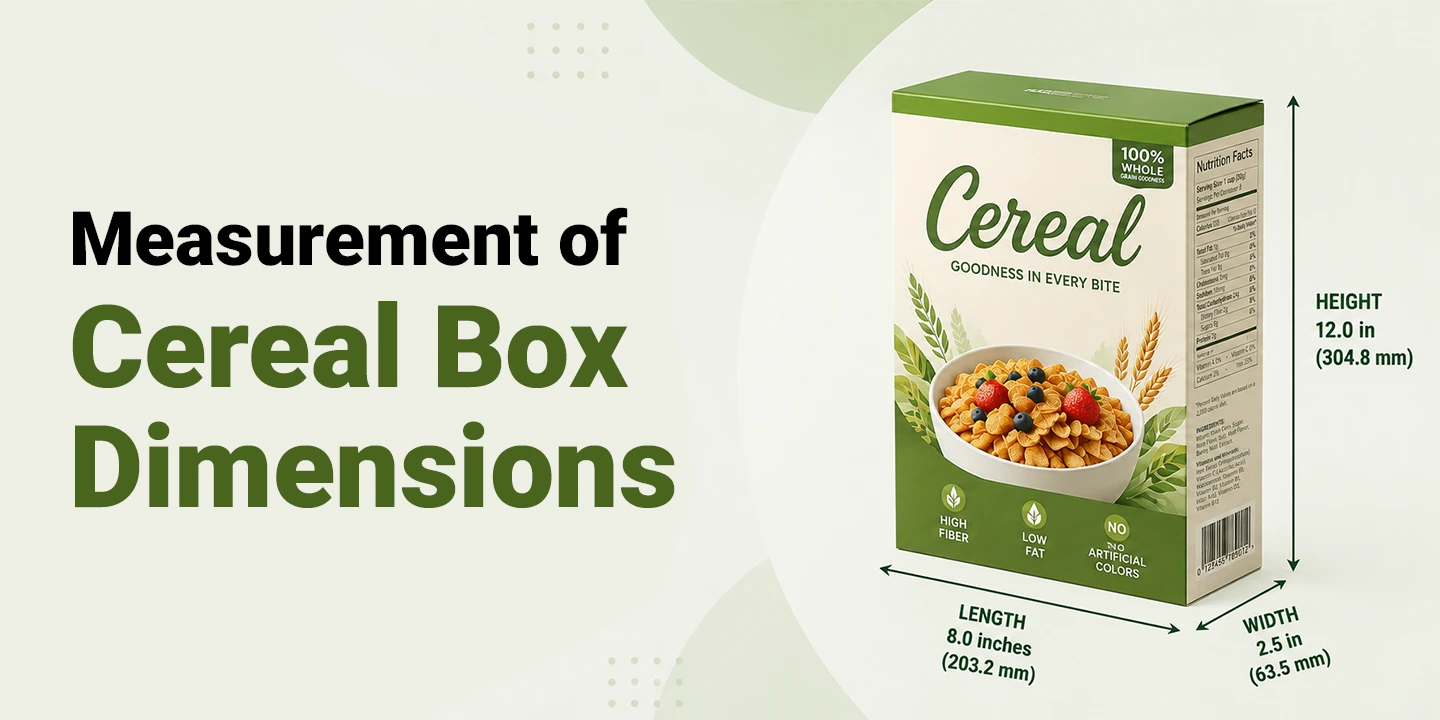
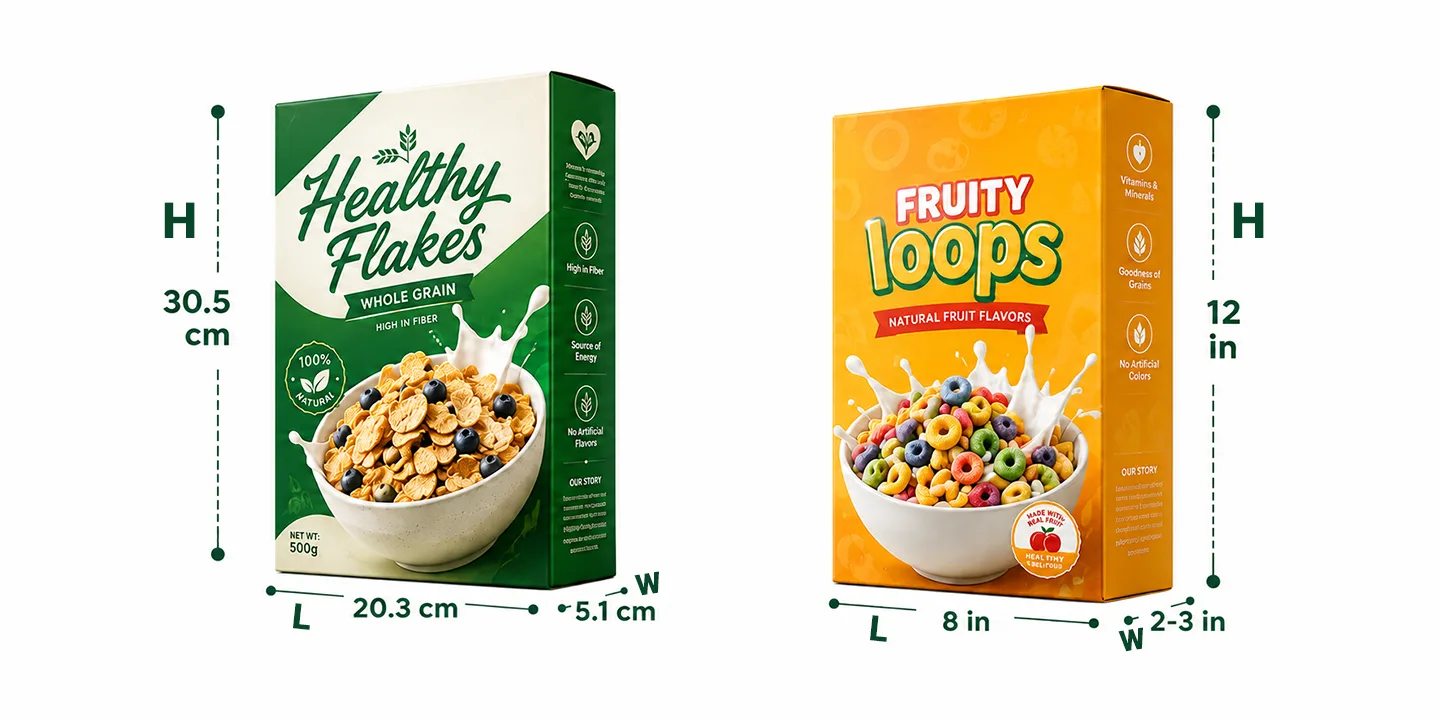
The standard size for a cereal box is about 12 inches tall, 8 inches wide, and 2-3 inches deep (or 30.48 cm tall, 20.32 cm wide, and 5.08-7.62 cm deep). However, such measurements can vary depending on the type of cereal and the volume to be packaged and its requirements.
Custom dimensions can be chosen to make the product look great on the shelf, to reduce shipping costs, or to create custom packaging for products that are optimized.
You will find all the information about:
-
The standard cereal box dimensions in inches and centimeters
-
Types of cereal packaging
-
And tips on selecting customized cereal packaging.
What Are the Standard Cereal Box Dimensions?
The packaging size of most cereal brands is the same for retail products. A box is the ideal size to keep the cereal, nutrition panel, brand, and product graphics and allow for easy stacking and display.
| Measurement | Inches | Centimeters |
|---|---|---|
| Height | 12 in | 30.48 cm |
| Width | 8 in | 20.32 cm |
| Depth | 2–3 in | 5.08–7.62 cm |
The measurements are industry standard but may vary depending on the product and the packaging objectives.
What Is the Average Cereal Box Size?
The size of a cereal box is, on average, the same as the standard size. This will accommodate most breakfast cereals, providing a nice product volume, shelf appeal, and shipping size.
However, the size can be changed for the following:
-
Granola and muesli
-
Protein cereals
-
Organic cereal products
-
Children's cereals
-
Family-size packs
Packaging used for promotional or sample products:
When the right size is used, it guarantees optimum product protection and reduces over-packaging.
Dimensions in Inches
One of the frequent issues faced by packaging manufacturers is that they use inches to design their structures and production layouts.
The average dimensions are:
-
Height: ~12 inches
-
Width: 7.5–8 inches
-
Depth (Gusset/Side panel): 2–2.5 inches
These measurements provide sufficient space for the brand, product information, and the actual cereal. Depending on the product, brands can include additional depth or height.
Dimensions in Centimeters
During the packaging design and manufacturing process, many international manufacturers package using metric measurements.
-
Height: 30.48 cm
-
Width: 20.32 cm
-
Depth: 5.08–7.62 cm
Inch and centimeter measurements keep designers, printers, and manufacturers on track with accurate packaging specifications during production.
Common Cereal Box Size Chart
Packaging size is dependent on the cereal product. The below chart lists the most frequently used box sizes throughout the industry.
| Packaging Type | Length | Width | Height | Ounces | Best For |
|---|---|---|---|---|---|
| Mini/single-serve | 1–2 in | 4 in | 6 in | 1–2 oz | Samples and single servings |
| Standard | 2–3 in | 8 in | 12 in | 8–12 oz | Regular retail products |
| Family Size | 3 in | 8–10 in | 14–15 in | 16–24 oz | Large household packs |
| Custom | Varies | Varies | Varies | Varies | Brand‑specific packaging |
Rather than standard sizes, manufacturers select the dimensions that suit the product, the audience, and the retail needs.
How Tall Is A Box of Cereal?
The average cereal box is 30.48 cm (12 in) tall. The height is widely adopted for retail products, as it provides sufficient room for product information and branding and fits on supermarket shelves.
Boxes are usually 14-15 inches tall when it comes to family size and 6 inches for mini boxes, which are commonly used for travel boxes, school lunches, or samples.
Family-Size vs Standard vs Mini Cereal Boxes
There are different sizes of packaging for different cereal products. The manufacturers choose the sizes based on the quantity of cereal being used, customer base, and application.
Standard Cereal Boxes
Retail-ready boxes are the most prevalent type of box. They provide adequate space to print brand details, nutrition, and attractive graphics on a product but are small enough to fit in storage and transport solutions.
Family-Size Cereal Boxes
Family-size boxes will be filled with a larger amount of cereal and are perfect for families buying in bulk. Typically, these packing cartons are more elongated and have a larger width.
Mini Cereal Boxes
Single-serving mini cereal boxes are suitable to encourage a single serving in the setting of breakfast in a hotel, airline, school, or promotional giveaway. They are compact, easy to carry, and suitable for multipack products.
How Do You Measure A Cereal Box?
Before customizing cereal packaging or ordering a printed cereal box, it is very important to measure a cereal box properly.
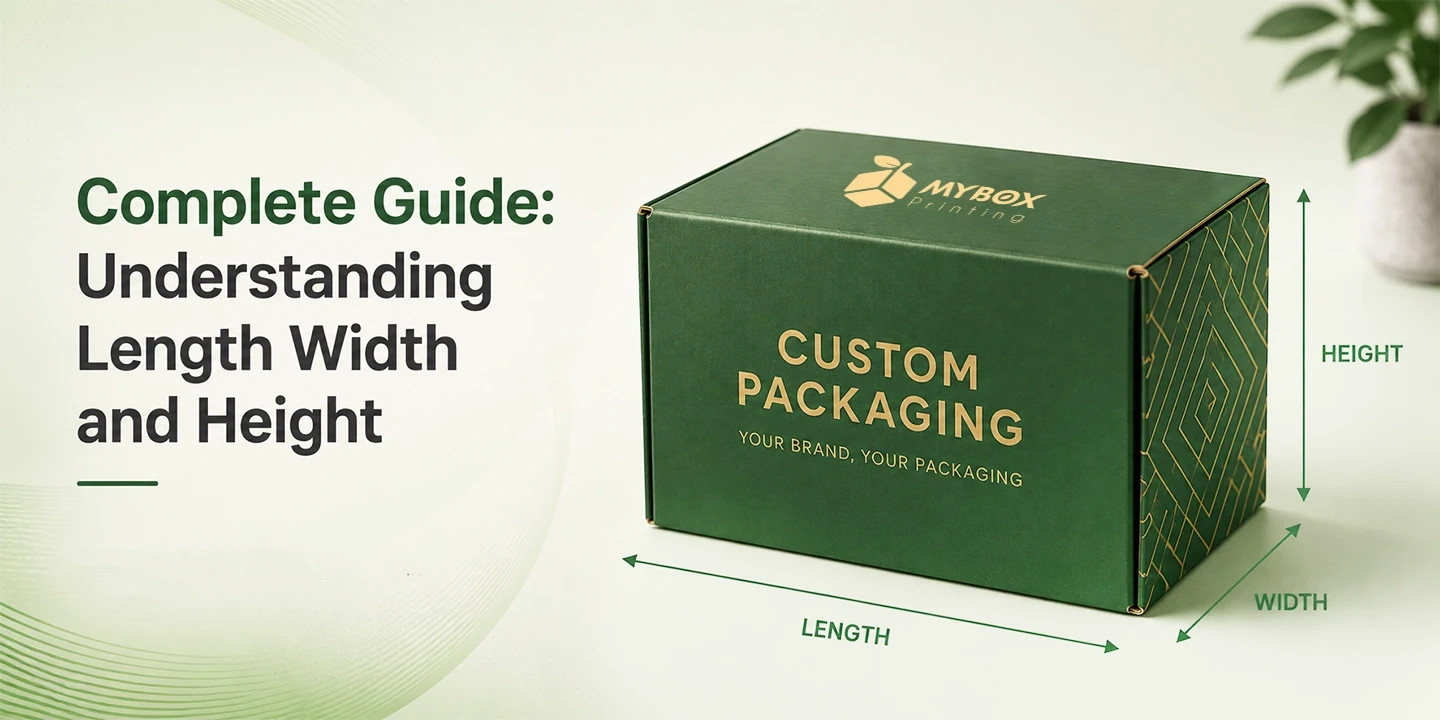
There are three basic measurements for packaging size:
-
Length: Front to back of the box
-
Width: Measured in the front panel
-
Depth: Front-to-back measurement
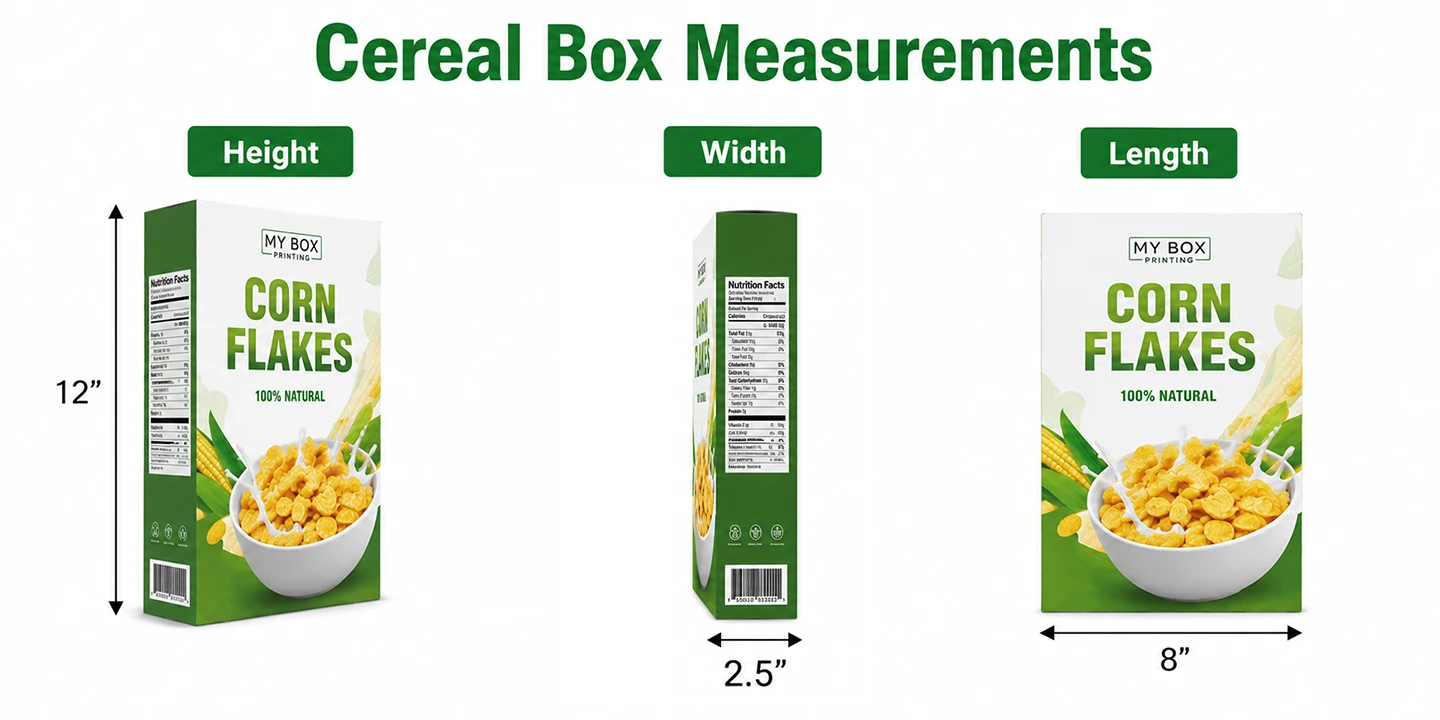
The following format is used for measurements:
Height × Width × Depth
For example: 12 × 8 × 2.5 inches
Furthermore, there are external dimensions and internal dimensions, both of which vary depending on the manufacturers. For a more detailed explanation of length, width, and height measurements, including how these dimensions are used when determining box size, refer to our complete guide.
Why Do Cereal Box Sizes Vary?
The cereal box size is not the same for all products. The height, width, and depth can be different from standard, depending on the product and packaging requirements.
Factors that influence the size of a box of cereal are the following:
-
The mass of the product and its volume
-
Serving size, retail shelf requirements
-
Science and design space
-
Shipping and storage needs
Choosing the right dimensions will help to ensure better protection of the product, reduce material waste, and package it effectively throughout the supply chain.
How Do Box Dimensions Affect Packaging?
The size of a cereal box has more than just an impact on its appearance. Correct dimensions assist manufacturers in optimizing production processes, cutting down shipping costs, and building packaging that meets retail specifications.
Shipping Efficiency
Good packing reduces as much as possible the space between the carton and the product and as much as possible the space between the carton and the floor of the pallet. An appropriate box size can also help to lower shipping costs as well as damage to goods being transported. You can also estimate the shipping cost of a box based on its dimensions and weight to better manage packaging and transportation expenses.
Warehouse Storage
Boxes that are the same size make stacking, organizing, and storage easier. If the packaging is successful, companies can benefit from the space of their warehouses and decrease the problems related to inventory management.
Retail Shelf Display
The perfect cereal box is designed to fit retail shelves and provide enough space to accommodate the brand, product images, and the nutrition panel. Fitting packaging also makes the product more visible and enhances the shopping experience.
How Do You Choose the Right Cereal Box Size?
The box size of the cereal is determined by the type of product and the desired type of packaging. While deciding on the dimensions, keep in mind the following:
-
Product Type: There are multiple types of cereal, and each type has its own packaging. Depending on the size and shape, a different size of boxes may be necessary for such foods as granola, muesli, protein cereals, and children's cereals. Choosing the right food packaging for your product can help determine the appropriate box style, size, and material.
-
Product Quantity: Single-serving products require smaller sizes, and larger, family-size servings of cereals must be boxed in larger-sized cartons so as to contain more product without affecting the presentation.
-
Branding Requirements: The package must have adequate space for all the essential information such as nutrition and product photos, along with logos. The right size and dimensions yield elegance and professionalism.
-
Shipping and Storage: Cereal boxes can be used for a variety of retail products, but it's not necessary for all brands. Custom packaging is more flexible for businesses as it can be customized to fit the product perfectly.
Standard vs Custom Cereal Boxes
They can be used for a variety of retail products, but it's not necessary for all brands. Custom cereal boxes are more flexible for businesses, as they can be customized to fit the product perfectly.
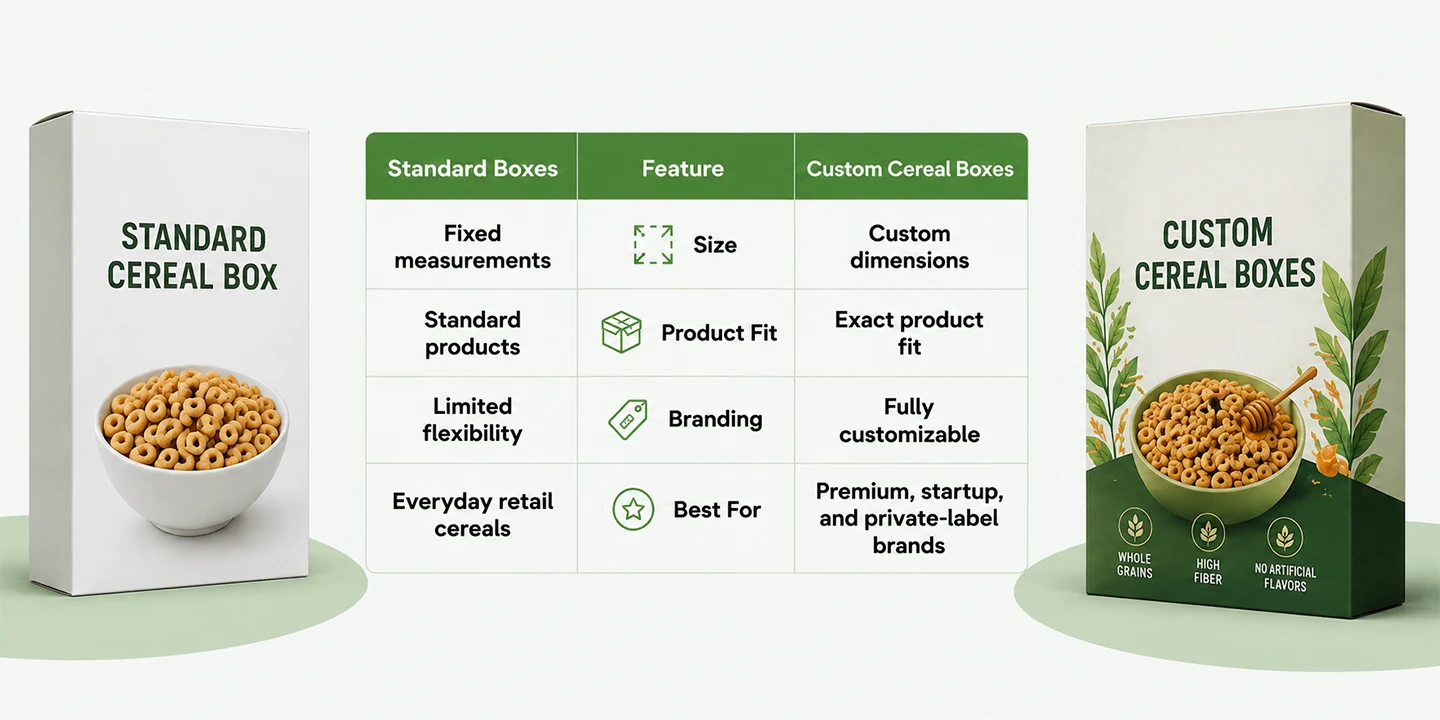
| Feature | Standard Boxes | Custom Cereal Boxes |
|---|---|---|
| Size | Fixed measurements | Custom dimensions |
| Product Fit | Standard products | Exact product fit |
| Branding | Limited flexibility | Fully customizable |
| Best For | Everyday retail cereals | Premium, startup, and private‑label brands |
Can You Customize Cereal Box Dimensions?
Yes. Custom packaging can be used to create cereal boxes of virtually any size for manufacturers. Thus, the business can create packaging that is appropriate for the product, instead of altering the product to fit a standard pack.
Custom dimensions can be used to:
-
Improve product protection
-
Avoid over-packaging material
-
Increase shelf appeal
-
Create unique branding
-
Optimize shipping and storage
Whether you're packaging a standard breakfast cereal or a specialty product, custom dimensions provide greater flexibility than standard box sizes.
What Packaging Materials Are Used for Cereal Boxes?
The materials used in cereal boxes have an impact on the strength, aesthetic properties, and printability. Most manufacturers use paper-based materials for food and beverage packaging. They are lightweight, durable, and have food-safe capabilities.
| Material | Benefits | Standard Thickness |
|---|---|---|
| Paperboard | Lightweight, durable, and easy to print | 0.25 - 0.55 mm (10 - 22 pt) |
| Kraft | Natural appearance and suitable for eco‑friendly packaging | 0.30 - 0.60 mm (12 - 24 pt) |
| SBS Paperboard | Smooth surface with premium print quality | 0.35 - 0.65 mm (14 - 26 pt) |
| Corrugated Cardboard Board | Excellent strength and protection during shipping | 1.5 - 7.0 mm (59 - 275 pt) |
| Folding Carton Board | Cost‑effective, foldable, and ideal for retail packaging | 0.20 - 0.50 mm (8 - 20 pt) |
Note: For a complete breakdown of food packaging materials, see our full guide.
Why Partner with MyBoxPrinting for Custom Cereal Packaging?
Choosing the right box dimensions is just one component, and making a box for retail involves the precision of structure and materials. They comply with food requirements and a successful supply chain.
Whether you're designing and developing your custom packaging, manufacturing, testing, or delivering, My Box Printing has the expertise to help you design packaging. We personalize them according to your product volume, retail shelf needs, and brand identity.
We have the ability to package your product for commercial sale at the most competitive prices.
-
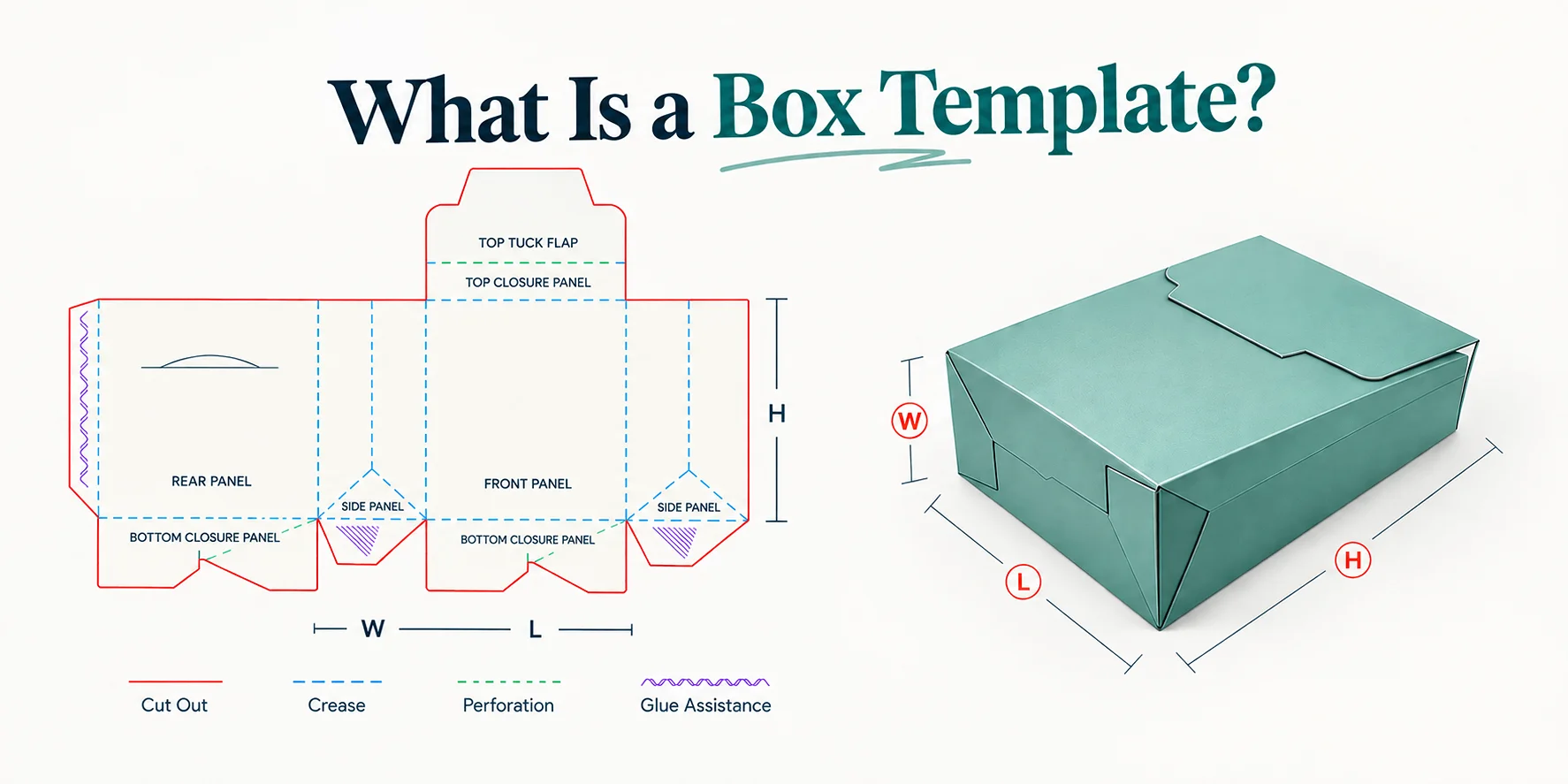
Precision Dielines & Custom Sizing: From standard retail sizes (12" × 8" × 2.5") and up to family and mini sample sizes, our dielines are precision-engineered 2D cutting lines for structural integrity and seamless automated filling lines.
-
Food Grade & Eco-Friendly Board Stock: All the food-grade 18 pt to 24 pt Solid Bleached Sulfate (SBS), natural kraft paperboard, and high-density Clay-Coated Recycled Board (CRB) are developed to be fully compatible with protective inner liners.
-
High-Impact Custom Finishing: Stand out on crowded supermarket shelves with high-definition offset printing, spot UV coatings, tactile embossing or debossing, metallic foil stamping, or premium soft-touch matte laminations.
-
Scalable Wholesale Production: Optimize your packaging needs with competitive tier-based wholesale pricing, quick production turnaround, and flexible Minimum Order Quantities (MOQs).
Frequently Asked Questions About Cereal Box Dimensions
What are the standard cereal box dimensions in inches and centimeters?
The industry standard size for a regular retail cereal box (10 to 18 oz) is 12 inches tall, 8 inches wide, and 2 to 2.5 inches deep (30.48 cm tall × 20.32 cm wide × 5.08 to 6.35 cm deep).
How tall are family-size vs. single-serve mini cereal boxes?
Cereal box heights vary across three primary retail tiers:
-
Mini / Single-Serve: 6 to 6.5 inches (15.2 to 16.5 cm) tall
-
Standard Retail: 11.5 to 12 inches (29.2 to 30.5 cm) tall
-
Family Size / Mega Pack: 13.5 to 15 inches (34.3 to 38.1 cm) tall
How do you measure a cereal box for custom manufacturing dielines?
Commercial packaging manufacturers measure custom folding cartons in the following strict order:
Width (Front Face, Left to Right) × Depth (Side Gusset, Front to Back) × Height (Vertical, Top to Bottom)
Always measure internal dimensions to ensure the inner poly liner and product fit correctly.
What paperboard material and thickness are used for cereal boxes?
Commercial cereal boxes are manufactured from 18 pt to 24 pt (0.018" to 0.024") paperboard stock. The most common material choices include:
-
SBS (Solid Bleached Sulfate): Premium, bright white board for vibrant exterior graphic printing.
-
CRB (Clay Coated Recycled Board): Eco-friendly recycled board with a white printing surface and gray interior.
-
Virgin Kraft Paperboard: Strong, unbleached brown paperboard ideal for organic and natural cereal brands.
Why is an inner liner required inside a paperboard cereal box?
The outer paperboard box provides structural rigidity, stacking strength, and branding surface area. However, it is not air-tight or moisture-proof. The inner sealed liner bag (typically HDPE poly or wax-coated paper) serves as the primary barrier against humidity, oxygen, and contamination to keep the cereal fresh and crisp.
How many standard cereal boxes fit in a master shipping carton?
A standard master shipping carton typically holds 12 or 24 individual cereal boxes, arranged in double-row configurations (e.g., 2 rows of 6 boxes). A standard 48" × 40" shipping pallet accommodates roughly 240 to 360 standard cereal boxes depending on stack height and palletizing pattern.
Final Checklist: Optimizing Your Cereal Box Dimensions for Retail Success
Optimizing cereal box dimensions balances product protection, shelf display, and transit efficiency. While standard 12" × 8" × 2–2.5" boxes suit 10–18 oz products, custom structural dielines eliminate void space, reduce dimensional freight charges, and run smoothly on automated filling lines.
Whether packaging single-serve samples, custom granola, or family multi-packs, pairing precise dieline dimensions with food-grade 18 pt to 24 pt SBS or Kraft board and high-barrier inner liners ensures maximum freshness and shelf impact.
Ready to Build Custom Cereal Packaging?
Partner with MyBoxPrinting for custom 2D dielines, food-safe board stock, high-barrier liners, and free wholesale quotes.