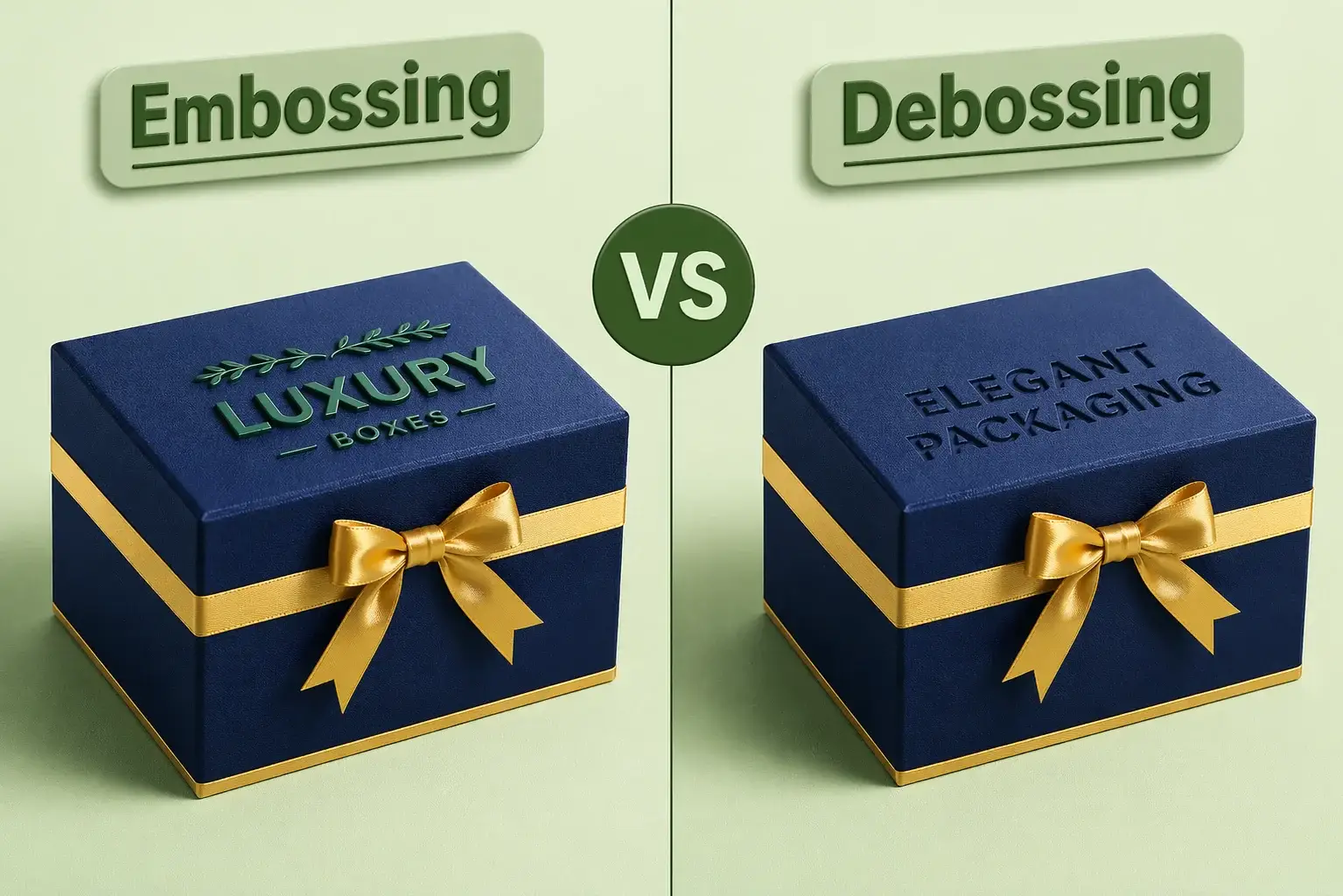
Embossing is an art used in printing that lets you raises a design on the surface whatever you wish to do to add an extra layer of elegance to your product. Besides embossing, there is one more printing method that is quite similar but still different, and that is known as debossing. It creates a recessed effect instead. In order to become a successful designer or printer, you should know what makes the mentioned printing methods different.
Learn about embossing and debossing, their benefits, uses, and distinctions. Take your brand, product packaging, and designs to the next level using premium finishes and textures.
Embossing and debossing are two printing processes that involve forming a three-dimensional image from paper, cardboard, leather, and other materials. Two techniques have become popular in branding, packaging, and design components owing to the elegance of the finish.
Before going in depth to know about both techniques and thier impact as per selling point of view and grabbing customer attension, there is a compartively comparison; so you can get an idea about them.
| Emboss vs Deboss Comparison | ||
|---|---|---|
| Feature | Embossing | Debossing |
| Visual Effect | 3D Raised Surface | Sunken/Indented Surface |
| Feel | Distinctly tactile & "pop" | Subtle, elegant & smooth |
| Back Side | Shows a "negative" indentation | Usually remains flat/unaffected |
| Best For | Logos, brand names, luxury feel | Minimalist designs, leather, thick cardstock |
Embossing is a printing and design technique that produces raised patterns and images on surfaces that include paper, leather, and metal. The process creates a raised surface which improves visual effect and touch sensations.
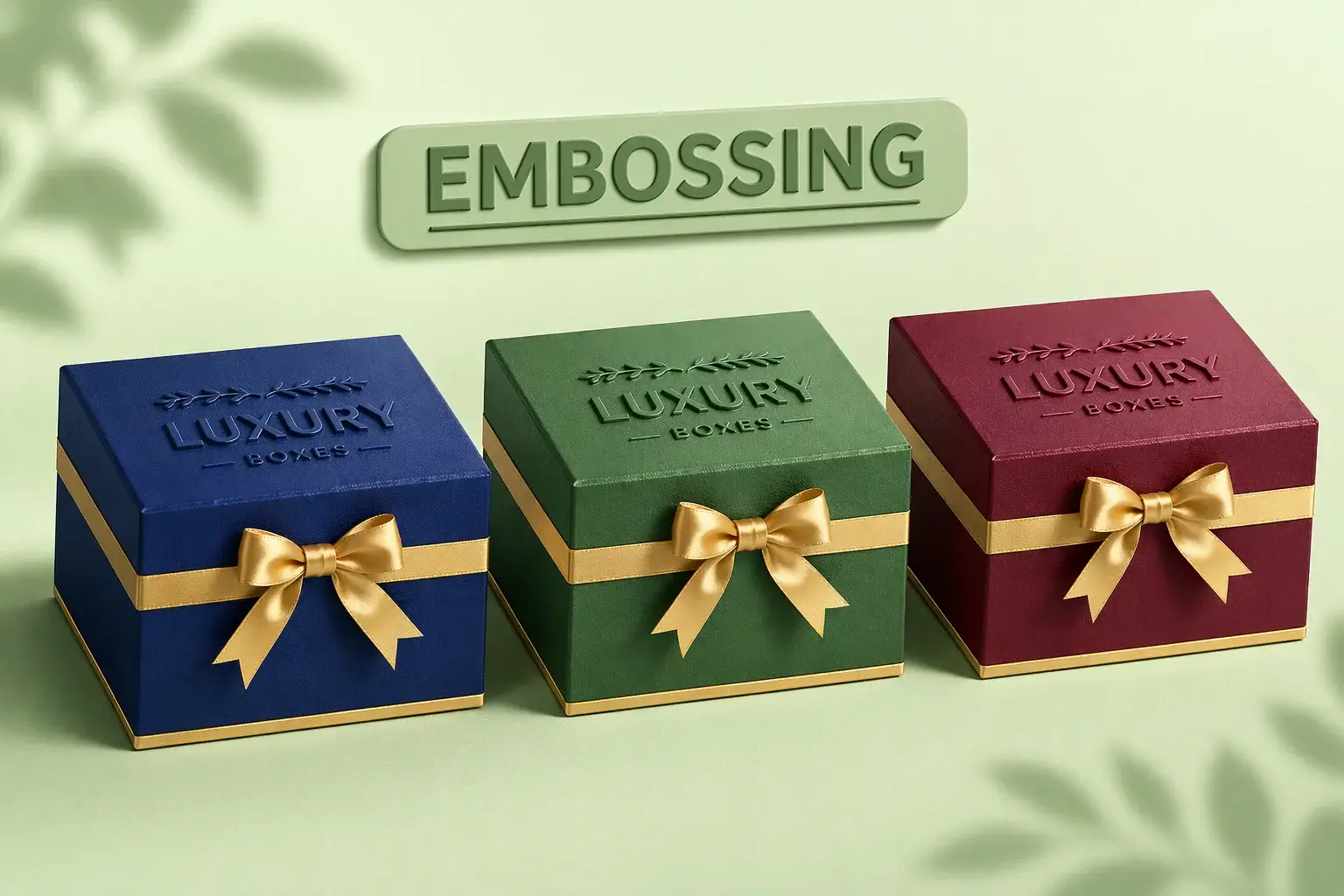
The process of embossing, which designers use for packaging and branding, is used in stationery design to create a sophisticated and high-end appearance for their products.
Embossing allows you to come up with unique patterns that can improve your printed materials in their ability to make them look elegant and attract customers to feel them.
Through highlighting the important elements of a design, like logo or heading, embossing adds emphasis and creates a strong visual hierarchy through which the viewer is led.
Since embossed prints are usually associated with luxury and premium quality, any embossed business cards, packaging, or invitations will be regarded as high-quality by clients or recipients.
Embossing involves special dies and printing press equipment that raises the prices, making the process too costly for low-budget or mass-production purposes.
In addition, embossing can distort small details in designs, and hence, simple designs are recommended for maximum effect.
The other side of the printed material gets imprinted with the reverse image when embossing, which is undesirable for double-sided printing or thin paper sheets.
Debossing is a form of printing that entails pushing a surface into a particular design, thereby creating an indentation of the design. As compared to the embossed form of decoration that pushes the design outwards, debossing makes a design more subtle and classy.
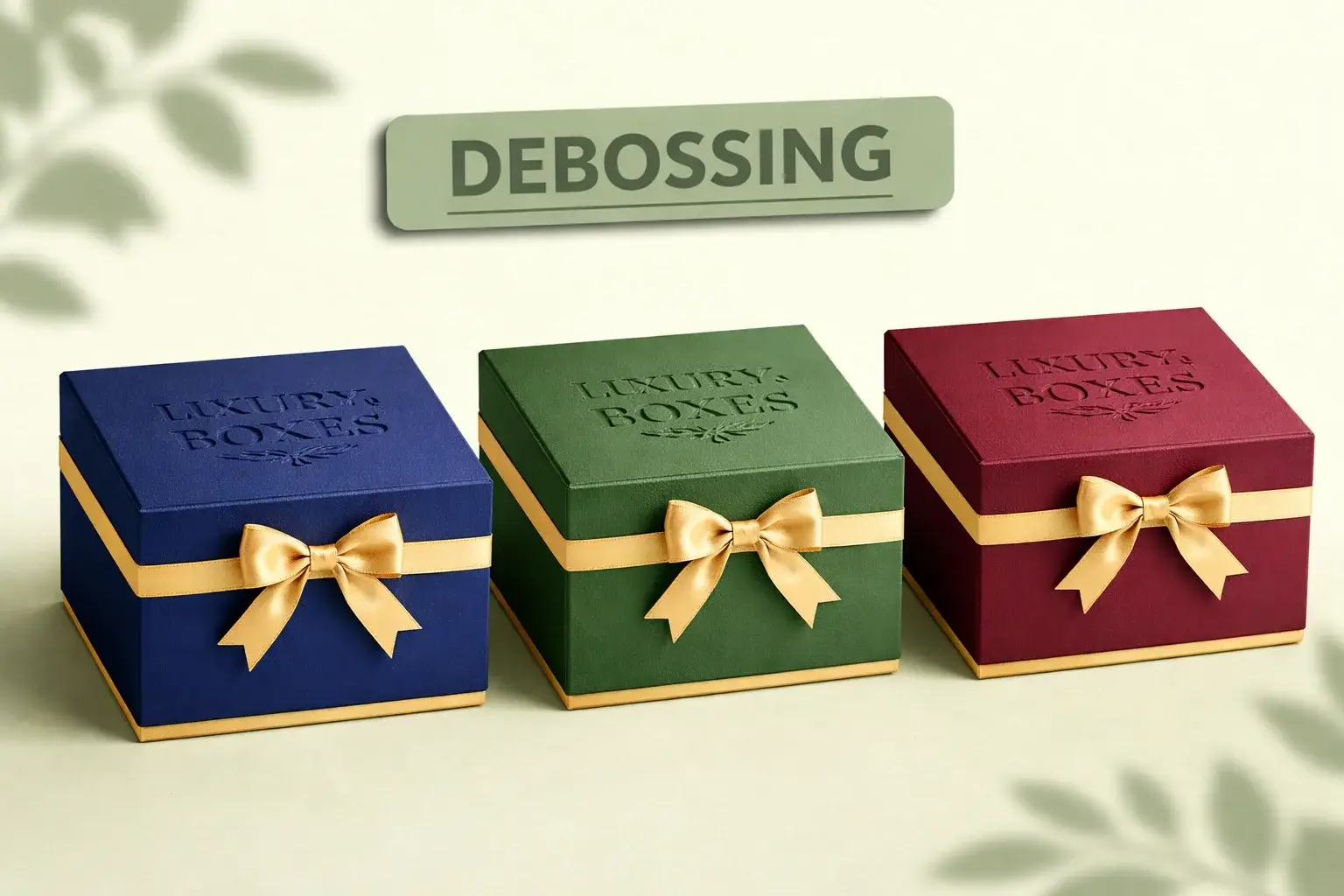
Debossing makes your design elegant and subtle; even as you print it, your design seems to acquire an element of sophistication without being too glamorous for it.
Using ink or foil, you can enhance the debossed design to give it extra appeal without making it less elegant and professional.
The debossed design adds to your card, pouches & packets, or paper prints an elegant appeal because of the professional printing style used.
As compared to other methods, the production of debossing requires particular dies and presses, hence making its production more costly than regular printing.
This makes for a lesser impact on touch, as opposed to embossing, where debossing involves indentations; thus, the designs are less noticeable.
Since the designs created by debossing cannot be too visual in nature, especially in cases where there are textured and dark surfaces, the effectiveness will be lost.
Design selection is complete, and a die is created for creating an impression using embossing or debossing techniques.
A counter die is created in the same manner as the main die, because it would create the pressure necessary for embossing/debossing.
Embossing and debossing methods require proper preparation of the material. Embossing is best used when the surface is soft, such as paper and cardboard, whereas debossing is used on hard surfaces, such as kraft paper, leather, thick books, and wood.
The press machine is adjusted accordingly to position the dies in such a way that the pressure applied to the material will be adequate and in the right position.
The press is positioned above the material and applies pressure on the material, embossing or debossing the design as required.
Debossing requires specific dies with applicable presses, and at the same time, is also expensive when compared to other types of printing.
Every element is checked for accuracy, precision, and the angle at which each debossing and embossing project must be done.
The items then get packaged once they are perfected via embossing or debossing to ensure that the embossed items get protection until they are sent to where they should go.
Blind Embossing
The blind emboss is made by using pressure and heat, which makes a very delicate design without using any ink or foil.
Multi-Level Embossing
Multi-level embossing produces a three-dimensional effect by creating various levels of depth on the surface that make the design attractive and complex.
Registered Embossing
This embossing technique makes sure that raised portions of the design match perfectly with printed portions using colors and textures, thus producing an elegant look with precision.
Blind Debossing
The blind deboss is a recessed design made by designing pressing without any use of ink or foil, which makes it professional and elegant.
Foil Debossing
Foil debossing uses recessed impressions to apply metallic foil, which creates a shimmering effect that contrasts with the design to produce an expensive and attention-grabbing appearance.
Textured Debossing
Textured debossing applies patterns and grain effects into recessed areas, which creates a tactile experience that produces decorative finishing for printed materials.
The embossing/debossing process provides texture and class to prints, which enhances the memorability of your design. The branding technique will create a stronger brand presence for your business while it improves your logo design and produces a premium business card, bag tags, custom boxes, invitations, and high-end products.
It is vital that you comprehend which process should be used when, in order for you to improve the design through effective branding of your company. The decision will influence aesthetic appearance, feel, and cost of the process, and this is why it is important to know both.
Direction: In embossing, the design is raised, as compared to debossing, where the design is made by sinking it into the surface.
Appearance: Embossing is glittering in its aesthetic quality, and debossing is elegant in its aesthetic quality.
Reverse Side: Embossing can be visible on the back side, but debossing makes the back side perfect.
Applications:
1) Embossing: The embossing is ideal in branding, name tags, and other certificates that need good grace and style.
2) Debossing: Suits well with leather material, heavy paper, and simple design.
3) Material Compatibility: Both can be used with leather, paper, plastic, glass, and metallic materials.
| Embossing vs Debossing Comparison | ||
|---|---|---|
| Feature | Embossing | Debossing |
| Visual Effect | Raised and prominent | Recessed and subtle |
| Tactile Feel | Elevated and tactile | Indented and smooth |
| Durability | Raised areas can wear/flatten over time | Highly durable; design is protected |
| Reverse Side | Leaves a visible indentation on the back | Often leaves the back clean/unaffected |
| Cost | Normally larger (two dies are needed) | In general, lower (only one die is needed) |
These are the greatest applications of embossing and debossing in various designs and printing works.
The use of embossing or debossing with a logo on a business card is very professional and makes a great impression.
Embossing is often used on luxury rigid packaging for printing the logos and designs, while debossing is a means of adding luxury without adding thickness.
Debossing provides elegance to invitations, journals, and hardcover books, while embossing provides unique titles or designs to stickers, labels, boxes, jars, and containers.
Yes, indeed, embossing and debossing have been combined to create layers that will give dynamism to the design due to the three-dimensional effect created by them.
Definitely, the foiling technique may also be used along with embossing/debossing, or even give a metallic or colored touch to the printing process.
Yes, these printing methods (embossing and debossing) may be done on materials like leather/felt, thus providing fashionable designs on premium products.
Certainly, one can use foiling or ink to add colour, but in other instances, one can deboss without colour of any kind.
Yes, because debossing is a process of impressing the design on the surface, it is tougher to fade and wear.
Yes, digital printing is capable of embossing for graphic design enhancement purposes.
The processes of embossing and debossing create printed products that attain elegance through the feel of the paper and quality designs. The use of all these features allows for the creation of unique business cards, packages, and invites. MyBoxPrinting offers exact delivery of the design that not only looks good but feels good and is made using high-quality methods.
If still you have a question or getting confused about which one is better and which one will increase your sales overnight, do not waste your time. Pick your phone, call us, or contact us by pressing the button below to get free consultation. We are always here for you!