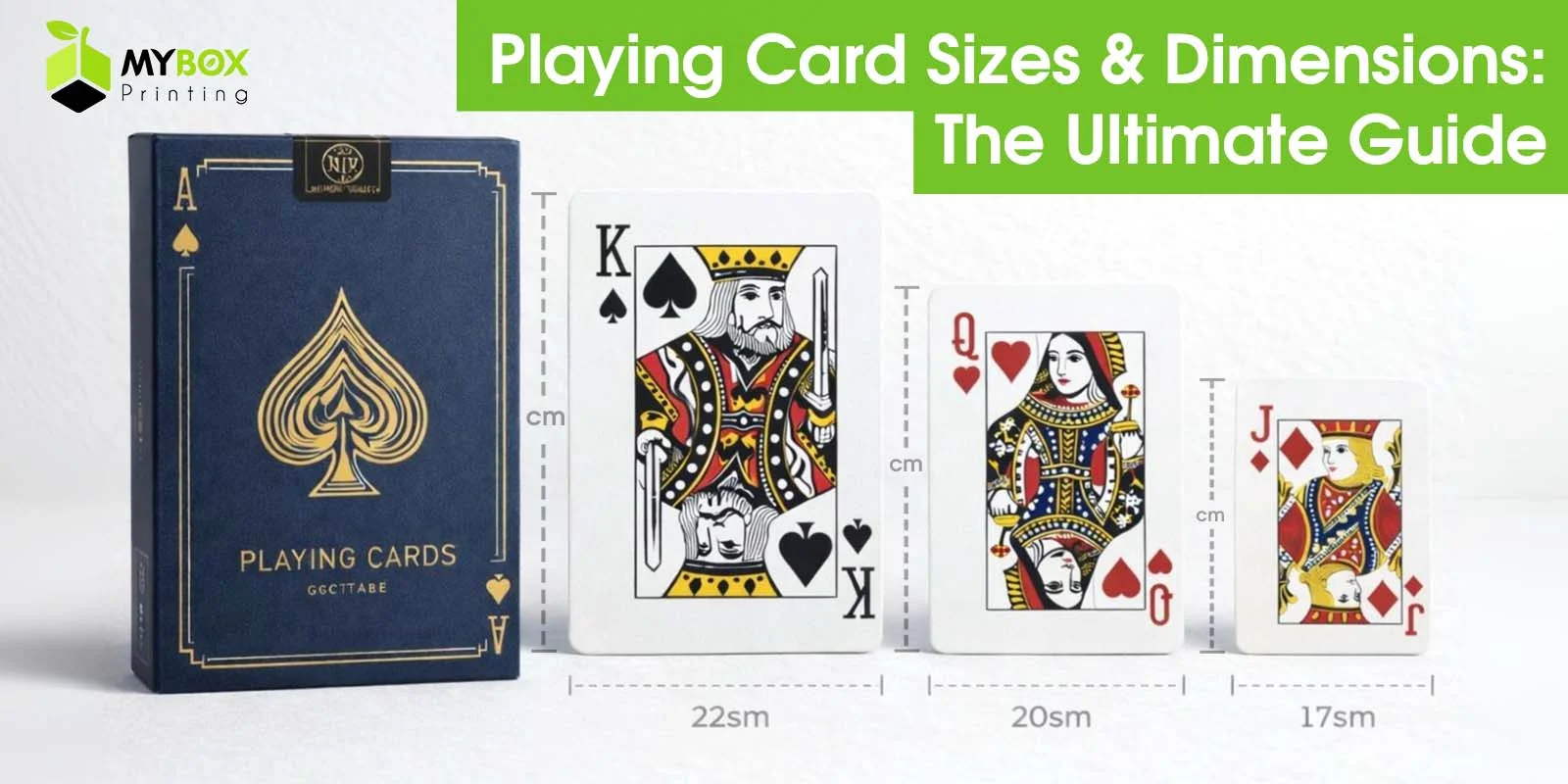
Playing cards is a loved form of entertainment for friends and families worldwide. They are used in over a thousand games that bring the world together for fun and social interaction. In fact, these are used everywhere, from casual games to tournaments and from game designers to entrepreneurs.
Whether you are a casual player, a game designer, or planning to start a card-playing business, it is very important to understand that playing card sizes are very important. The dimensions of the card affect its shuffleability, handling, and readability. It increases the overall gaming experience by giving your customers an aesthetic look and feel. You can give your customers a unique and unforgettable gaming experience by providing them with proper creative artwork and design.
A properly manufactured card, after knowing the correct measurements, increases both functionality and visual appearance. Moreover, it can help manufacturers as well in creating professional and visually striking cards that are long-lasting.
In this guide, we will explore all the standard playing card sizes and their dimensions. We will also learn how they vary across different games and regions. We will give you all the information that you need to make the right decisions for playing, designing, or selling cards.
"Playing card sizes" is a term that refers to the physical dimensions of playing cards. It includes several factors, which include
Thickness of cards
Aspect ratio
Corner radius
Bleed area
Safe zone
All these aspects play an important role in gameplay and handling the cards. The cards are designed on the basis of them.
There are different card sizes available in the market that are made for different purposes. For example:
Poker cards are standard cards for casinos and tournaments.
Bridge cards are very narrow cards that are made to give comfort to the holder, especially in large hands.
Jumbo cards are made for classic stage magical classroom visibility.
There are several other creative formats, like square cards or mini cards. These are very popular for novelty, travel, or promotional decks.
These cards are all based on customer satisfaction and their improved gaming experience. If you want to increase your brand recognition in the playing card market. Then you need to think about the comfort of your customers. If you enhance visual clarity, it can support their gameplay and make sure that your cards fit in their fist properly.
Note: "It is a very critical consideration for board designers and players that your cards must fit properly into the boxes or sleeves as well."
Playing cards are not just for fun. When games get serious, the right size becomes an important asset for performance. For this, playing card size is more than just a choice.
In fact, it directly affects how comfortably you are enjoying your game and how practical you are getting. The right card size can improve your playing experience, and it also offers efficiency.
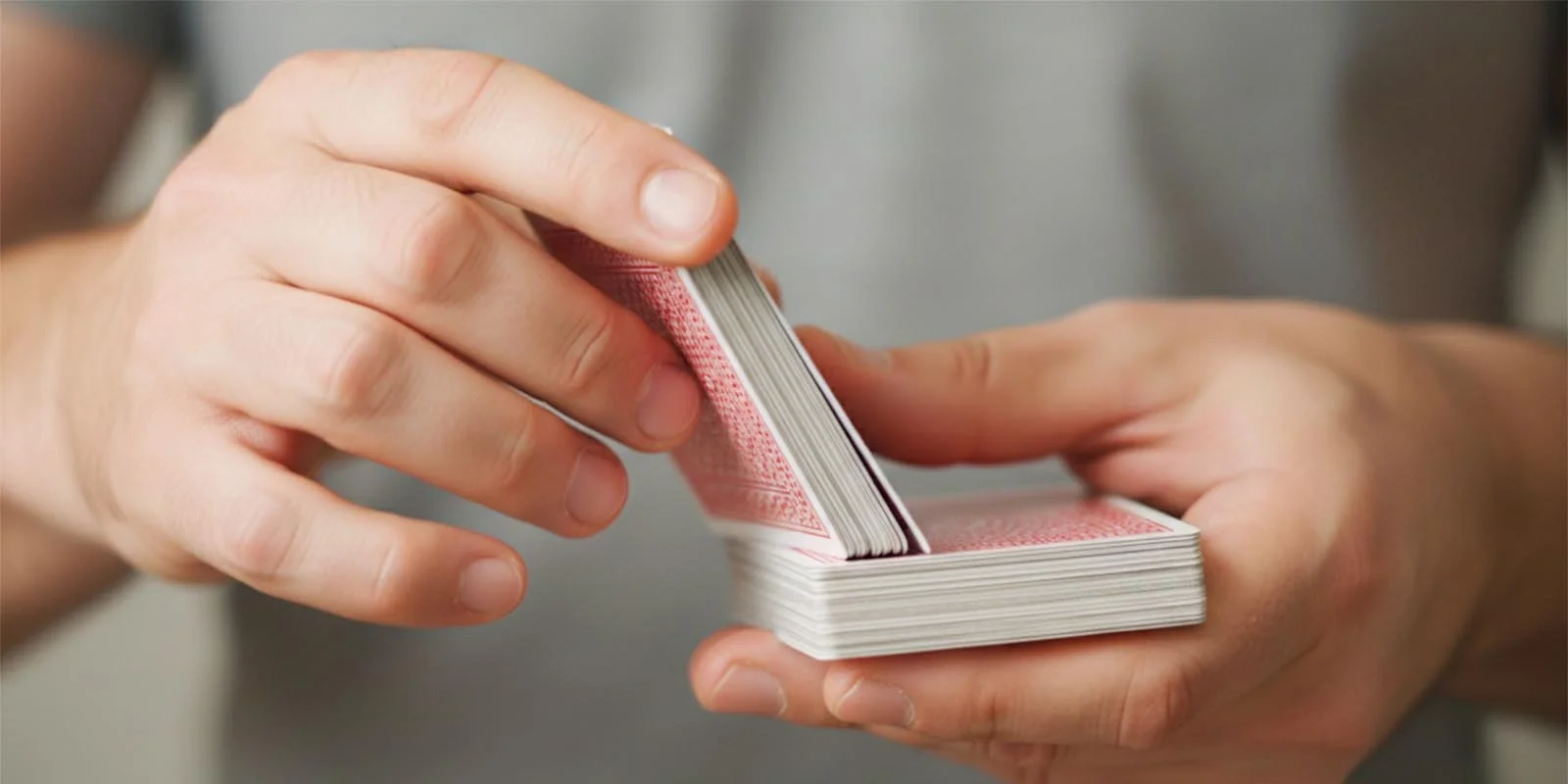
When the card size is according to your choice. You can easily hold and shuffle them to take the lead over your competitor. It does not matter if you are playing with small cards or large cards. When you get a more in-hand grip of your card, your table-based game becomes more interesting.
It's not just a card. In fact, when we hold something in our hand that is not the perfect size. We can feel stress or hand strain. When your customers need to manage many cards at once in long games, they get tired. If they have bigger cards, they can cause finger strain and decrease their comfort level.
That is why narrow cards are perfect for making extended play more comfortable.
Smaller or narrower cards can reduce finger stretch. Then, large cards provide more space for numbers, symbols, and artworks. The large-sized cards increase the readability in low-light settings or crowded places. Moreover, it helps players quickly recognize the minor details for winning the game.
Card size affects different factors like printing layouts, material usage, shipping costs, box dimensions, etc. So standard sizes of cards are preferred because of their cost-effective production, and they are much easier to pack as well. Moreover, if you want to go for custom-sized cards, manufacturing and packaging depend on certain factors like the size of the cards and their purpose of use.
There are some specific card sizes because of different regions and game traditions. Like, narrow cards are used for easier handling in European bridge games. And favored poker-size cards are favored in casinos because they are easier to see on the table and from a distance.
When we talk about the size of playing cards. There are several technical factors that need to be considered. These factors make sure that every card fits in the deck of cards properly. Moreover, it also increases the usability and production accuracy of them.
A well-designed card deck is a result of multiple dimensional and print layout parameters. They work together to give your customers hand-comforting cards. These not only increase your customers' satisfaction but also increase your brand image.
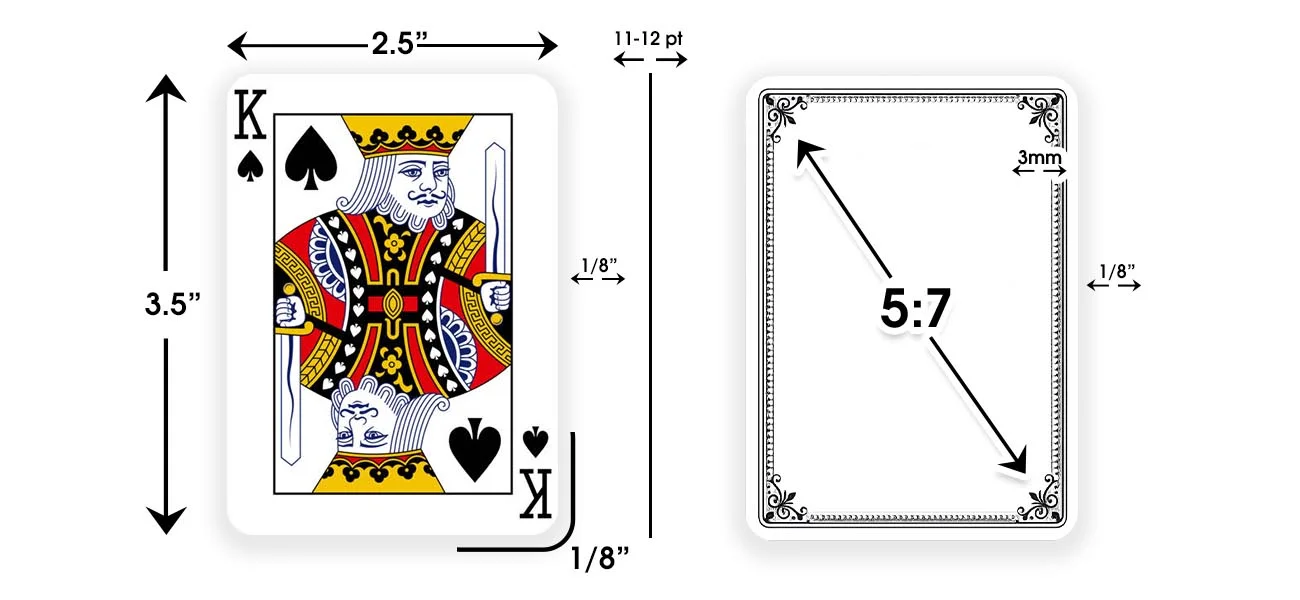
These define the base card format. They help in determining the hand feel and deck visibility. Moreover, they also make cards compatible with standard tuck boxes and shufflers.
Aspect ratio is a proportional relationship between width and height. It affects visual balance and artwork layout. It also determines how cards fan in the hand. However, the standard aspect ratio is considered 5:7, or 0.714.
Cards are manufactured and printed as rectangles at a sharp 90-degree angle. But then rounded at the corners using a die cut. The corner radius influences the shuffle smoothness. It also increases the wear resistance, actuated ability, and player comfort and increases card thickness, caliper, or GSM.
The thickness of the cards determines how stiff your playing card would be. It affects the snap and longevity of your cards. It also makes sure that the total deck height and the box dimension match each other. The card thickness is usually measured in
Pt (points)
GSM (grams per square meter)
Standard poker cards are typically:
11–12 pt
300–310 GSM
This thickness gives the perfect balance between flexibility and strength. Moreover, casino cards are often slightly thicker and more rigid than retail decks.
This area is the external area of the playing card, which is left as a precaution. This area makes sure that no white lines show if the cutting moves get a bit irregular.
This is the final line, which comes after all the cutting is done.
The safe zone is an area which is has all the important content, like important numbers and symbols. This area has other features like images and logos.
There are two types of decks of cards. One has a total of 52 cards. This contains 4 suits of 13 and 2 jokers. And the second one has 56 total cards. This means they have 2 extra cards. These are also known as "gaff cards". These cards can be blank cards or promotional cards.
Below are some of the most common playing card sizes. These are given for general reference and quick comparison. These are standard dimensions that are mostly used in different games and regions. This makes them a reliable starting point for design and manufacturing planning.
But you can always go for custom dimensions and sizes based on your personal preference and gameplay needs. These sizes also affect branding requirements. If you are planning to create a standard or journal-style card deck. Then the sizes listed below can help you as a practical guideline for layout planning and printing setup.
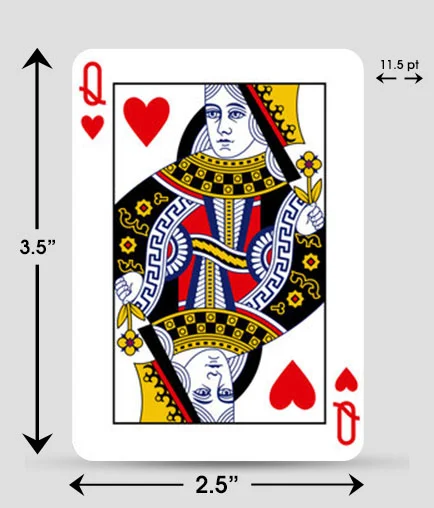
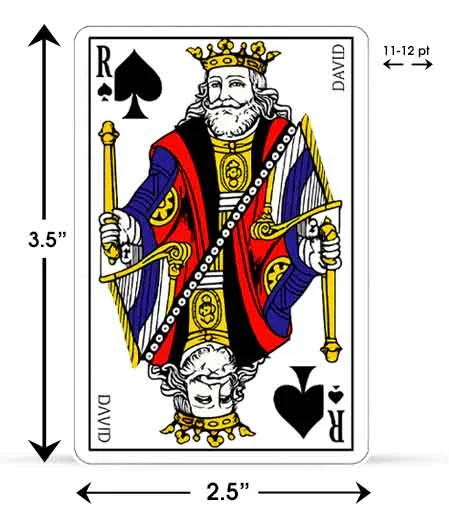
The poker card is the most common playing card around the globe. They are used because of their large face area, which makes them easier to read. Moreover, they are very comfortable cards for adults. And they are mostly used in games with cards on the table.
They are best for poker decks in Hold'em, blackjack, and card-based magic tricks.
Their dimensions in different units of measurement:
|
⬤ Poker Playing Card
|
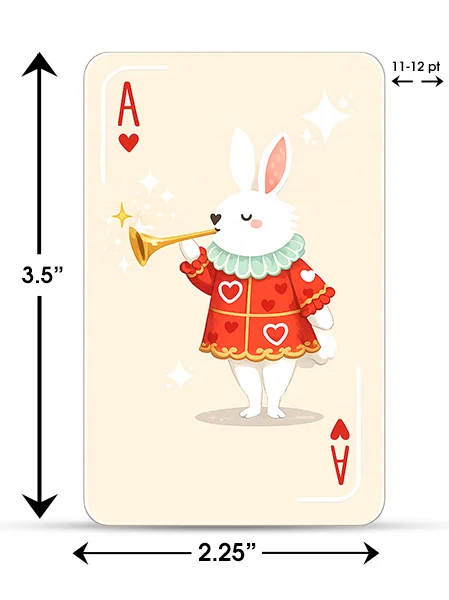
Bridge-size cards have a narrower width for shuffling multiple cards more easily. They are preferred by competitive bridge players because they cause less hand fatigue during long games. In casinos, bridge playing cards are preferred in games like Texas Hold'em. It is because of their easy shuffling and handling in large quantities.
Bridge card dimensions in different units of measurement:
|
⬤ Bridge Playing Card
|
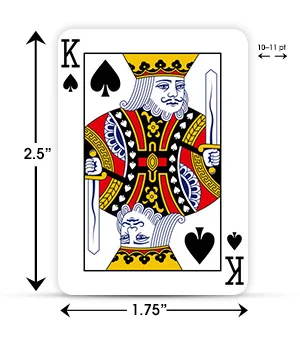
Mini playing cards are portable with a fun, creative appearance. They are very cost-effective for bulk printing and branding. They are perfect for travel decks and party favors.
Mini playing card dimensions in different units of measurement:
|
⬤ Mini Playing Card
|
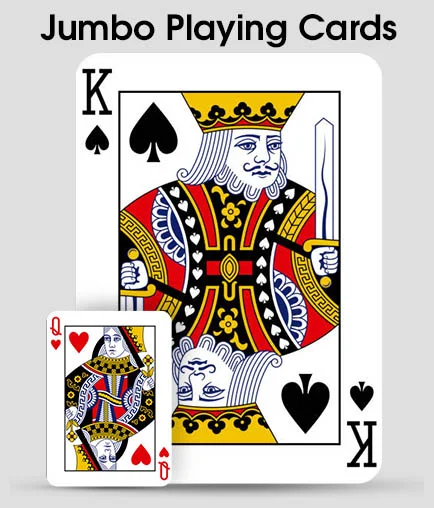
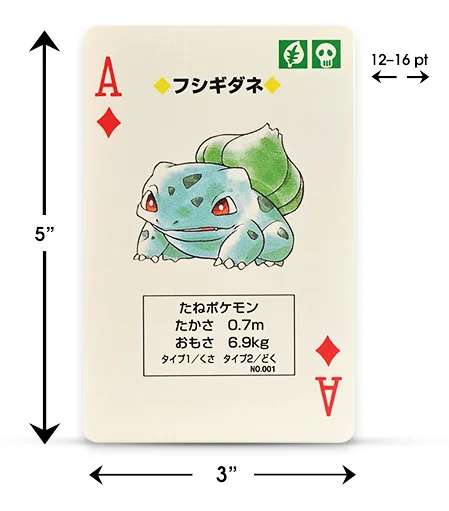
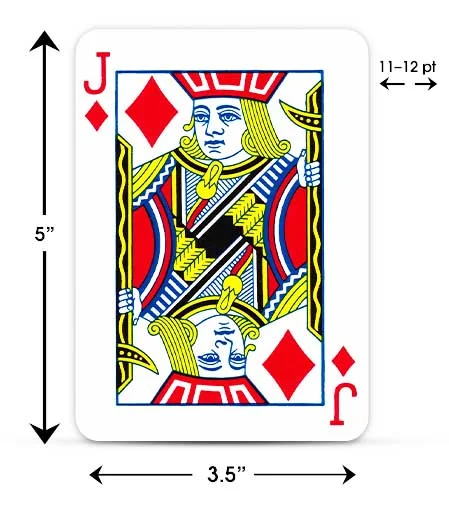
Jumbo playing cards are famous due to their extra-large sizes and printed numbers & symbols that are easily seen from a distance. They are helpful for visually impaired players who want to learn and view the game. They are ideal for classrooms, playgrounds, and groups where kids join and play games.
Jumbo playing card dimensions in different units of measurement:
|
⬤ Jumbo Playing Card
|
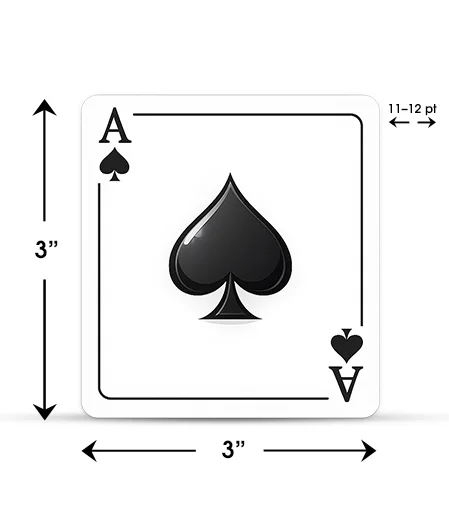
Square cards have different but the best geometrically shaped design layouts that seem perfect visually. All sides have the same length, which shows the amazing organization of the cards. A different design can provide you with strong brand recognition and become a branding and marketing tool. They are ideally used in novelty board games and internal-style decks.
Square playing card dimensions in different units of measurement:
|
⬤ Square Playing Card
|
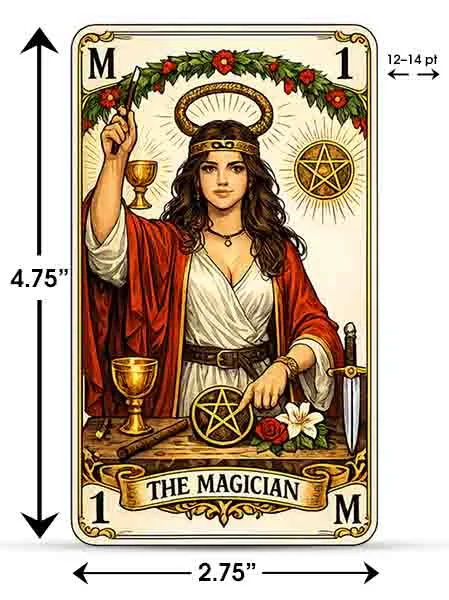
Tarot cards are used for divination and spiritual practices. They come in larger sizes for very detailed drawings with small and meaningful design elements.
Tarot card dimensions in different units of measurement:
|
⬤ Tarot Playing Card
|
These playing cards are very easy to hold, and they are easily shufflable. They are the perfect choice for hand games and table games. They have clear symbols and numbers. This makes them perfect cards for games like Skat and Belote. Many families use them for Scopa and Jass games for fun and casual play at home.
European playing card dimensions in different units of measurement:
|
⬤ European Playing Card
|
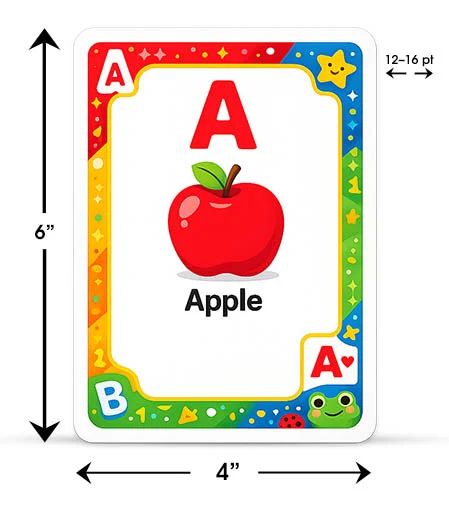
They are very kid-friendly cards that can be easily handled by children. They have more spaces for visuals and texts. They are mainly used for skill development for kids and learning alphabets, numbers, or shapes. They are mostly used in classroom activities.
Educational playing card dimensions in different units of measurement:
|
⬤ Educational Playing Card
|
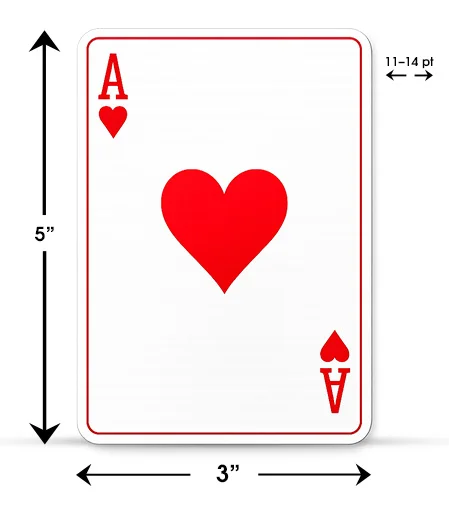
Trump cards are those cards that fit detailed information and images. They are durable for repeated use because they're easy to hold and compare. Moreover, they are used in family games and school games, like kids' comparison games. They are printed with images of animals, vehicles, facts, etc.
Trump playing card dimensions in different units of measurement:
|
⬤ Trump Playing Card
|
Flash cards are bigger cards that provide more readability and have enough space for questions and answers. Moreover, they are very easy to organize and carry. They are commonly used for study and review purposes. They also come for language learning, training, and presentation purposes.
Flash playing card dimensions in different units of measurement:
|
⬤ Flash Playing Card
|
Double poker card size is ideal for instructional settings because they provide improved visibility and is easier for group play. They are commonly used for promotional or novelty decks. They are also used in games that need larger visuals for teaching and demonstration.
Double poker playing card dimensions in different units of measurement:
|
⬤ Double Poker Playing Card
|
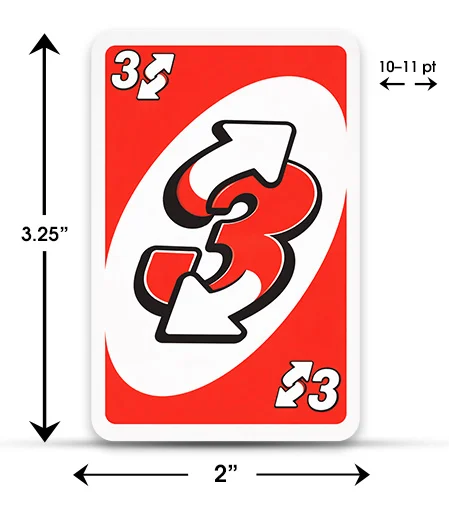
These playing cards are only made for home games. Some very common game-playing cards are Pinochle cards and UNO playing cards. These are used as both traditional playing card decks and specialized game-based card sets. These games are different because they have their own rules, card symbols, and colors. These cards are available in various sizes and finishes to enhance their appeal.
Gaming playing card dimensions in different units of measurement:
|
⬤ Gaming Playing Card
|
Note: Trading Card Games (TCG) like Magic: The Gathering use standard poker dimensions (2.5 x 3.5 inches). Whereas games like Yu-Gi-Oh! cards are smaller. They measure 2.31 x 3.37 inches (59 x 86 mm).
Custom-shaped cards are different from regular square cards. They are made according to your brand requirements and theme. They are more fun and attractive than standard cards.
Custom cards can be made in many shapes, including
Square cards (e.g., 3 × 3 inches)
Circular cards
Oval or rounded-edge cards
Die-cut shapes (logos, icons, characters, symbols)
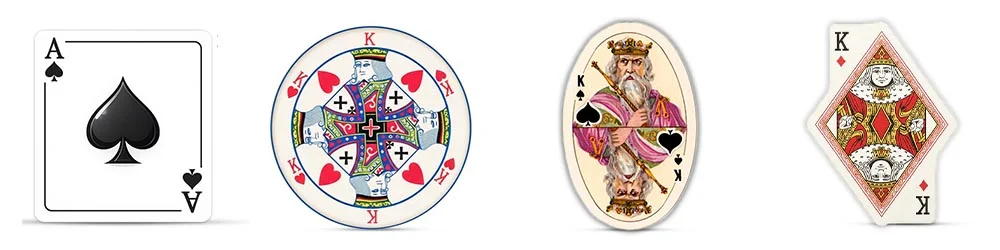
These shapes are created using die-cutting for precise and consistent edges. Custom-shaped playing card dimensions do not follow fixed sizes. Some common sizes in different units of measurement:
Small custom cards: 2.5 – 3 inches
Medium custom cards: 3 – 4 inches
Large custom cards: 4 – 6 inches
Note: If you are looking for an expert manufacturer to customize game boxes or sports boxes for your gaming products, then you can always rely on MyBoxPrinting for a specialized production experience and design support. We offer structural sizing to material selection and high-quality printing finishes with branding options to elevate your small or large business.
The table below shows the most commonly used playing card sizes worldwide. The measurements are given in inches, centimeters, millimeters, and pixels. This will give you a precise design and print reference.
These are standardized formats that help designers, manufacturers, and game creators maintain the accuracy and consistency between production and gameplay requirements.
| Playing Card Sizes Chart | ||||
|---|---|---|---|---|
| Name | Inches | Centimeters (cm) |
Millimeters (mm) |
Pixels (300 DPI) |
| Poker Cards | 2.5 x 3.5 | 6.35 x 8.89 | 63.5 x 88.9 | 750 x 1050 |
| Bridge Playing Cards |
2.25 x 3.5 | 5.72 x 8.89 | 57.15 x 88.9 | 675 x 1050 |
| Mini Playing Cards |
1.75 x 2.5 | 4.45 x 6.35 | 44.45 x 63.5 | 525 x 750 |
| Jumbo Playing Cards |
3.5 x 5 | 8.89 x 12.7 | 88.9 x 127 | 1050 x 1500 |
| Square Playing Cards |
3 x 3 | 7.62 x 7.62 | 76.2 x 76.2 | 900 x 900 |
| Tarot Cards | 2.75 x 4.75 | 7 x 12 | 70 x 120 | 825 x 1425 |
| European Playing Cards |
2.5 x 3.5 | 6.35 x 8.89 | 63 x 88 | 750 x 1050 |
| Educational Cards |
4 x 6 | 10.16 x 15.24 | 102 x 152 | 1200 x 1800 |
| Trump Cards | 3 x 5 | 7.62 x 12.7 | 76 x 127 | 900 x 1500 |
| Flash Cards | 3 x 5 | 7.62 x 12.7 | 76 x 127 | 1050 x 1500 |
| Double Poker Cards |
3.5 x 5 | 8.89 x 12.7 | 89 x 127 | 1050 x 1500 |
*PPI (pixels per inch) = DPI (dots per inch) = Resolution
300 PPI is the best printing resolution of a digital printer.
Note: If you need more technical guidance on the size of playing cards in inches, you can find an expanded explanation in a detailed playing card dimension guide available on MyBoxPrinting.
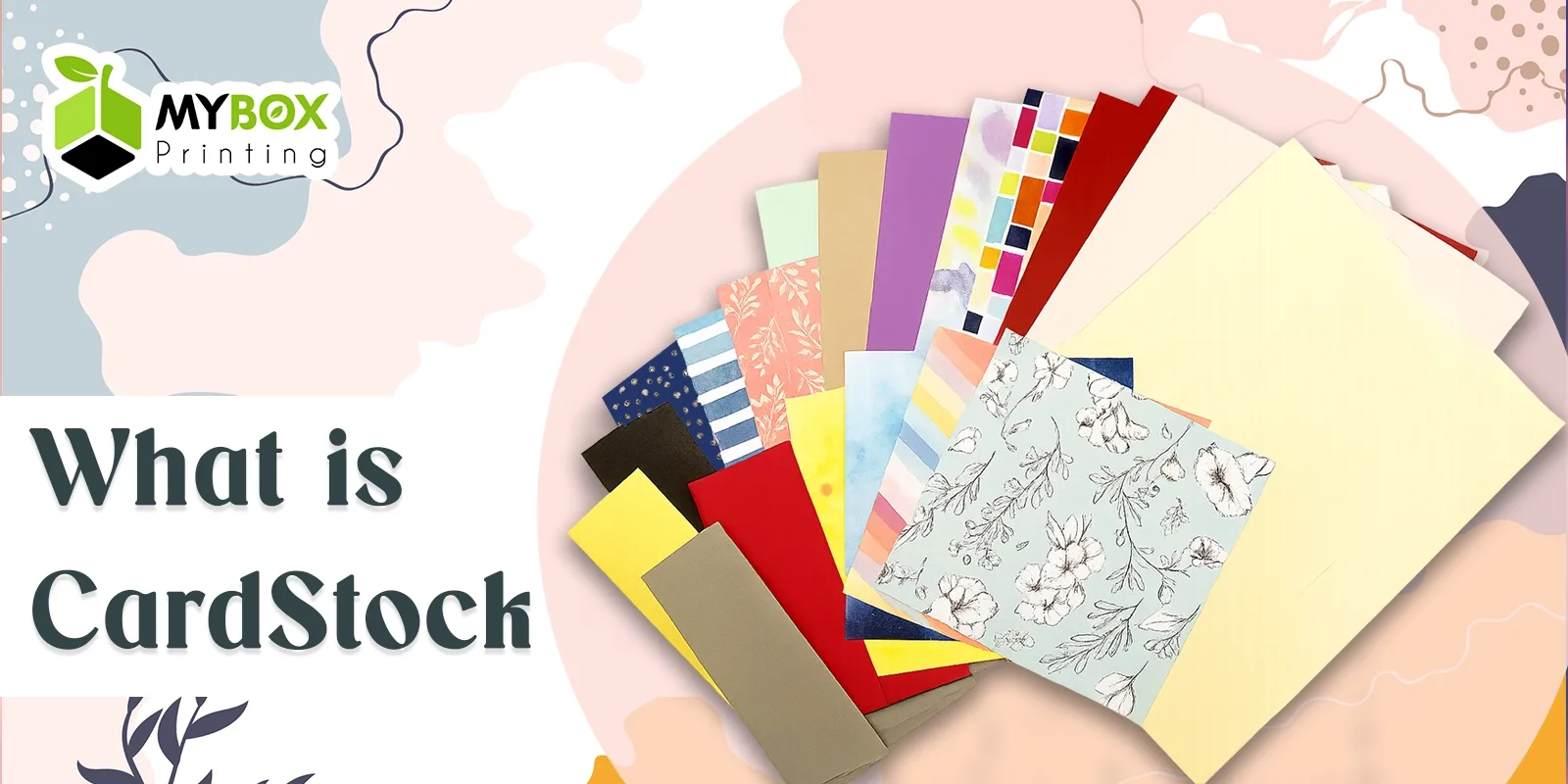
The thickness of a playing card's material is crucial in determining its feel, durability, and ease of shuffling. There are many playing cards that are made from layered paper cardstock that is not cardboard.
The cardstock is a thicker material that prevents seeing through and provides complete privacy to the players. Moreover, thick material increases the customer gaming experience by offering luxury and a smooth feel.
Card size works hand-in-hand with cardstock thickness, and they are mostly overlooked.
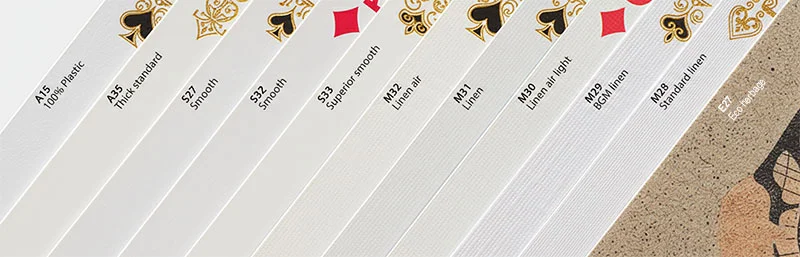
Standard thickness: 280–310 GSM
Casino-grade cards: Plastic, cardstock, or PVC
Premium decks: Linen finish or air-cushion coating
Below are the most common cardstock types used in the gaming industry with their approximate thicknesses.
It is a very popular paper-based cardstock with approximately 0.33 mm thickness. It is used in board games and playing cards. It has a light linen texture on the surface, which makes the shuffling of the card smoother.
These cards include a blue core layer in the middle. This helps reduce see-through and keeps the card fair during gameplay. They are best for board games, custom card games, and everyday playing cards.
The thickness of Premium Smooth (PS30) is approximately 0.33 mm. It is one of the most commonly used smooth cardstocks. It has a long, textured surface, which is flat. This makes it ideal for clean designs and imaging details.
It also includes a blue core, which gives it thickness and prevents transparency. These are best for playing cards with photos or artwork designs. They are used as a premium promotional card for weddings and events.
DS33 is one of the best cardstocks available, with approximately 0.31 mm thickness. It is a very high-quality smooth cardstock, which is famous for its sharp print quality and rich colors.
These cards are very durable and feel very refined. They provide better visual contrast than standard stocks. They are best for high-end games and projects with premium visual quality.
Casino Linen (CL31) has an approximate 0.31 mm thickness. These are also premium cardstocks with linen texture and tiny air pockets. This increases the durability and shuffling performance.
Moreover, it has a dark black core, which completely blocks the light and prevents any chance of seeing through the cards. They are best for high-end gaming projects for professional players, and they are used in casino-style deck games.
Note: If you want to learn more about cardstock in depth, you can read our expert material guide on What Is Cardstock & Its Types for intensive information.
In Asia, the playing card sizes vary according to the region. Mahjong decks and hanafuda cards are used because of their unique features and dimensions. Moreover, their format also differs from Western cards. Additionally, mini cards are also popular for travel and compact table games because they can be used while traveling.
In the United States of America, the most widely used playing card format is poker size, and it is used in games like poker, blackjack, and Texas Hold'em. Moreover, there are also some card sizes like jumbo cards, which are very popular among family gatherings, senior players, and magic shows because of their large size. They give them an easy way to hold and read.
In India, Ganjifa cards are the traditional playing cards that have a circular shape rather than a rectangular one. These cards are mostly hand-painted with intricate designs, and they depict themes from Indian mythology and history. These playing cards have cultural significance, and they are quite functional for Indian gameplays.
In European countries, people prefer slightly narrow playing cards like bridge-size cards. These are well-suited for traditional European card games, which require holding multiple cards at once. Moreover, tarot cards are also widely used in Europe because of card reading culture and artistic and historical designs.
Note: At MyBoxPrinting, we have spent years mastering the art of manufacturing playing card boxes and playing cards that fall under the U.S. Consumer Product Safety Commission (CPSC) and the Nevada Gaming Control Board.
Creating professional-looking playing cards is a nice art. You can give your customers a combination of design, functionality, and usability. It will not only improve your brand image in the market, but it will also bring you more sales. Because what we need in life is just not simplicity.
In fact, it's a whole new change that lightens the sad lives of people. So you can bring a moment of joy and happiness in the life of your customers by providing them creative and eye-catching designed playing cards. Some design tips are mentioned below
You can add options like enhanced resolution and image quality. In this, you can design your cards at 300 DPI for a sharp and professional look. Moreover, you can avoid low-resolution images that will prevent blurry or pixel-related prints.
For example, a poker card should be 750 into 1050 pixels.
You can include a bleed area of 0.125 inches. It will prevent edge cropping. Moreover, you can keep the text, logos, and essential elements inside a safe zone, which is within the card border. This will ensure that important details aren't cut off during trimming.
You can use bold and clear fonts for numbers, suits, or keyboards. This makes sure high contrast between text and background for readability. This not only avoids overlaying decorative fonts but also makes numbers or letters hard to read during gameplay.
We always go for symmetrical or mirror designs that are preferable for poker, bridge, or standard decks. It avoids revealing card orientation and keeps the pattern consistent. Moreover, it gives a visually attractive appearance without distracting from the game.
Our suggestion: "We suggest that you should always go for bright and clear colors for artwork. But make sure that they do not interfere with the readability."
A healthy tip: "You should avoid clashing colors between numbers and symbols and the background. And always consider color-blind-friendly patterns for more accessibility."
Always use cardstock and finish it like linen, smooth, or plastic when you're designing the deck of cards. Because dark or highly detailed designs may look different depending on the finishes.
A Pro Tip: "Always test your design mockups on similar material to check contrast and clarity."
You should always keep illustrations and icons centered and proportionate and avoid placing important artwork too close to edges or corners. You should make sure to maintain a consistent space for numbers and suits across all the cards in your deck.
Our Suggestion Based on Our Manufacturing Experience: Always make sure that all cards in the deck follow a consistent style for colors, iconography, and typography.
Outcome of This Suggestion: This will create a professional and visually appealing look and improve your customer trust in your brand by having attractive and eye-catching cards.
Always print a mock deck first to check size, readability, and shuffle feel. It will help you identify design issues before mass production, and it will save you a lot of money during production.
Designing playing cards is not difficult, but it requires a balance of artistic creativity and functional usability. At MyBoxPrinting, we make sure to provide you with well-designed cards that not only look great but also give comfort to the hand of your customer. They are easy to read. Moreover, you can gain more customer satisfaction, which will lead to more sales in your business. If you provide them with cards that will perform well during their gameplay.
Understanding playing card sizes is more than just knowing measurements. It starts from selecting the right dimension, which is done by considering that the playing card size will be functional for the customers. And it will provide comfort to the design, which will impact their mind and their purchasing decision.
The key takeaway: The right card size makes your deck look more beautiful. It enhances your customer’s playing experience and justifies its manufacturing.
Our Suggestion: We recommend that you understand the dimensions and sizes of decks properly, whether you are a custom deck designer or a deck brand. This is the key to making your cards more eye-catching and ensuring their high quality.
The most common standard size is poker size, which has a measurement of 2.5 x 3.5 inches, which becomes 63 x 88 millimeters. And it is widely used in casual games and in casinos.
The main difference between poker-size and bridge-size cards is that poker-size cards are slightly wider, that is, 2.5 inches. Whereas bridge cards are narrower at 2.25 inches. But they have the same height, that is 3.5 inches. Moreover, bridge-size cards are very easy to hold for players with smaller hands.
Tarot cards have a standard card size of around 2.75 x 4.75 inches, which becomes 70 x 120 millimeters. You need to know that they are larger than regular playing cards and allow more detailed artwork and symbolism.
No, the casino playing cards have the same standard poker size, that is, 2.5 x 3.5 inches. The only difference is that they are made strictly according to the regulations set by gaming authorities such as the Nevada Gaming Control Board.
It depends on the purpose for which you are customizing your cards. If you want a versatile and widely accepted card, then you should go for poker size. If you want easier handling, then you should go for a bridge size. And if you are focusing on artwork, then you should go for tarot size. And if you are manufacturing cards that are mainly for travel or novelty use, then you should go for the mini size.
For professional printings, you can always go for 300 DPI resolution with a proper bleed of 3mm. And you should also go for safe margins to avoid cutting off important design elements.
Most common playing cards are made from 300 to 330 GSM cardstock, which also has a protective coating. This makes sure shuffling is smooth and long-lasting.
You can always rely on a trustworthy manufacturer, MyBoxPrinting, for the most affordable rates and discounted prices. We offer wholesale pricing on bulk quantity and we provide free shipping and free sample kits.
Well, this is a partial truth because different materials only affect the thickness, weight, and durability of the cards, but the standard length and width remain the same. Moreover, thicker plastic materials can slightly increase the overall deck height.
Bridge-sized cards are commonly used for different games like bridge, rummy, spades, hearts, and gin rummy. These cards are used in all of these games because of their narrower width. This makes them easier to hold when players have to manage multiple cards in their hands at a time.
Domino cards are made approximately 59 mm x 91 mm, which becomes 2.32 inches x 3.58 inches. These cards are slightly narrower and taller than standard poker-sized playing cards.
A standard deck has 52 playing cards, and they are divided into four suits, which are clubs, diamonds, hearts, and spades. Then each suit contains 13 ranks, which include number cards from 2 through 10. Moreover, it has one ace, and three face cards, which are king, queen, and jack.
In this expert guide, we learn about all types and sizes of playing cards that are used in different games and tournaments all around the world. We also explored how the corner radius, bleed area, and other small details affect the sizes and designs of playing cards. After getting all the knowledge about technical terms, we are now able to design a professional and innovative deck of cards by ourselves.
At MyBox printing, we customize each size of card to offer your customers unique and sustainable options for different games in different regions. We customize every card, which offers a lot of advantages. Our cards are easier to handle and give your customers better visibility. Moreover, we manufacture cards that have enhanced artwork space to increase their playing experience.
We offer our customers perfectly sized playing cards, which are manufactured with proper sizing and thoughtful designs. We use eco-friendly and sustainable materials, which are FSC certified, to make sure that your playing cards are both functional and impressive.
"We are ready to deliver enjoyment and creativity that lasts longer with your values and your brand identity."