If you run a food business or a restaurant, you may relate to this: choosing the right meal prep containers is more challenging than choosing the recipe itself. The containers are as important as the recipe when you are prepping meals. Without leakproof, durable, and perfectly sized containers, your perfectly prepped meal can’t be saved from turning into a mess.
Whether you are planning and preparing meals for your restaurant or food truck, you need containers. If you are roaming around, finding the right containers for the preparation of dishes and recipes, don’t stress out.
In this blog, we are going to find out the best meal prep containers for all types of food items. We will explore the best container options for your soups, salads, casseroles, snacks, and other edibles in terms of size, material, and type. Let’s get started!
Why Choosing the Right Meal Prep Container Matters More Than The Brand
Your customers remember the presentation and functionality of the containers you use, not just the brand name from where they are sourced. So instead of chasing brands, choose containers that meet the food safety standards and are leakproof and durable. When you are choosing the prep container, you need to focus on these factors:
Functionality: Choose leak-resistant, durable, and efficient containers over the branded ones to improve your workflow.
Compliance with FDA and USDA Regulatory Standards: Choose containers in food-grade and BPA-free materials certified by the FDA (Food and Drug Administration) and USDA (United States Department of Agriculture).
Cost Efficiency: From a business perspective, choose durable containers with a long lifespan. These containers must be durable enough to withstand daily kitchen use. Your cost will be reduced, as you will not need to.
What Factors To Look For In A Meal Prep Container?
When you visit the market to purchase meal prep containers, there are thousands of containers available. They have multiple features that are not necessary for your meal preparation needs. But some of the factors that are non-negotiable are listed below:
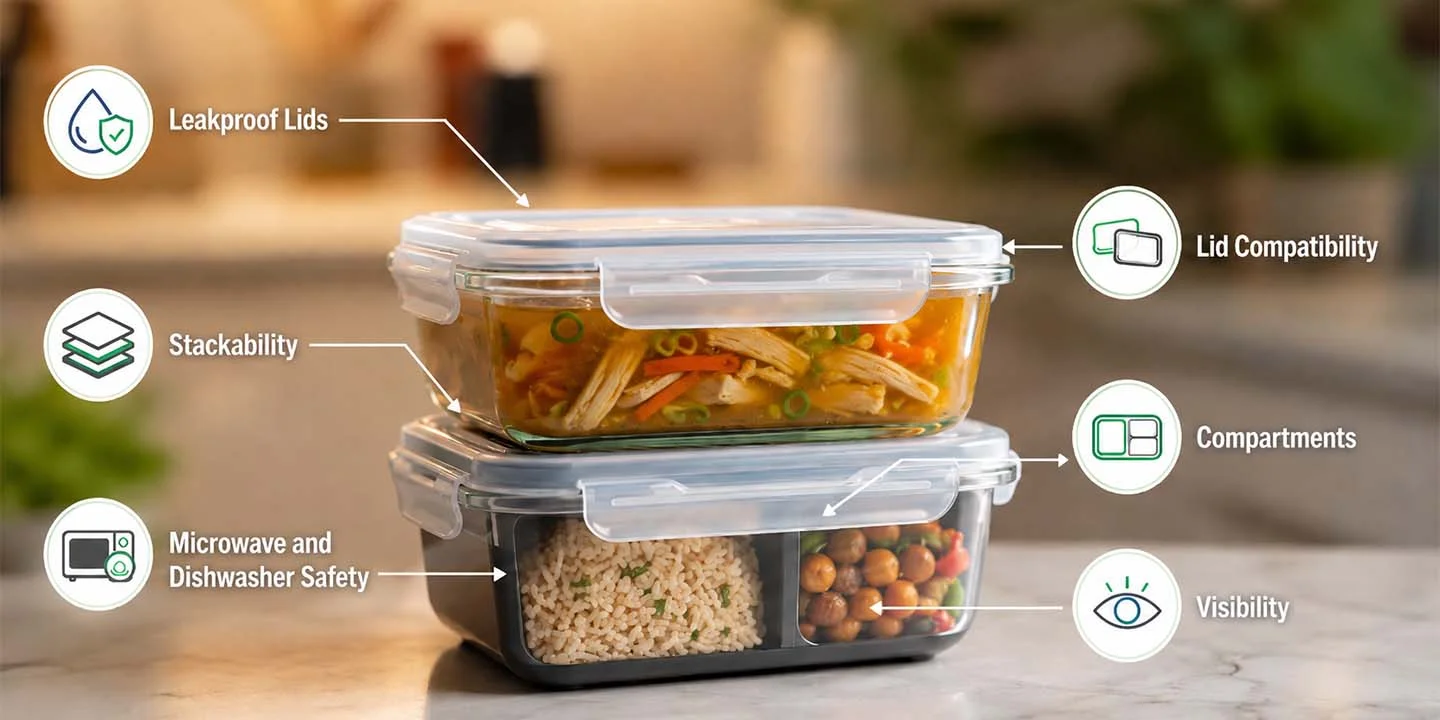
Leakproof Lids
If the containers are leaking when tilted or flipped, they are of no use. The containers must have leakproof lids that do not let the contents leak or spill. You must choose boxes with 4-sided snap-lock lids that have silicone gaskets over push-on lids.
Stackability
Space efficiency also matters when you are handling multiple containers. Choose square or rectangular containers instead of round ones, as they take 30-40% less space. When they are empty, they must be nested, and when filled, they must be stacked to manage the space efficiently.
Microwave and Dishwasher Safety
The container you use for reheating and microwave purposes, you must choose boxes with microwave-safe and oven-safe ratings for glass. It must also have symbols of dishwasher-safe; otherwise, they will not be safe for dishwashing and heating in the oven.
Lid Compatibility
Lid compatibility is another factor that most people often overlook. The lids of the containers can be damaged, and if you didn’t find the exact-sized lid, your container will be a waste. Opt for containers for which you can find the interchangeable lids easily.
Compartments
It’s always better to choose containers with compartments, as they help you organize food better. If you want to store bulk grains or proteins, a single-compartment box is enough. If you want to include salads and other items separately, choose 2 or 3-compartment boxes.
Visibility
Visible boxes or containers are far better than opaque ones. They let you see the contents of the box without opening the lid, so you never forget eating your food. Your prep food never goes to waste this way.
These are the factors you must not compromise with for your containers if you want a smooth meal prep experience. We have discussed above that there are thousands of containers in the market, but what are their types? Let’s discuss below:
Types Of Meal Prep Containers
Meal prep containers are available in different types and styles designed to cater to specific meal prep and storage needs. Based on these needs and preferences, the containers for meal prep are organized into the following types:
Food Containers With Compartments
One of the best things a container can have is the compartments that let you organize multiple food items separately. You can have a container with single or multiple compartments, depending on your needs.
Single Compartment Food Containers
If you want to store casseroles, pasta, grain bowls, or a full meal up to 4 cups, these boxes are for you.
2-Compartment Meal Prep Containers
These are the containers with one large compartment (2 cups) and one small compartment (1 cup). They facilitate you to keep carbs and proteins separate but in the same space. You can store the Butternut Squash Cranberry Skillet and the Sesame Chicken & Broccoli in these boxes.
3-Compartment Containers
If you want to store or serve veggies, in addition to the carbs and proteins, 3-compartment containers have your back. They contain one large compartment (2 cups) and two small compartments (each of 1 cup). Some examples of meals you can store and serve include Apple BBQ meatloaf and pesto chicken.
Liquid and Speciality Containers
One of the biggest challenges of meal preparation is handling liquid meals such as soups, custards, and smoothies. You need containers that can handle movement, temperature variation, and portion control. The following two options can be used for liquid and semi-solid meals:
Soup Cubes Freezing Tray With Lid
These meal holders or trays are often made of plastic and silicone material designed to store pre-measured portions of liquids and semi-liquids. Instead of storing soups and similar foods in a single container, store soups in each pre-measured portion of the tray. So you can just pop out the required amount only, while the remaining soup or liquids will be preserved.
They come in 2-tablespoon, 1/2-cup, 1-cup, and 2-cup molds that you can cover with lids. So, you can prepare and freeze lots of different things, such as cubes of olive oil, fresh herbs, and servings of stew or soup.
Round Containers
The round containers can either have a single compartment or multiple compartments, like a dinner plate with balanced portions. The sections have a space for one cup of food. These containers are best for chimichurri steak, salads, or salmon with fruit.
Snack Containers
These boxes are small two-compartment containers that facilitate your snack storage, portion-controlled sides, or lunchbox extras.
Quart Canning Jars
If you want a container for preserving, pickling, and storing food in a 32-ounce amount, quart canning jars are the best option. You can store different items such as green beans, tomatoes, soups, and applesauce. You can even use them for storing bulk dry goods like rice and pasta. They are the best jars for pickling.
Mason Jars
Mason jars are soda-lime glass jars that are known for their strength and durability. They have metal or plastic lids that ensure an airtight seal to preserve the freshness of the contents. You can have them in different sizes, from 8 oz to 128 oz.
You can choose any of these food containers according to your meal preparation needs. For canning and pickling purposes, glass jars are the best option, while for other meals, you can go for compartment containers.
Disposable vs Reusable Meal Prep Containers
Whether you choose disposable or reusable containers entirely depends on your usage and needs, in addition to the cost. Let’s compare both options so that you can decide which one you should go with:
| Disposable vs Reusable Food Containers | ||
|---|---|---|
| Factors | Disposable Options | Reusable Options |
| Material | Paperboard, plastic, foil | Glass, stainless steel, plastic, and silicone |
| Upfront Cost | Very low | Higher investment initially |
| Long-term Cost | High as they are replaced frequently | Low cost, as they have a long lifespan |
| Durability | Low | High |
| Food Freshness | Freshness is preserved, but there is a high risk of leakage or spilling | Airtight seals preserve food and prevent any leakage |
| Portability | Highly portable due to their lightweight and compact design | Depends on the material you choose. Plastic containers are easily portable, while glass containers are not. |
| Convenience | No cleaning or tracking required. Short-term use. | Need to be washed and stored. Long-term use. |
| Heat Resistance | Disposable options have limited heat resistance as they warp under high heat. | Glass and stainless steel are highly heat-resistant. |
| Sustainability | Paperboard is sustainable, while other options like plastic and foil are less sustainable and contribute to waste generation. | As they are reusable, they are more sustainable. |
| Best Use | Single-serve applications, such as takeout and distribution. | Long-term personal and business use. |
If you want short-term convenience, go for disposable options. But if you want a long-term solution, reusable containers are recommended.
Common Sizes For Meal Prep Containers
Most businesses/people commit the same mistake. What mistake? They buy a single container and try to put everything into it while expecting it to work for them. But that’s not the right approach, as every meal is different and has different storage and preservation requirements. The following table gives you the container size guide:
| Food Container Sizes and Meal Types | ||
|---|---|---|
| Size | Meal Type | Quantity |
| Small | Snacks, dressings, dips, sauces, nuts | 1-1.5 cups / 8-12 oz |
| Medium | Single-serve lunches, grain bowls, salads | 2-3 cups / 16-24 oz |
| Large | Family portions, soups, stews, casseroles | 4-6 cups / 32-48 oz |
| Extra Large | Batch cooking, storage, marinating, and big salads | 8+ cups / 64+ oz |
If you are looking for custom-sized meal prep containers, MyBoxPrinting is here to help you. Just share your requirements, and your containers will be delivered to you.
The Common Materials Used For Meal Prep Containers
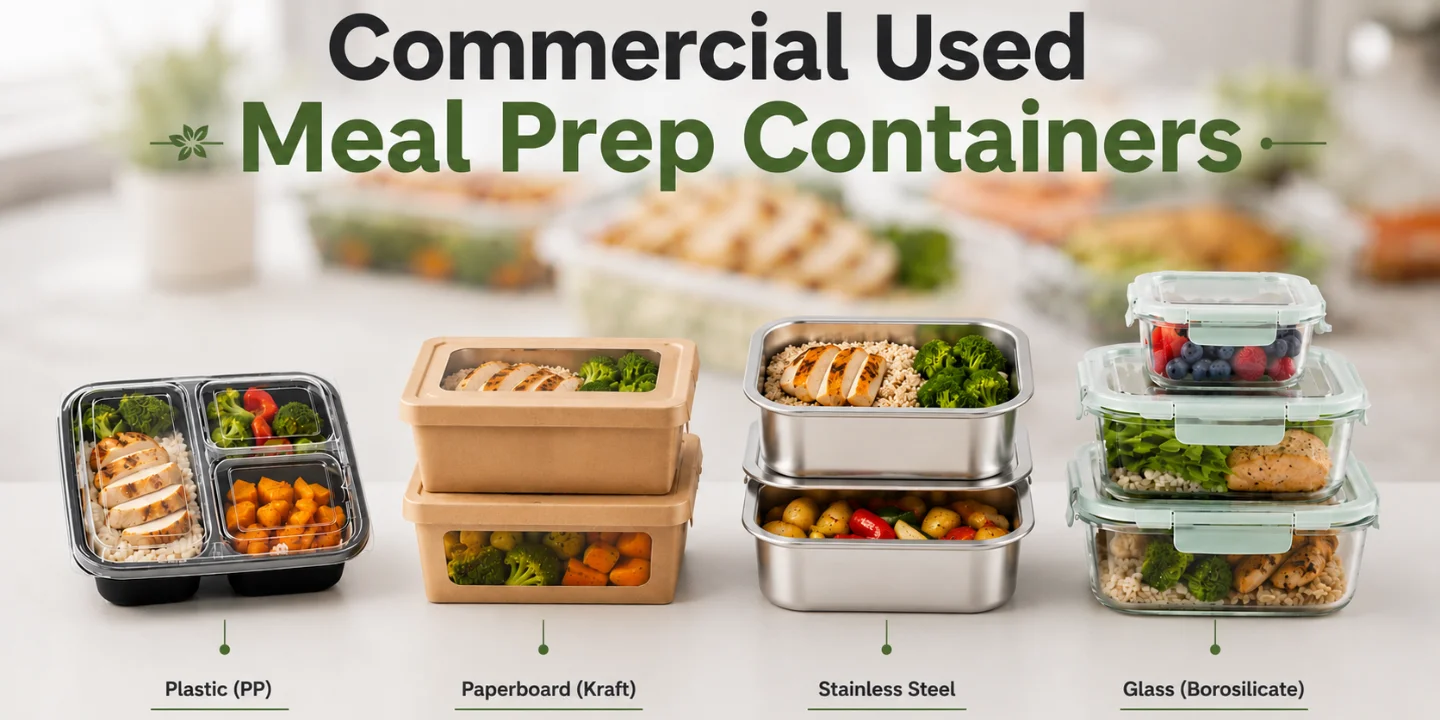
Plastics, glass, stainless steel, silicone, and last but not least, paperboard are the common materials used for meal prep containers. The choice of materials depends on certain factors such as use, durability, portability, and cost. Let’s understand each container material so that you can make an informed decision:
Plastic
Plastic is one of the most common material choices for food containers. The reason is obvious that plastic containers offer the convenience of carrying and daily use at an affordable price, as they are lightweight.
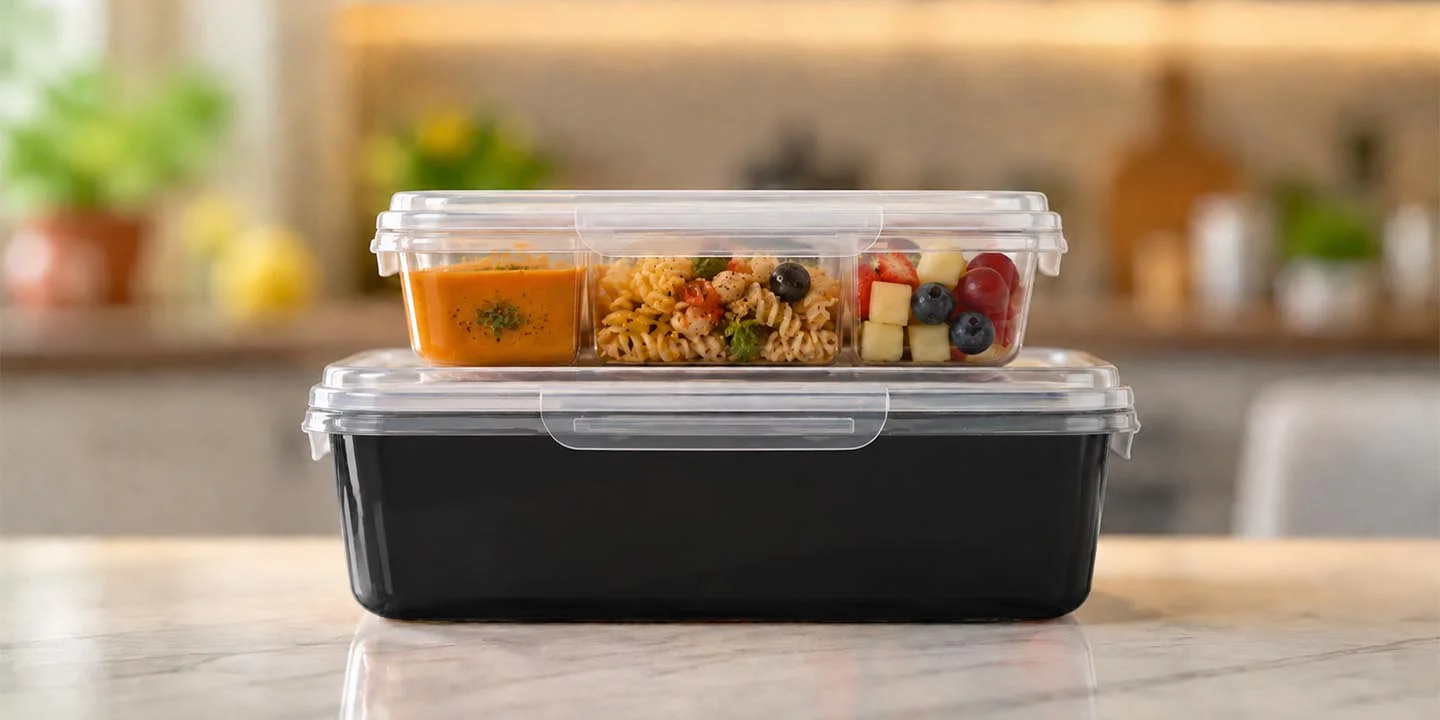
But at the same time, this material is a less sustainable choice as it warps over time and needs to be changed frequently. Moreover, on recycling, they can leach harmful chemicals into the environment.
Plastic can be a practical choice when you want food containers at a budget-friendly price for short to medium-term use. Don’t use it for long-term use, as it can be harmful to your health.
Pros
+ Lightweight
+ Inexpensive
+ Shatterproof
Cons
+ Can leach chemicals
+ Stains easily
+ Absorbs food odors
Recommendation: Always use the BPA-free and food-grade plastics that do not contaminate your food.
Glass
If you are a prepper who prepares meals daily and doesn’t want to entertain food stains, glass material is for you. The glass containers are food-safe and non-reactive, which does not change the taste and flavor of your food.
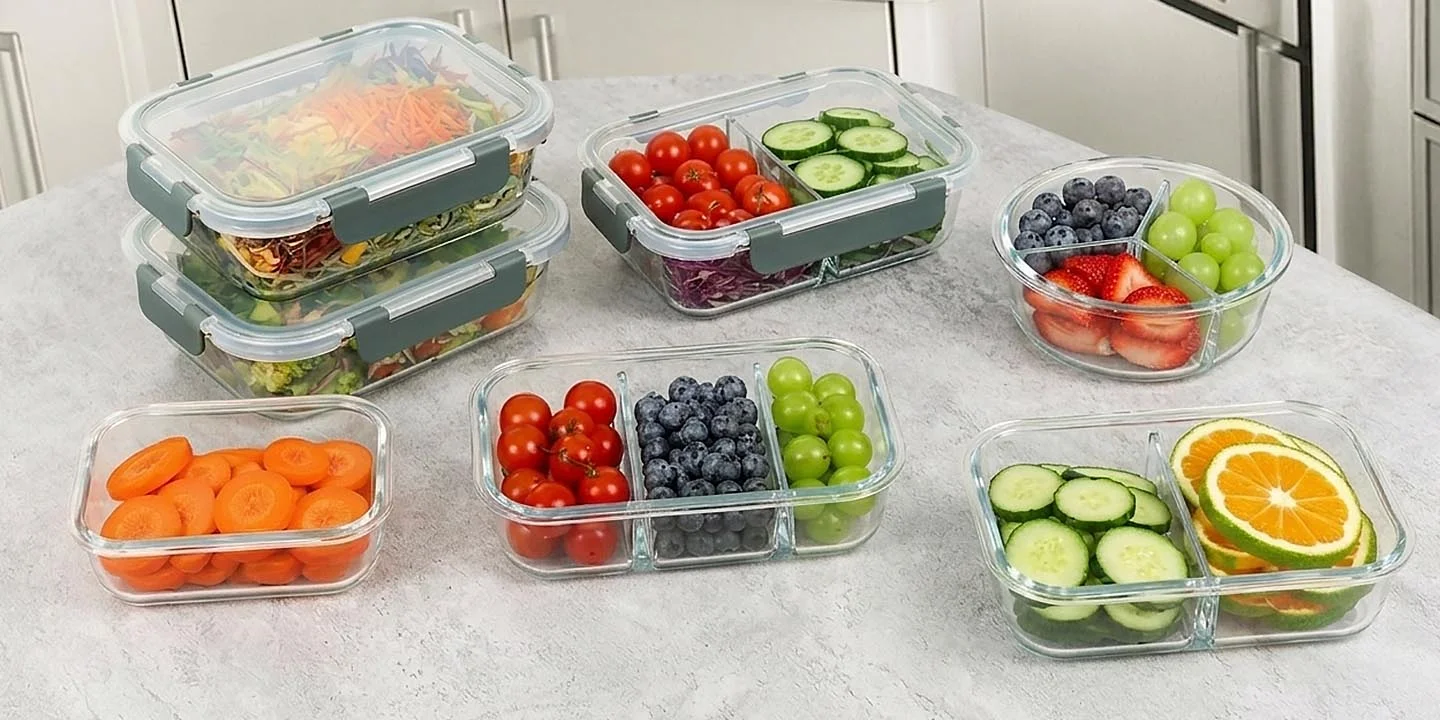
It’s a durable material that does not get stains and is also microwave- and oven-friendly for reheating purposes. The only problem with glass material is that it is fragile and can easily shatter or break if mishandled. Use tamper-proof glass containers when you are preparing food at home.
Pros
+ Microwave, oven, and dishwasher safe
+ Does not stain or retain odors
Cons
+ Heavy and expensive
+ Fragile and more prone to breakage
Recommendation: We recommend glass containers for food storage, such as mason jars, canning jars, and reheating in the oven or microwave.
Stainless Steel
Stainless steel is one of the best materials for food prep containers if you want to invest once and take advantage for years. The stainless steel containers are highly durable and do not retain odors and stains.
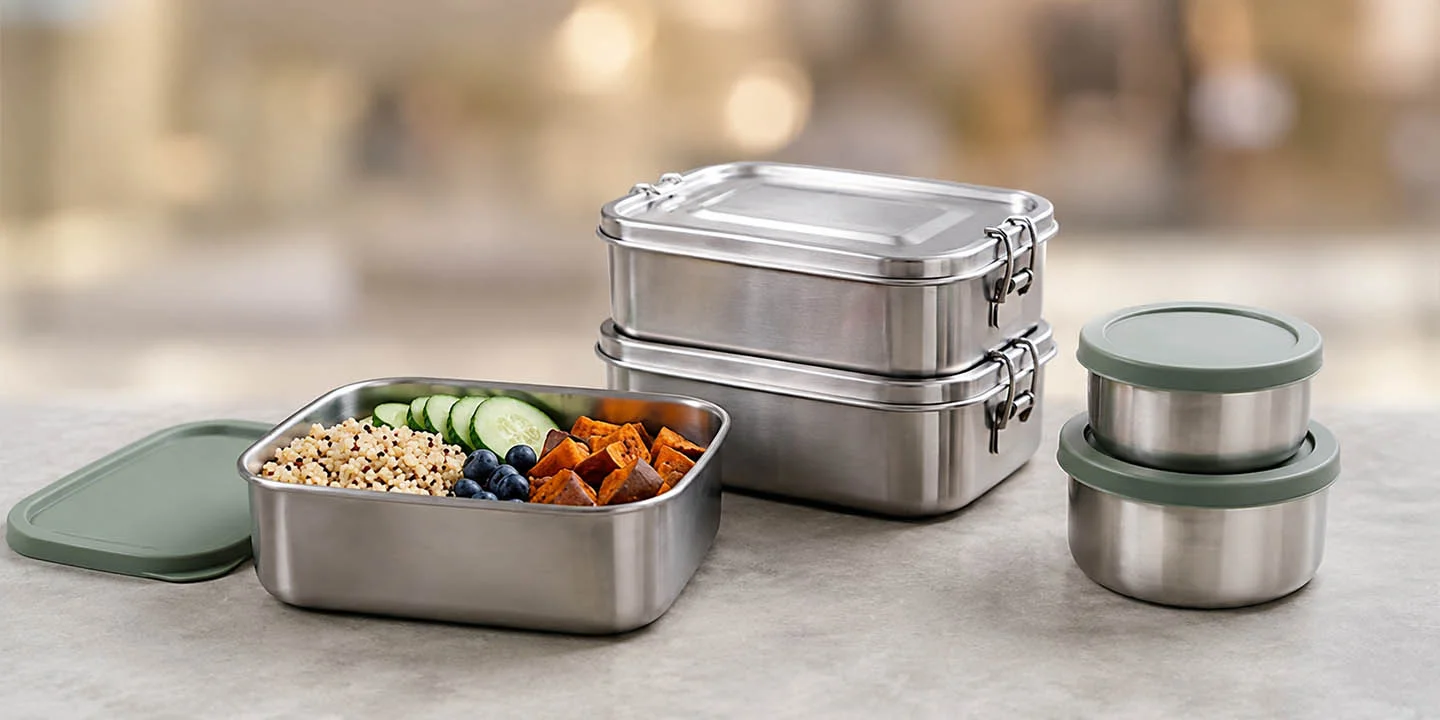
They are a low-maintenance solution for those who have consistent meal preparation routines. Like every other material, they also have cons, such as limited visibility, and are not oven- and microwave-friendly.
Pros
+ Lightweight and highly durable
+ Do not store odors and smells
+ Non-toxic and rust-resistant
Cons
+ Expensive
+ Not oven and microwave-safe
+ Visibility is limited due to an opaque surface
Silicon
Silicon material is the best alternative to plastic, as it is a lightweight and flexible material. Containers made with these materials are collapsible and have a space-saving design, which makes them best for traveling and on the go.
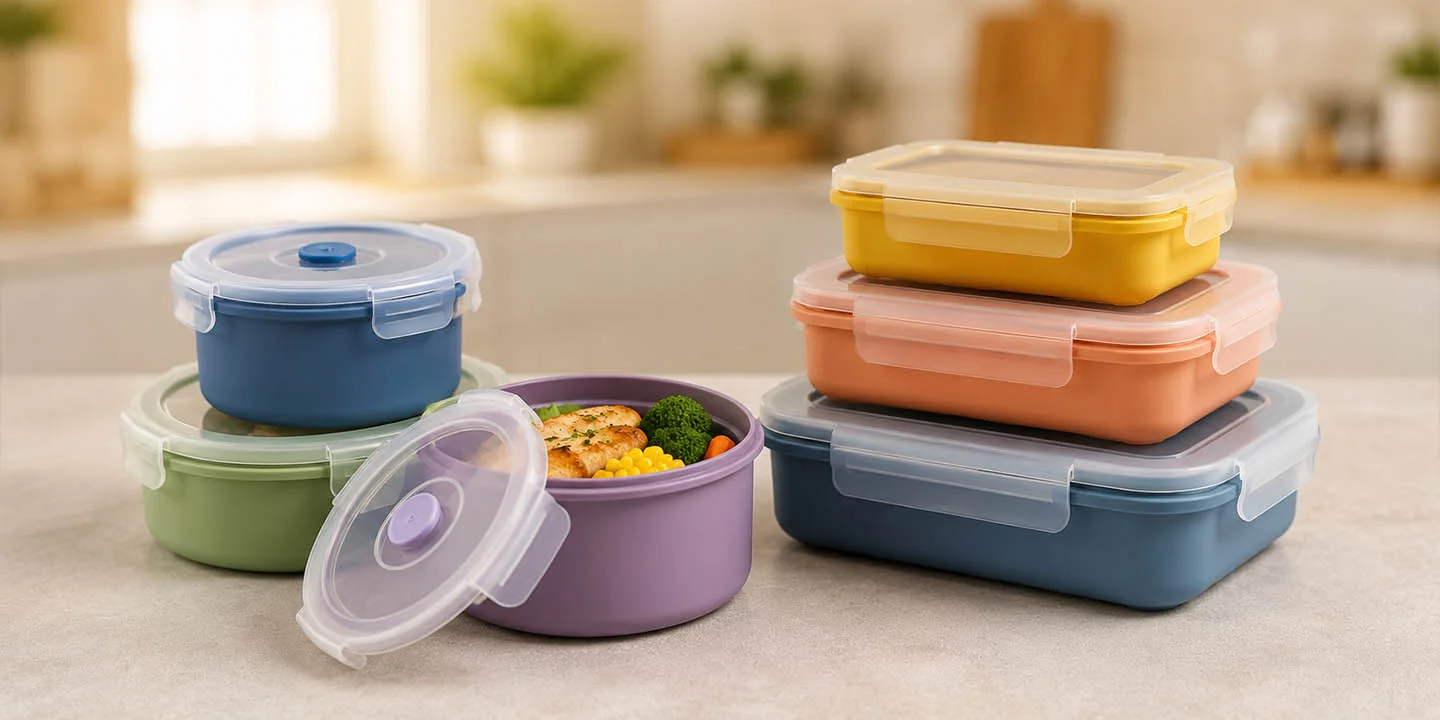
In short, they are a perfect blend of convenience and sustainability. They are mostly used as freezing trays and storage molds.
Pros
+ Collapsible
+ Flexible and lightweight
+ Can tolerate extreme temperatures
Cons
+ Flimsy when full
+ Retains soapy smells sometimes
Paperboard
If you run a food restaurant or takeaway business, paperboard containers are commercially used. They are designed keeping in mind the single-use and hygiene requirements.
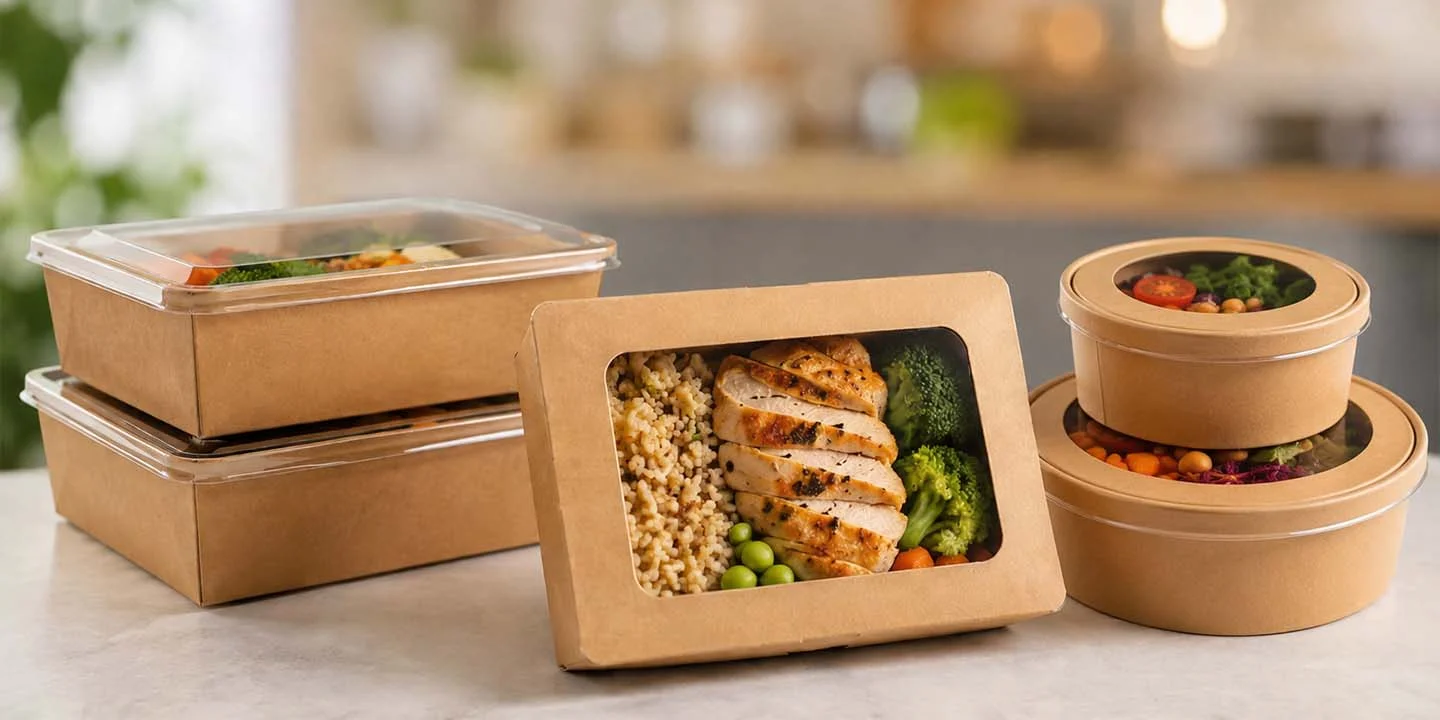
These containers are considered sustainable and green material choices as they are lightweight and recyclable/compostable. They offer you convenience and presentation at an affordable price without compromising on food quality.
Pros
+ Eco-friendly
+ Biodegradable and disposable
+ Easy to recycle and does not leach chemicals
Cons
+ Single-use only and gets soggy with liquids
All these materials are commonly used for prep containers, and you can choose any of them. Let’s have a quick comparison of each material to make a better choice:
Quick Comparison Chart: Which Material is Best for You
| Food Container Materials Comparison | ||||
|---|---|---|---|---|
| Material | Lifespan | Eco-Friendliness | Portability | Best For |
| Plastic | Short to medium | Low to medium, based on the type of plastic used | High | Travelling and on-the-go |
| Glass | Long | High as it is reusable | Low because of the risk of breakage | Canning and food preservation at home |
| Stainless Steel | Very Long | High | Medium | Home use |
| Silicone | Medium | Medium | High | Travel and on-the-go |
| Paperboard | Single-use | Medium | High | Takeout businesses and food lines |
Which Material Is More Sustainable?
Sustainability is not just about the materials from which the containers are made. It is also related to how long a container withstands, and it is reusable. The stainless steel and glass containers are rated as highly sustainable materials because they last longer and are reusable. Then silicone can be assigned the second position as it’s reusable and long-lasting. But at the same time, it is not highly recyclable, so it becomes less sustainable.
Plastic is considered a less sustainable material, as it needs to be replaced frequently and is not completely recyclable.
Besides these materials, paperboard is considered one of the most sustainable material choices for single-use purposes. The materials are food-grade and easily recyclable, which don’t have any negative impact on the environment.
Best Meal Prep Containers Based On Use Case
In the market, there are thousands of containers available, but not every container is designed for your needs. The best container depends on the user and the use case for which they are used. Let’s explore the best and most suitable option for different use cases:
For Home Meal Preppers
When you are planning and preparing meals in bulk, you need non-reactive and food-grade containers. You must choose glass containers that do not change the flavor and taste of your food.
An affordable and lightweight alternative to plastic containers or glass containers with plastic lids. The better option is to use both glass and plastic materials in combination. Use glass for reheating and long-term usage, while plastic is for ease of managing food for everyday needs.
For Fitness & Long-Term Use
If you are a food provider for gym enthusiasts who follow a perfect routine for meals, you need durable prep containers. You need to prepare food consistently to support their diet routine and portion control.
For daily meal preparation, glass and stainless steel get along in the long run. If you need frequent reheating and want to prevent stains while preserving food freshness, glass containers are better. Stainless steel is better in terms of robustness.
For Office & On-the-Go
When you need to carry food for the office or on the go, you need lightweight and portable containers. When that’s the case, you must choose plastic or silicone containers. Plastic containers are lightweight and best for daily commuting.
On the other hand, silicone containers are flexible and can be folded to save space. These properties make them best for carrying food while traveling and on the go.
For Meal Prep Businesses & Food Brands
If you are a food supplier or business, paperboard containers are the most practical packaging solution for you. Paperboard containers preserve the freshness and heat of your food. They let you brand your business with custom designs and printing techniques.
For single-serve distribution, these custom boxes are budget-friendly, easy to transport, and present food in a professional way.
How To Choose The Best Meal Prep Container For A Food Business?
If you are a food business, you need to take into account certain things relevant to ROI, long-term needs, and budget constraints. As a business, we recommend that you consider the following practical factors:
Usage Frequency
Before you choose a container, you need to know how often you are going to use that container. For meal preparation businesses, durability is non-negotiable because they need to use these containers repeatedly for preparing dishes. In addition, they will be washed, reheated, and stored together repeatedly.
For frequent usage, stainless steel, plastic, silicone, and glass are better options. But if you need containers for occasional meal preparation, disposable and plastic options are good.
Portability
If you need to transport food to offices, homes, or gyms, not all containers are designed for this purpose. For this purpose, lightweight containers with secure lids are needed that have zero risk of leakage and spilling.
Here, plastic, silicone, and paperboard materials are the practical options.
Budget
Budget does not mean the upfront cost. It refers to the cost over time. If you are a startup, you need durable containers at an affordable price. Plastic containers will be the best option for you initially, but they need to be replaced more often.
On the other hand, the more budget-friendly options in the long run will be stainless steel and glass.
Environmental Impact
In the current era, eco-friendly and sustainable practices are the way to make your business stand out. Sustainability is no longer a luxury; it’s a necessity. Opt for reusable containers, for example, glass and stainless steel containers that are suitable for long-term use.
The silicone material offers a perfect balance between flexibility and reusability. For a single-use application, go for paperboard because it’s the best option in terms of sustainability.
Business vs Personal Use
Which container is best depends on who will be using the container. If you want containers for personal use, convenience and microwave safety matter.
Businesses must focus on scalability, presentation, and cost control. Therefore, they need durable and reusable containers like glass and stainless steel, which can be used for the long term. They reduce costs and support storage and transportation without compromising the food quality.
Common Mistakes To Avoid
When you are purchasing prep containers for your meals and dish preparation, not every container is suitable. The market is flooded with thousands of containers, so you need to choose wisely which one best meets your food preparation needs. You must avoid the following mistakes:
+ Purchasing opaque containers
+ Not checking whether the plastic container is microwave-safe or not
+ Ignoring the water test before committing to a set
+ Buying containers with push-on lids that pop open in the bag and leak
Frequently Asked Questions
Are food storage containers freezer-safe?
Generally, the food storage containers are freezer-safe, but it depends on their material. Most containers have labels on them that tell whether they are safe for microwave, heating, or freezing purposes. Silicone containers are generally more convenient and safe for freezing. Stainless steel ones can also be used for freezing.
Can you buy replacement lids?
If you have chosen a container with which you can use interchangeable lids or boxes whose lids are easily available, then you can buy replacement lids. Usually, lids are not sold separately.
What size container is best for meal prep?
The containers that can accommodate 3 cups are the best for meal preparation. This size is the best, as it can entertain different kinds of meals and help in portion control.
Should I choose glass or plastic?
Whether you should use glass or plastic must depend on your needs. If you want a container that you can use in the long run, go for glass. If you just want short-term convenience and are okay with high long-term cost, plastic is good for you.
How long can you store prepped meals?
You can store the prepped meal in the fridge for three to five days maximum. If you are storing something with a longer shelf life in the freezer, it can last up to two to three months. Ensure your food is perfectly sealed in freezer-safe containers to preserve it for a long time.
Final Recommendations
Whether you are a beginner or a food business, when you visit the market to purchase the meal prep containers, you will be stunned. How? You will find a wide variety of containers in the market with different features. Not all containers are for you, nor are all the built-in features in them relevant to you.
In this blog, we walked through different types of meal prep containers, common sizes, materials, and the mistakes to avoid when purchasing them. Stainless steel and glass are recommended if you want a long-lasting and affordable solution in the long run. Plastic and paperboard are for short-term packaging needs.
If you are looking for disposable meal prep containers or food packaging that is food-grade and eco-friendly, MyBoxPrinting is here to help you. We provide you with custom solutions for your needs in custom materials, sizes, and styles that attract and sell.