
There’s a specific type of box for your e-commerce business needs. They help protect products, showcase your brand, handle rough transit, and more. But choosing which one is the best is a challenge. Which one do you think is ideal for your business needs: folding cartons, corrugated boxes, or rigid boxes?
Can’t decide. We are here to help and provide you with how each box is useful, what materials they use, what their construction is, and so much more. This guide will help you compare and let you decide which box is a smart packaging material.
What Is a Folding Carton?
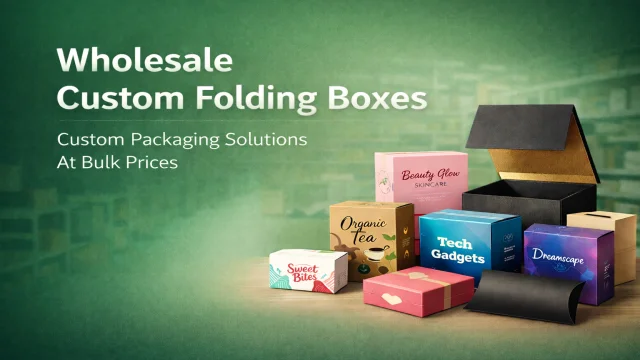
A folding carton is also called folding cardboard or cartonboard, which is easy to assemble and store. Brands can save a lot of money on transit costs. The sturdy, durable, and protective nature of this box keeps the products safe from any harm. Many industries use them, like
-
Cosmetics & perfumes
-
Toy manufacturing
-
Pharmaceutical brands
Materials Used in Folding Carton Packaging
This box is made from single- or multi-ply 100% post-consumer recycled SBS, CRB, and uncoated paperboard, which are lightweight paper-based materials. Its typical thickness is under 0.81 mm. Their durability and function are enhanced with several coatings, from gloss to foil lamination.
Environmental Impact: Is Folding Carton Sustainable?
Folding carton is 100% biodegradable and an eco-friendly packaging material. Its core substances are fully recyclable and leave a low carbon footprint compared to plastic packaging alternatives. The FSC-approved wood fibers and micro flute design add strength and can easily be disposed of after use. You don’t need to use plastic blister packs and trays, which lowers the cost and environmental impact.
How Is a Folding Carton Constructed?
A flat paperboard is assembled into a three-dimensional package through a simple process. They start with a template of large sheets that are printed with your logo, graphics, colors, and product information. Then premium coatings are applied, cut into precise die cuts, and then folded & glued together. This creates a highly sustainable, versatile, and cost-effective packaging box.
Popular Custom Styles of Folding Cartons
How can brands make these cartons more interactive for their customers? You can try these styles to make them more functional, eye-catching, and customizable:
-
Auto bottom
-
Double-wall tray and lid
-
And more
Common Applications of Folding Cartons
The most used industries that use this carton are food and beverages, with a percentage of about 37% to 42%. These come at a reasonably lower cost than other heavy-duty boxes and are best for large production runs. Get custom boxes in no time and ship with your products.
-
Food Boxes: Frozen foods, bakery items, dry goods, pasta packaging, etc.
-
Cosmetic Boxes: Skincare bottles, makeup items, perfumes, essential oil bottles
-
Medical, Healthcare, and Pharmaceutical Boxes: Prescription drugs, supplements, medical devices, and drug containers
-
Retail Boxes: Tech accessories, toys, hardware, and more
Pros and Cons of Folding Cartons
Where a material offers so many benefits, it is still bound to fall short somewhere. Folding a carton is no exception. Let’s break it down where it shines and where it doesn’t:
| Pros | Cons |
|---|---|
| Lower shipping and material cost | Can’t handle bulky items |
| Protection against impact, moisture, and other environmental factors | Single use |
| Flat structure with efficient storage | Minimal shock absorption |
What Is a Corrugated Box?
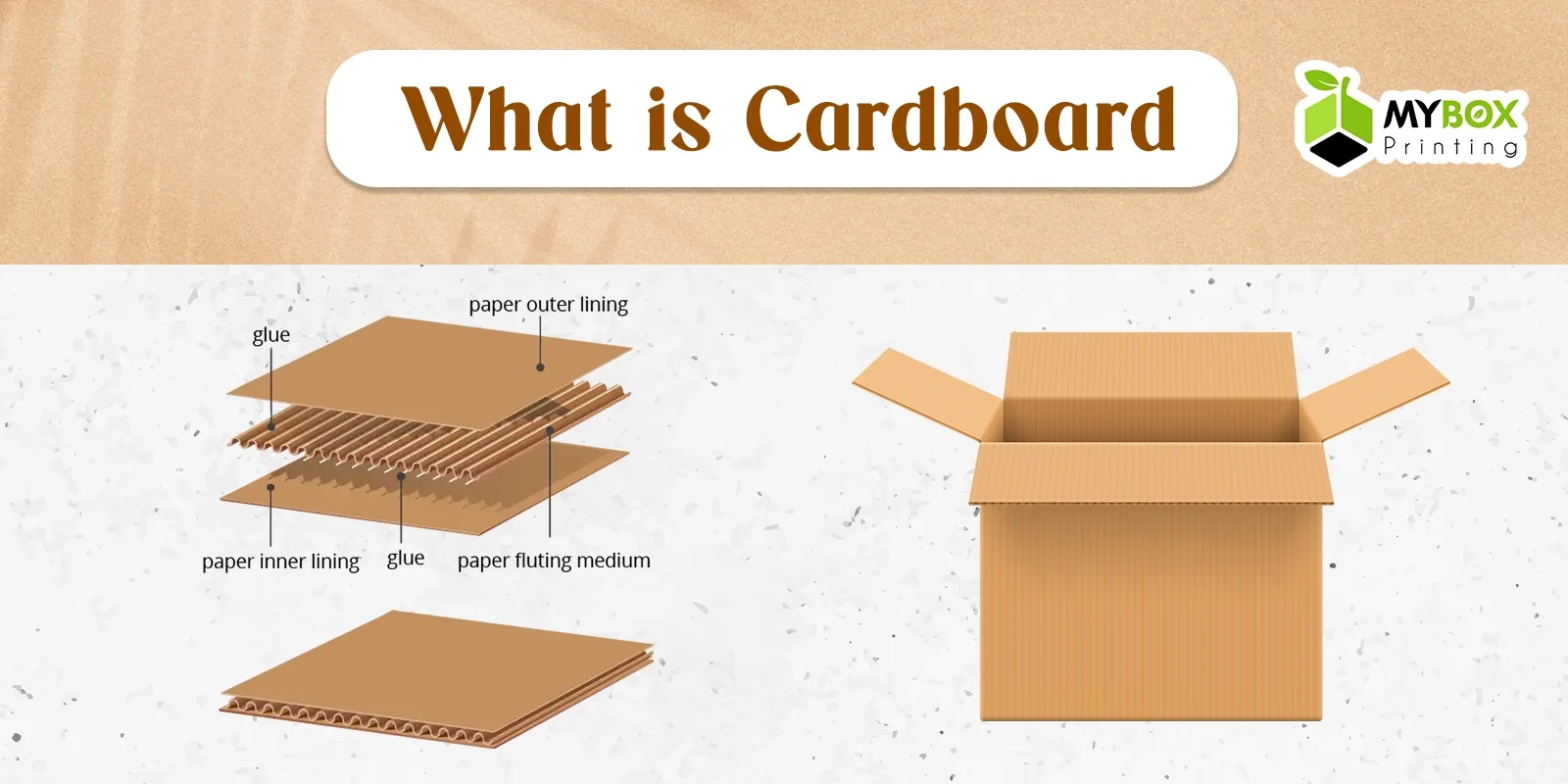
It is best known as a shipping container, which is made from corrugated fiberboard. The flutes are sandwiched between two flat outer linerboards. The thickness range is ~1 mm to 15 mm. Its multi-layer is built to handle heavy weight, stacking, and long shipping distances. Corrugated boxes are not cardboard, which is a single flat sheet.
Structural Materials in Corrugated Packaging
This corrugated mailer box uses Kraft paper and test liners that give it that high-end durability. It is made from softwood pulp and various fluted layers that give it resilience, puncture resistance, and impact absorption qualities. Their strength is even tested with ECT and Mullen Burst tests to ensure their resistance to most impacts.
Environmental Impact: Are Corrugated Boxes Recyclable?
About 80-95% of the e-commerce industry and retail brands use these boxes to meet packaging demands and ensure safe transit and delivery. The different fiberboard and flutes used in this box make it highly environmentally friendly and easier to recycle. It’s estimated that 70% of this material is biodegradable.
Understanding Flute Profiles and Structural Strength
Corrugated boxes have 2 layers: a flat outer linerboard and a wavy middle fluted layer. There are various factors that make up this box, such as
-
Wall Board Types: Single, double, and triple
-
Fluted Profiles: A, B, C, D, E, F, G, K, N, T, and R
-
Board Grade: ECT, Mullen Crush Test
All of these give the box the desired cushioning and resistance and help you determine which thickness, type, and flute you need for your packaging.
Popular Custom Styles of Corrugated Boxes
Corrugated boxes come in several styles and wall thicknesses that are specially designed for different shipping, storage, and various packaging needs.
-
RSC (Regular Slotted Container)
-
FOL (Full Overlap Container)
-
HSC (Half Slotted Container)
-
POL (Partial Overlap Slotted Container) or OSC (Overlap Slotted Container)
-
Tucktop Auto Bottom Boxes
-
Tab Lock Roll End Boxes
Common Applications of Corrugated Boxes
If you want a package with low shipping costs that doesn’t compromise protection, then choose this material. They come in handy in these regards:
-
Fashion & Apparel Packaging: Apparel, fabric rolls, footwear, accessories, and subscription boxes
-
Electronics and Technology Boxes: Smartphones, laptops, circuit boards, and home appliances
-
Food & Consumer Goods Packaging: Perishable goods, frozen foods, pizza, and soap
Pros and Cons of Corrugated Boxes
What sets apart corrugated cardboard in terms of advantages and disadvantages? That’s what the table is here for
| Pros | Cons |
|---|---|
| Great resistance to crushing, shocks, and transit damage | Unfit for extremely hot or cold temperatures |
| Can handle fragile items | Crush under heavy pressure or overloading |
| Eco-friendly and cost-effective | Unflattened box; takes too much storage space |
What Is a Rigid Box?
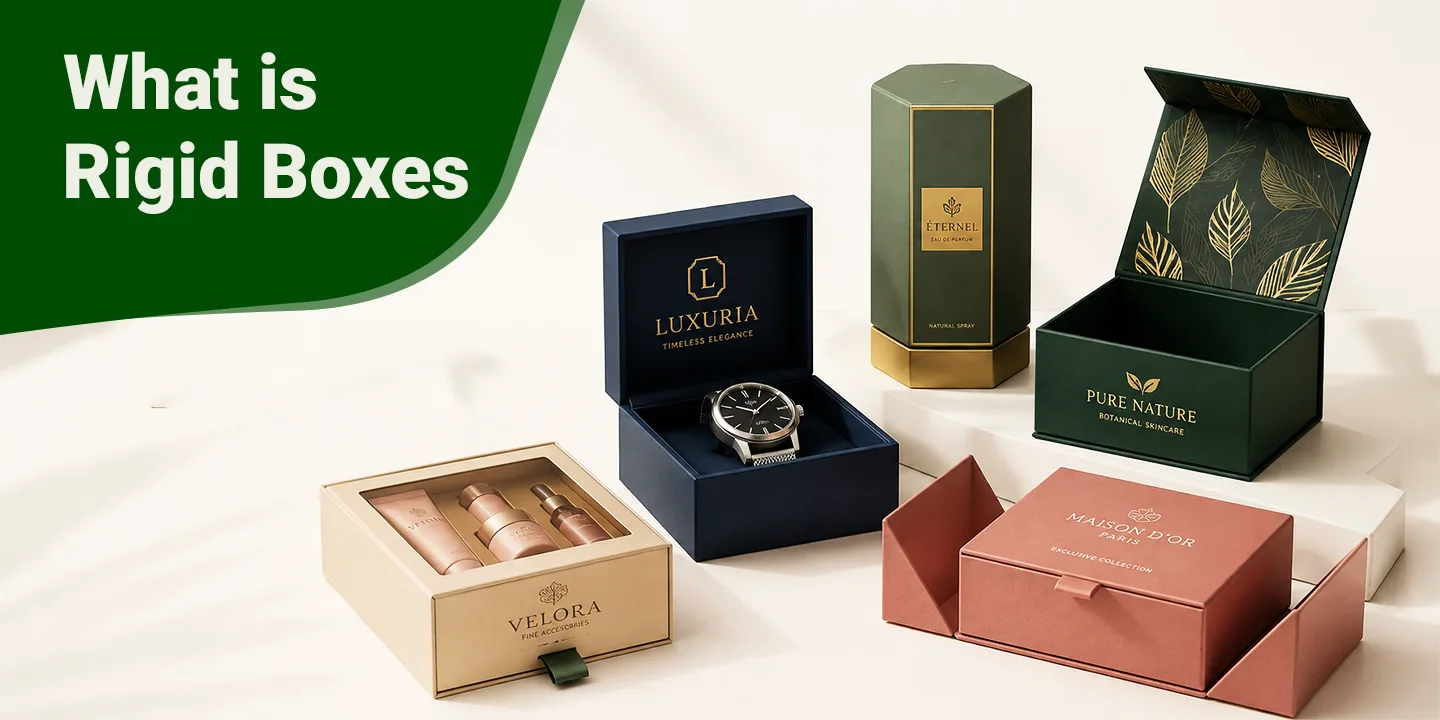
In your words, what do you think rigid boxes or set-up boxes are? They are sturdy, non-collapsible containers that are made out of thick (2-3 mm) chipboard or grayboard. The outer layer of the box is covered with decorative paper, fabric, or leather. Due to their thick exterior, brands usually use them for luxury products like jewelry or gifts.
Premium Materials Used in Rigid Box Manufacturing
The core materials used for this box are dense chipboard or grayboard (800 to 3000 GSM). These materials give the box its rigidity, sturdiness, and presentable look. Brands use grayboard material to make rigid boxes for smaller, thinner, tiny luxury accessories.
Environmental Impact: Are Rigid Boxes Recyclable?
Yes, they are like hardboard that goes through a complex recycling process. But if you use sustainable boards, water-based inks, and wrappers that are recyclable and biodegradable, it’s an easy sustainable packaging material.
Structural Construction and Durability of Rigid Packaging
Rigid boxes include V-slotted boards that are folded and secured at the corners using strong adhesive tape, which prevents flattening. The dense walls resist crushing and compression during display and transit. It's four times more durable than folding cartons and holds their form even when completely empty.
Common Styles of Rigid Boxes
Here are the styles you can adopt so that customers can enjoy the ultimate unboxing experience:
-
Clamshell Boxes
-
And more
Common Applications of Rigid Boxes
These setup boxes are designed to impress customers at first glance. Whether it’s retail shelves or luxury gifting, they never fail to attract, which is why they are used by so many brands:
-
Beauty Product Boxes: Bath products, skincare tools, salon products
-
Technology Packaging: VR devices, gaming controllers, power banks
-
Gift & Retail Item Packaging: Luxury subscription kits, wine gift sets, seasonal gifts, anniversary
Pros and Cons of Rigid Boxes
What are the reasons for picking rigid boxes? Care to know exactly what? Then go through this table:
| Pros | Cons |
|---|---|
| Superior protection for delicate items | High material cost |
| Upscale and luxury unboxing experience | Slow production rate |
| Reusability | Dense construction adds weight and increases shipping fees |
Direct Comparison of Folding Carton vs. Corrugated Box vs. Rigid Box
Let’s put all three materials side by side, look at every spec of them, and then you can decide which one best suits your needs:
| Aspects | Folding Carton | Corrugated Box | Rigid Box |
|---|---|---|---|
| Materials | Lightweight paperboard such as SBS (solid bleached sulfate), kraft paperboard, or recycled paperboard. | Kraft or test liner + fluted medium (multi-layer) | Thick chipboard/greyboard wrapped in decorative paper |
| Structural Format | Flat, single-sheet die-cut construction | Layered liner(s) + flute(s), single/double/triple wall | Pre-formed, non-collapsible solid board |
| Assembly | Ships flat, pops up/folds at packing time | Ships flat, erected, and taped/glued at packing time | Assembled during manufacturing; ships pre-built |
| Common Styles | Tuck-end boxes, sleeve and tray boxes, auto-lock boxes, window cartons, etc. | RSC, mailer boxes, pizza boxes, shipping cartons, and corrugated trays. | Two-piece (lid-and-base), collapsible rigid drawer/sleeve |
| Printing Techniques | Offset litho, digital, high-detail CMYK color system, or PMS color system | Flexographic printing, digital printing, lithographic lamination, screen printing | Offset print on wrap, then laminated onto board |
| Print Quality | Excellent | Good | Superior |
| Lamination/Finishes | Gloss/matte coating, foil stamping, embossing, etc. | Kraft finishes, varnishes, coatings, water-resistant treatments | Soft-touch, gloss/matte laminate, foil, embossing, spot UV, etc. |
| Common Inserts | Paperboard dividers, trays, windows, cardboard holders | Corrugated partitions, honeycomb inserts, foam inserts, molded pulp | Styrofoam, EVA foam, tissue paper, velvet, silk, or custom-molded inserts |
| Which Industries? | Cosmetics, food, pharma, retail consumer goods | E-commerce, shipping, industrial, wholesale distribution | Luxury goods, jewelry, electronics, gift sets |
| Sustainable Option | Recyclable | Most sustainable | Least sustainable |
| Cost | Lowest | Mid-range | Highest |
| Production Speed | High | Moderate | Low |
Which Packaging Box Works Best for Your Business?
Whether you are an e-commerce store or a physical store, corrugated boxes are the ideal choice for packaging and shipping purposes. They are durable, have fluted layers that absorb shocks, and are cost-effective. These boxes protect products from damage and are light enough to help reduce transit costs and survive any heavy damage.
Moreover, you can customize them in custom sizes, shapes, and printing options with your logo, design, pattern, etc. Give your brand and customers the best unboxing experience with corrugated packaging boxes.
Packaging Recommendation by Use Cases
If you are not sure which packaging matches your product or brand, look at these practical examples and learn:
Folding Cartons: Bakery, Cosmetics, Food & Others
Whether it's bakery treats, frozen foods, or makeup products, a folding carton is an ideal packaging option. They are lightweight, easy to customize, and ideal for small and giftable items.
Corrugated Boxes: Bulk, Heavy, and Shipping Products
These are ideally suited for shipping and storage of heavy products or fragile materials. Their multi-layers give great protection, stack strength, and impact cushioning.
Rigid Boxes: Luxury & High-End Items
This one is only for lavish presentations and protection that have a solid construction, premium finish, and elegant appearance.
Get Custom Packaging from My Box Printing
Whatever material you decide to choose, you need a reliable packaging partner that can help you manufacture custom boxes. We offer brands a wide variety of FSC-approved, 100% sustainable folding cartons, corrugated cardboard, and rigid materials. You can customize them in the way you want with advanced printing techniques, unique add-ons, finishes, custom shapes or sizes, and more.
Get your durable, eco-friendly, and eye-catching custom boxes in bulk at our wholesale rates. Fill in the quote!
Frequently Asked Questions
What is the difference between a rigid and a corrugated box?
Rigid boxes are made from thick, dense paperboard and wrapped in decorative paper. Corrugated boxes are made of multiple layers of fluted liners.
Is a corrugated container the same as a standard cardboard box?
No, corrugated boxes are made from fluted layers like A, B, C, etc., and plain cardboard is just a single sheet with no liners.
What’s the main difference between rigid and regular folding cartons?
Rigid is a non-collapsible container that is used for luxury presentation, while regular folding cartons easily fold and are used for practical shipping.
What are the best eco-friendly alternatives to corrugated packaging?
You can go for other reusable alternatives such as RPCs, kraft, molded pulp, and paperboard materials.
Which packaging type offers the best protection for fragile products?
Brands should go for corrugated boxes, as they give excellent support throughout transit and will prevent the product from moving.
Which box option is the most cost-effective: folding carton, corrugated, or rigid?
The folding carton is the most affordable option for small startups or large e-commerce companies to purchase.
Which packaging material is best suited for bulk wholesale orders?
If you look at per unit, the folding cartons in bulk are the most economical option. The corrugated material does cost more due to its layering and rigidity, 3 to 5 times more per unit than the two combined.
Which packaging material has the highest overall sustainability rating?
Corrugated cardboard boxes are 100% post-consumer material that easily breaks down and don’t leave behind any toxic waste.
Conclusion: Selecting the Right Custom Packaging Solution for Your Brand
This blog makes it clear that there is no one size that fits all types of packaging for different purposes. You learned that folding cartons, corrugated cardboard, and rigid boxes serve different functions, uses, materials, etc. Try asking yourself, “Which box is the best for your product?” This blog answers that. If you are looking to create the best custom packaging solution for your product, then My Box Printing is here to help. Contact us now and get the most customized box for your product/brand.