Every packaging decision sends a message before a customer reads a single word on the box. There are many factors involved, such as shape, color, and material, but the finish is often the first thing that people notice, even if they can't identify it.
A soft, non-reflective surface feels different in the hand compared to a shiny, polished surface, and that difference will alter the perception of the product on a shelf, in a picture, or in a video of it being unboxed.
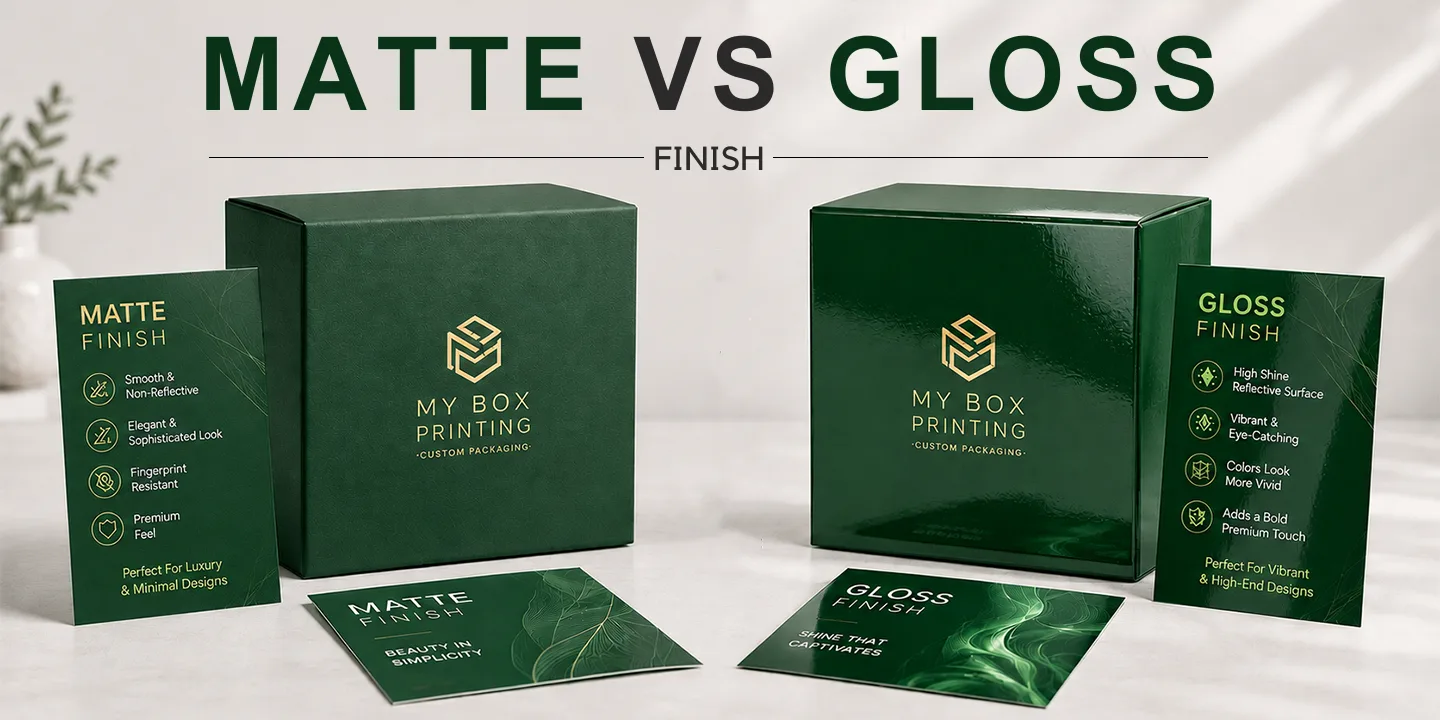
Matte and gloss are two common packaging finishes. They can be produced using different application methods, including aqueous coating, UV coating, and lamination. The finish can affect how your artwork appears, how the packaging performs during handling, production costs, and how customers perceive the brand.
The guide covers matte finish vs. gloss finish in detail, explaining what they are and where they work best to let you make a choice without just taking a wild guess.
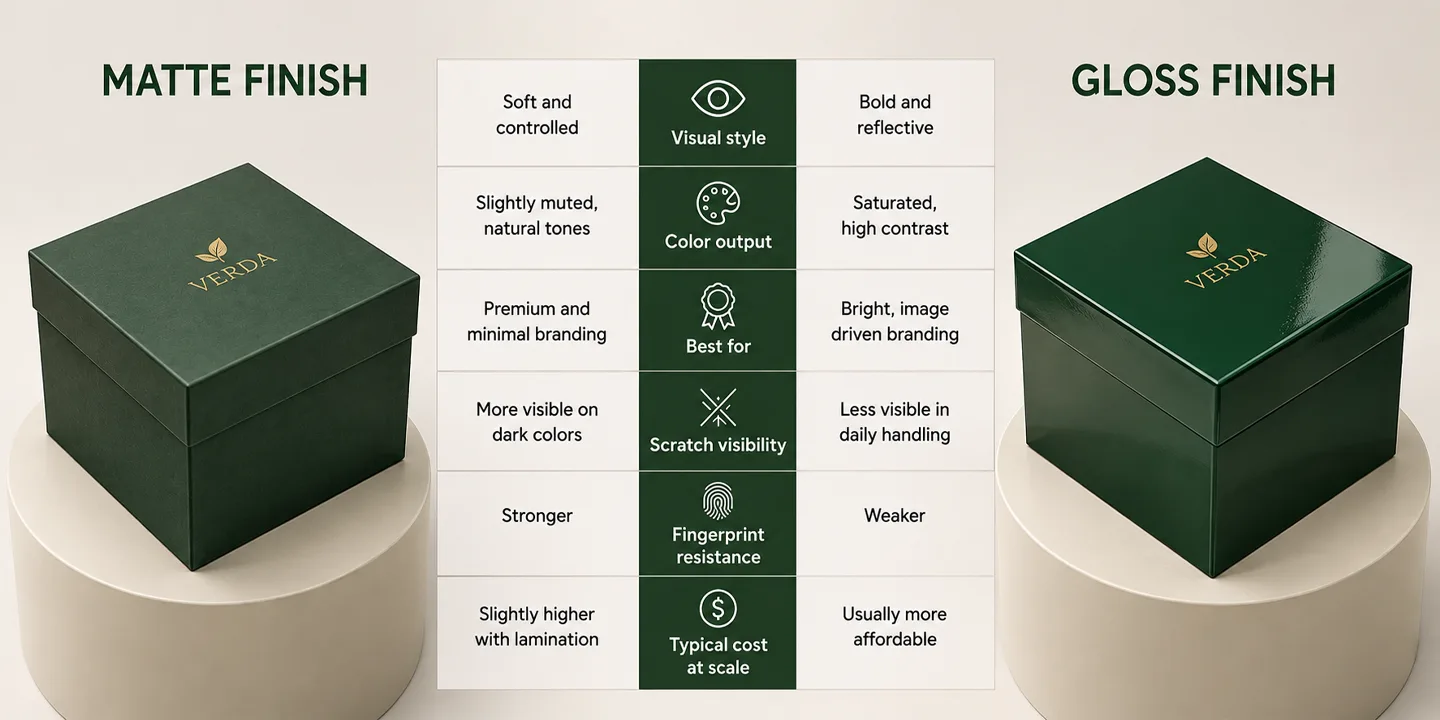
Matte vs. Gloss Packaging: Quick Comparison Table
For a quick decision, choose matte when you want a low-sheen, refined appearance with less glare. Choose gloss when you want stronger surface reflection and greater visual impact. The right finish ultimately depends on your brand image, product type, and packaging requirements.
Quick Comparison
| Feature | Matte Finish | Gloss Finish |
|---|---|---|
| Appearance | Soft, muted, and sophisticated | Bright, smooth, and eye‑catching |
| Brand perception | Refined, low‑sheen appearance | Energetic, vibrant, and promotional |
| Colors | Creates a softer, more refined look | Makes colors appear brighter and more vivid |
| Fingerprints | Less noticeable | More noticeable |
| Surface marks | Dark matte surfaces can show scuffs and handling marks | Fingerprints and fine scratches can be more noticeable |
| Gloss Unit (GU) | <15 GU | >70 GU at 60° |
| Best for | Luxury, skincare, cosmetics, gifts, and premium packaging | Food, beverages, promotional products, and retail packaging |
| Branding | Works well with minimal designs, typography, foil, or spot UV | Works well with bold graphics, colorful artwork, and high‑impact designs |
| Cost | Usually slightly more expensive | Generally more budget‑friendly |
| Shelf impact | Subtle and premium | Strong and attention‑grabbing |
Finish vs. Coating vs. Lamination: What's the Difference?
-
"Finish" describes the final surface appearance, such as "matte" or "gloss."
-
"Coating" is a liquid layer applied directly to the printed material, such as aqueous or UV coating.
-
"Lamination" uses a film applied over the printed surface.
Matte, gloss, and soft-touch laminates are available depending on the required appearance and protection.
What Is a Matte Finish in Custom Packaging?
A matte finish is a coating or film applied to printed boxes to reduce the amount of shine on the surface and soften light reflection. A matte surface will scatter light, rather than reflect it back at the viewer, making it a calm and even surface that is generally understated in appearance. This finish is commonly used when brands want packaging to have a soft, low-reflective appearance.
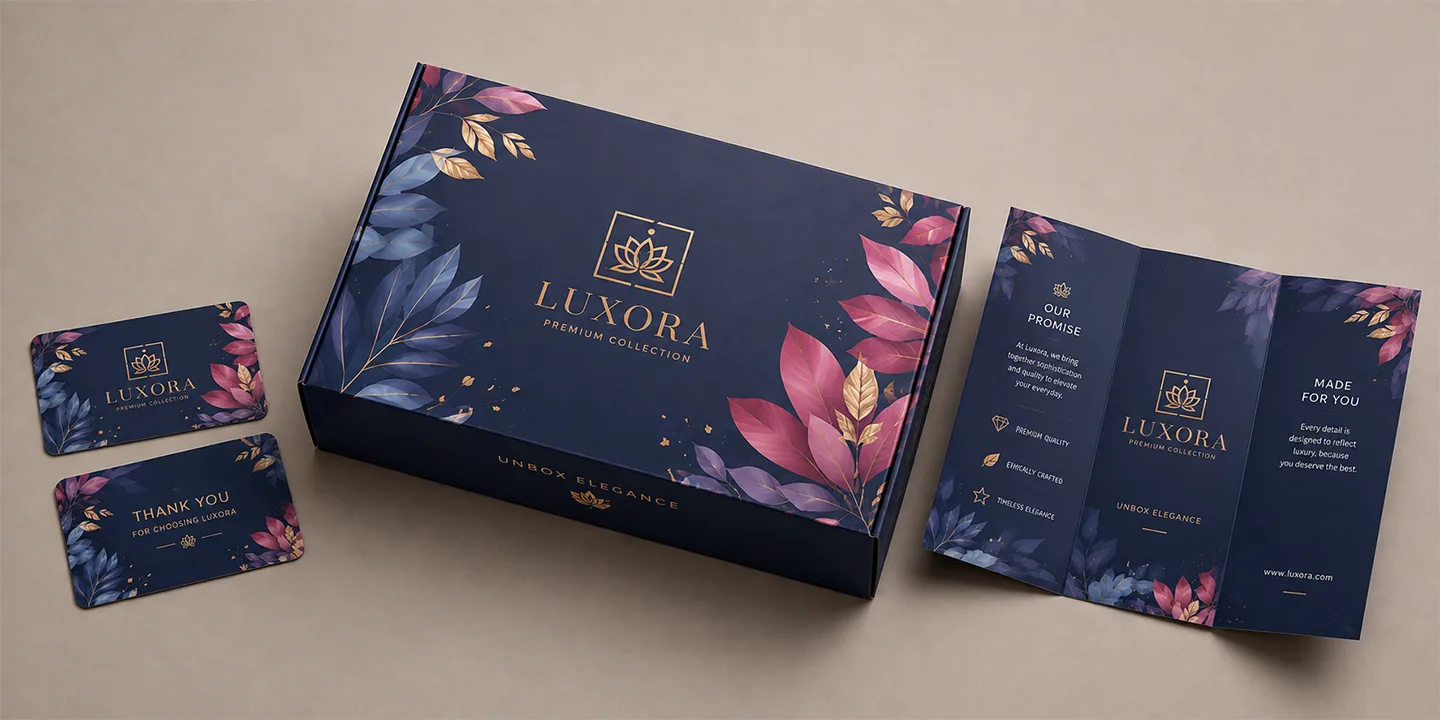
Matte Application Technologies: Liquid UV Coatings vs. Soft-Touch Films
In production, matting is typically done in three ways.
-
Matte UV coating, which is a liquid coating that is effectively cured with ultraviolet light. It creates a smooth and durable low-sheen surface.
-
Matte lamination, which uses a thin film applied to a printed sheet with heat and pressure.
-
Soft-touch lamination is a specialized type that provides a more tactile and smooth feel. In addition, it provides additional protection against scuffs, moisture, and handling.
Benefits of Matte Finish
-
Works well for packaging that uses minimal layouts, fine typography, and subtle visual contrast.
-
Minimizes glare, allowing for easy readability of small text and fine details in store or studio lighting.
-
Hides fingerprints and light surface marks better than a reflective surface.
-
Works well when combined with foil stamping, embossing, or spot UV accents, as there is a good contrast between the shine and a plain surface.
-
Smooth and pleasant handling enhances the unboxing experience.
Drawbacks of Matte Finishes
-
Scuff marks and light scratches are more noticeable, particularly on dark-colored boxes that go through frequent handling.
-
Colors are slightly muted when printed without gloss compared to the same colors when printed with a gloss coating.
-
Soft touch lamination is an added cost and material over a simple coating.
-
Some matte paper stocks are more absorbent and may need to be carefully print-calibrated to avoid dot spread of detailed artwork.
What Is a Gloss Finish in Custom Packaging?
A gloss finish is a high-sheen surface treatment that increases reflection and gives printed packaging a brighter, more polished appearance. This is the type of reflective surface most people associate with glossy magazines and retail boxes.
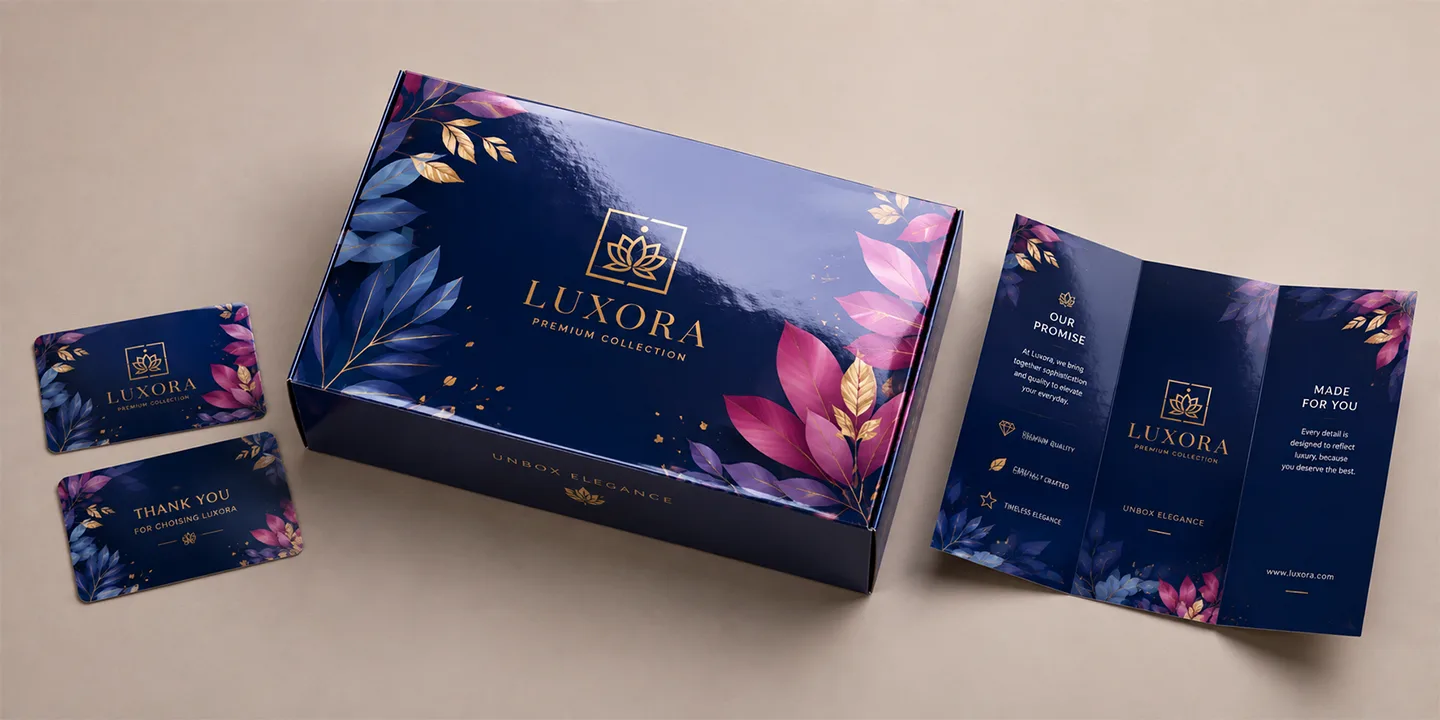
Gloss Application Technologies: Aqueous, UV, and BOPP Film
There are a number of common types of gloss coatings.
-
Aqueous coating is water-based and does not add a separate plastic film layer. Its overall recyclability depends on the complete packaging construction and local recycling systems.
-
Gloss UV coating involves curing with ultraviolet light to produce a thicker, harder coating for greater scratch resistance than aqueous coating.
-
Gloss lamination is the application of a smooth plastic film for maximum gloss and the highest degree of surface protection. Typically, it is used for high-traffic or high-value packaging.
Benefits of Gloss Finish
-
Works particularly well with photographs, gradients, and artwork that depends on strong color contrast.
-
Smoother than most coatings, which allows it to hold ink closer to the surface, improving the sharpness of fine detail and gradient printing.
-
Aqueous gloss coating can be a cost-effective option for large-volume orders, depending on the material and production specifications.
-
Adds a protective surface layer that can help with routine handling and light abrasion.
-
Works well under high-intensity retail lighting, making products more visually appealing on a crowded shelf.
Drawbacks of Gloss Finish
-
May produce glare in strong or angled lights, making small text difficult to read.
-
Reflects fingerprints and smudges more readily than a matte surface, particularly in the case of frequent handling.
-
The shiny surface will show the fine scratches better than a matte surface.
-
May not look as refined for brands that prefer a minimal, quiet, or high-end look.
Matte vs. Gloss: What Is the Real Difference?
There is more to these two finishes than just appearance. It impacts color, longevity, and the performance of your packaging after it comes off the production line.
Visual Appearance and Shine
Matte provides a muted, restrained appearance to packaging without the showy glitter. Gloss produces more direct reflection, which can increase visual contrast under strong lighting.
Color Vibrancy and Print Quality
Gloss-coated or laminated surfaces can produce strong color saturation and sharp visual detail. Matte surfaces diffuse reflected light, giving colors a softer appearance while often reducing glare around text and fine details.
Durability and Handling During Shipping
For packaging that is likely to be handled frequently, stacked, or shipped, lamination generally provides more surface protection than liquid coating alone, although performance depends on the film and packaging construction.’
Dark matte finishes can show scuffs and handling marks more readily, so an anti-scratch laminate may be worth considering for high-contact applications.
Cost Comparison
For high-volume orders, aqueous coating can be a cost-effective option, depending on the box material, size, and production specifications. Matte is a bit more expensive, especially when the laminate is soft-touch.
Manufacturing Methods: Film Lamination vs. Liquid Coatings
The production aspect of matte and gloss coating can be helpful in understanding the higher price or performance of one finish over another in certain situations.
Film Lamination (Matte and Gloss)
Lamination is a process that uses heat and pressure to fuse a thin plastic film on top of the printed sheet. Gloss lamination is a technique that uses a smooth film, which reflects light directly, enhancing color contrast.
A micro-textured film can be used in matte lamination to scatter light, creating a soft, non-reflective appearance. Lamination adds a physical film layer that can improve surface protection during handling and transport compared to liquid coatings. However, it also increases the material cost slightly.
Aqueous Coating vs. UV Coating
Aqueous coating is a water-based varnish that is applied directly to the printed sheet and dried to a hardened coating. Whether it is a matte or a gloss finish, UV coating involves applying a liquid coating before curing it almost instantaneously with ultraviolet light.
UV coatings generally produce a harder and more abrasion-resistant surface than standard aqueous coatings, although performance varies by formulation and application. UV coating can be a useful alternative when a brand wants a harder protective surface without adding a separate laminate film.
Best Uses for Matte and Gloss Finishes by Industry
The "right finish" is often more about the message the product must convey to the individual holding it than about the individual's taste.
Cosmetics & Personal Care Packaging
Matte is popular among skincare brands seeking a clean, clinical, or minimal appearance. Gloss can also work well for color-focused cosmetics where bright artwork is central to the design.
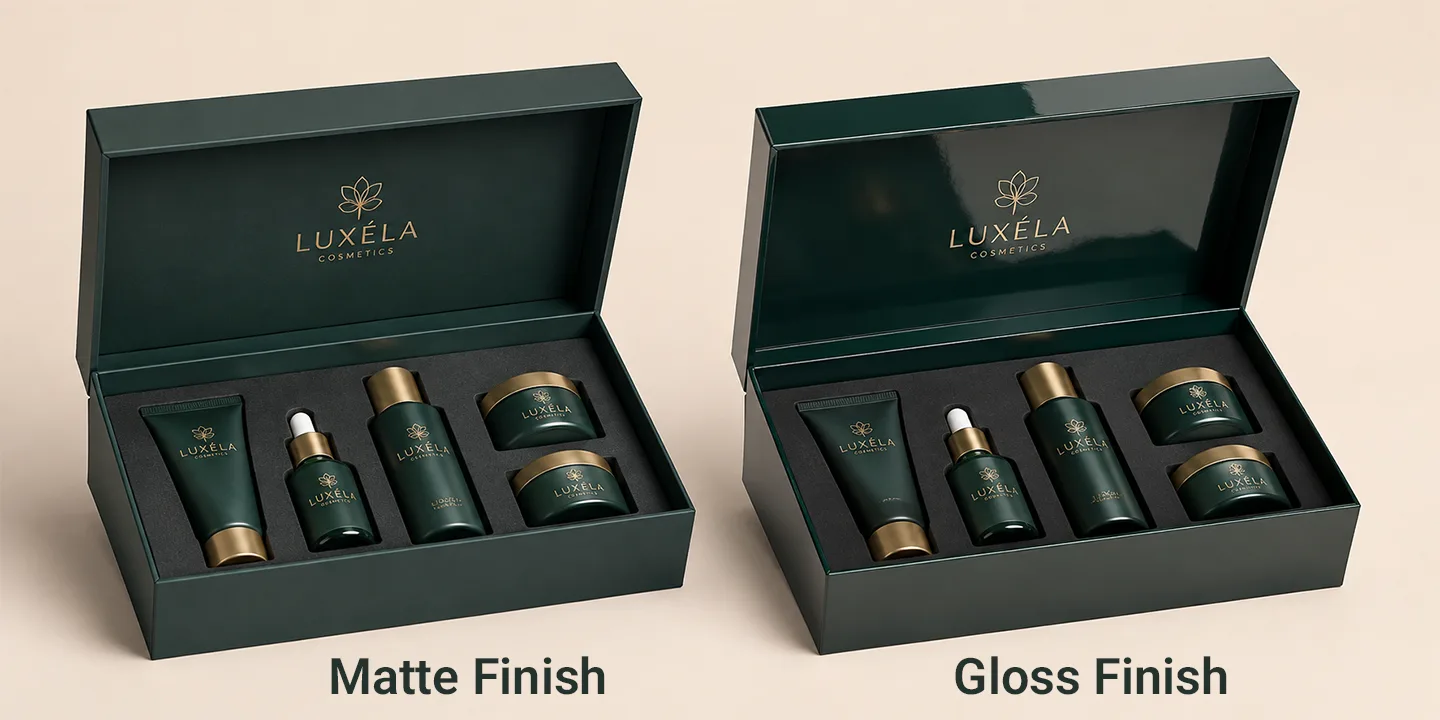
Check out our cosmetic boxes and custom skincare boxes to view both finishes used with actual box designs.
CBD & Vapor Packaging (Discreet Anti-Glare Finishes)
This is typically dominated by matte or semi-matte coatings. Matte and semi-matte finishes are often used for CBD and vape packaging when brands want a discreet, understated appearance.
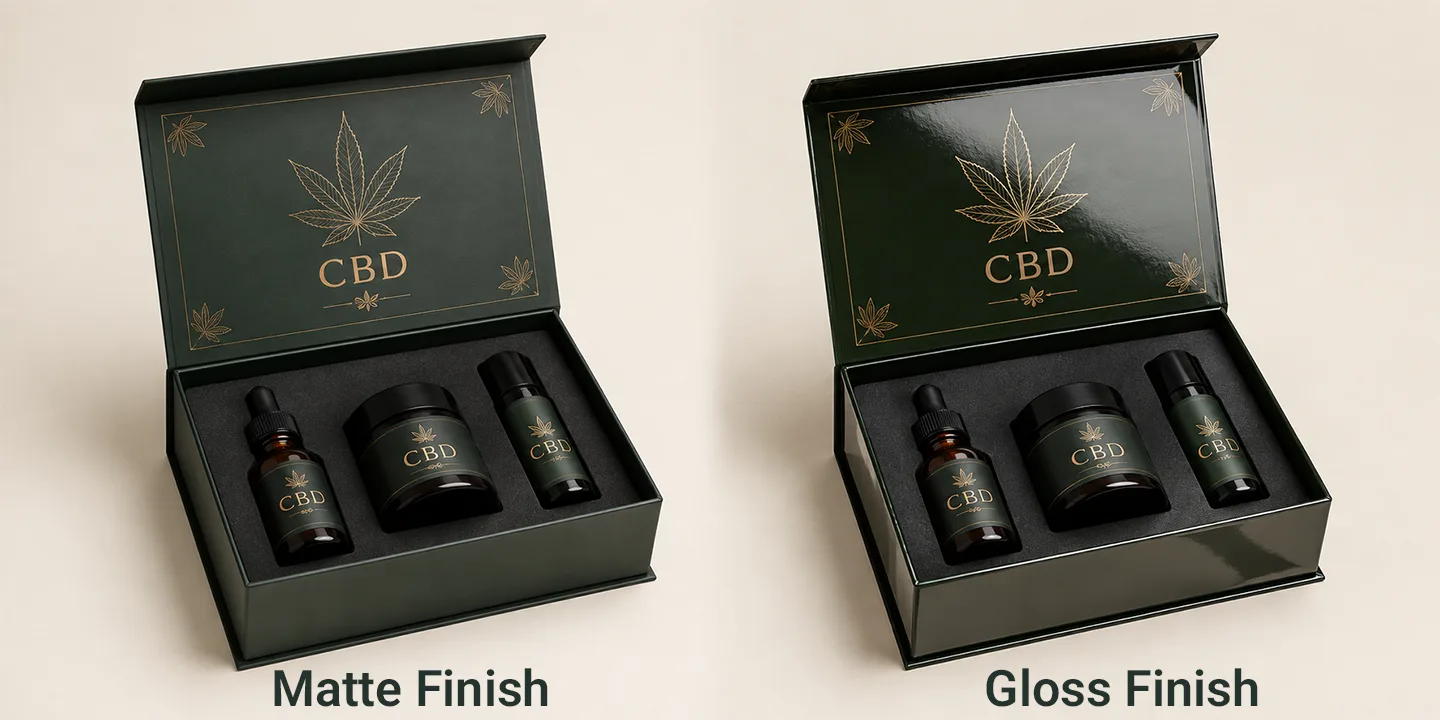
For products subject to frequent handling, the specific coating or laminate should be selected based on the required surface protection. Our CBD packaging offers matte UV and semi-matte as standard coating options.
Rigid Setup Boxes & Luxury Gift Packaging
A common approach for rigid boxes is to use a matte surface for the box body with a glossy or foil-stamped logo. This blend can produce depth and add emphasis to the branding without the entire box being covered in shine, which can be more costly.
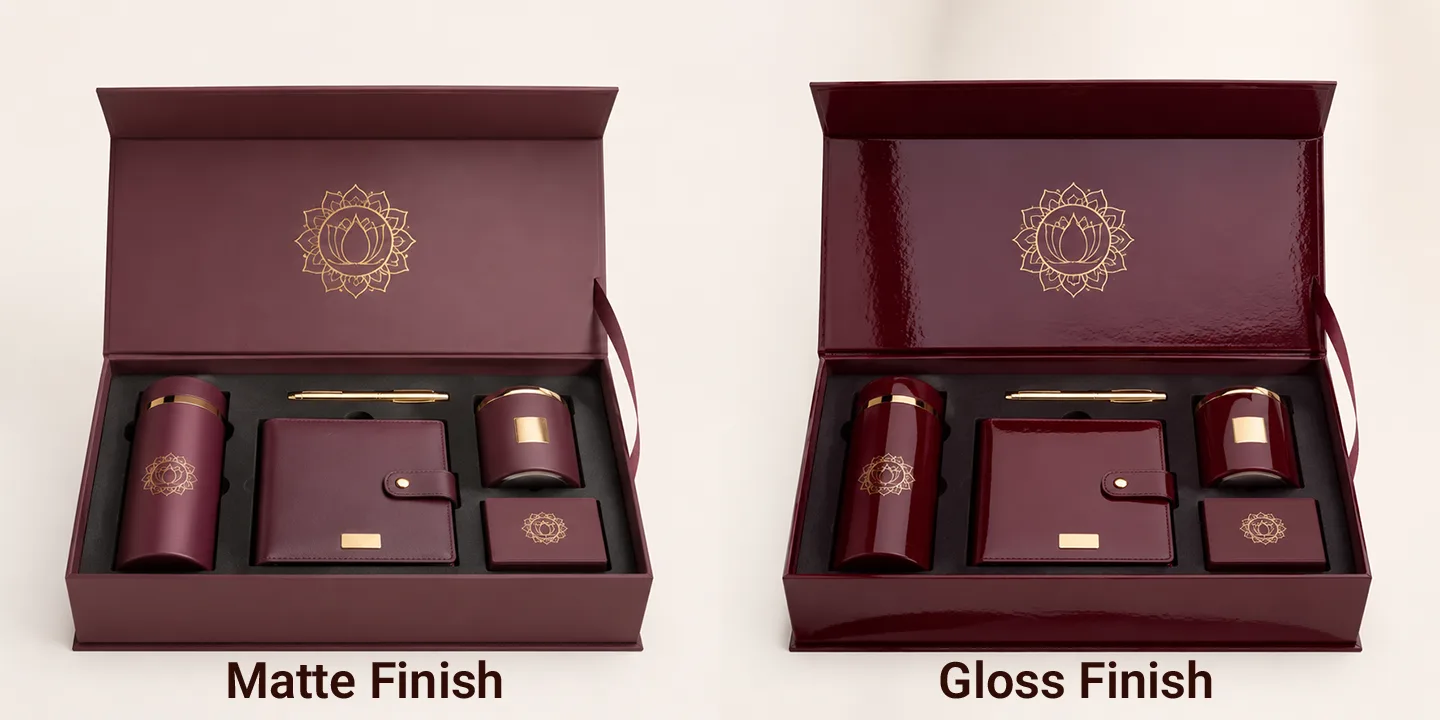
It is particularly effective with rigid boxes and gift boxes, as the unboxing experience is as significant as the gift itself.
Food & Beverage Retail Packaging (Aqueous Gloss & FDA Compliance)
Food photos and bright colors will look more appealing under a gloss, particularly in the bright lights of the grocery store.
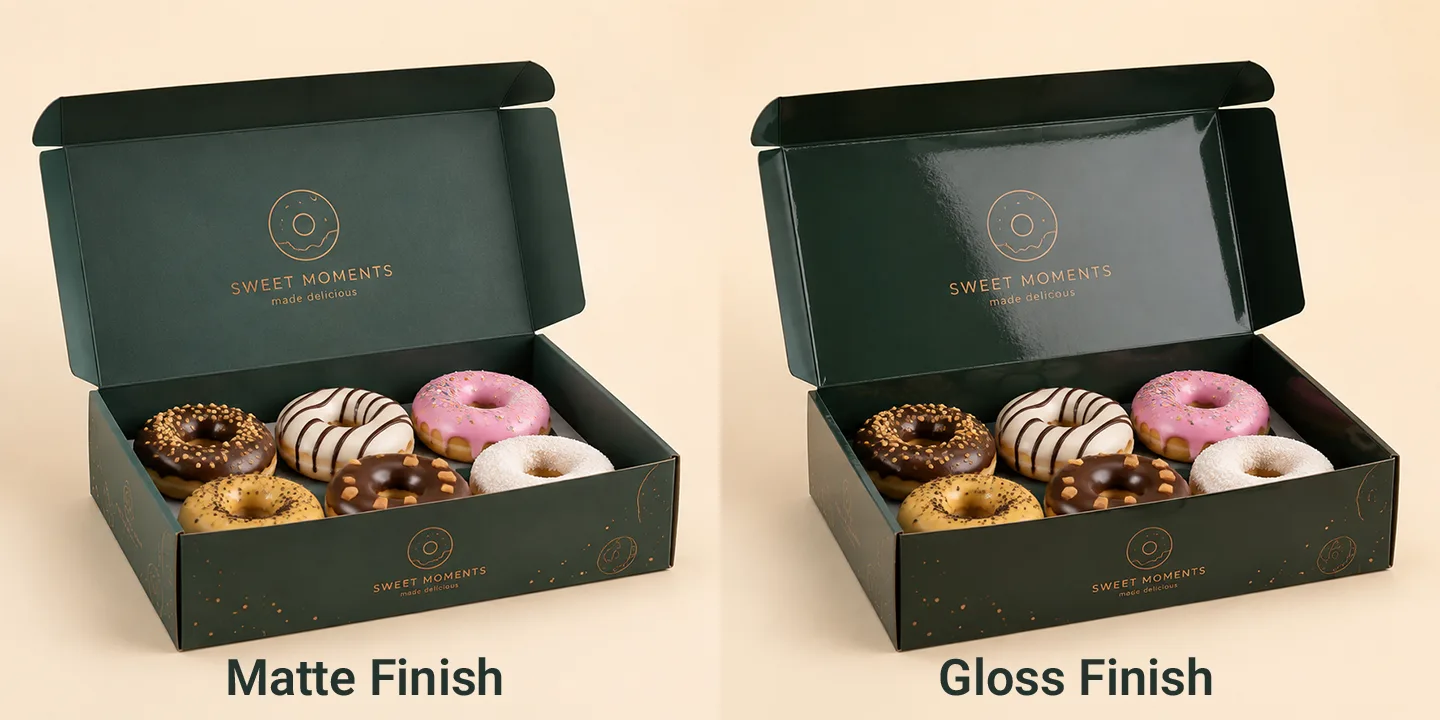
Discover these FDA-approved food and beverage boxes with gloss and aqueous coating for this category.
Retail and Shipping Box Packaging
For retail boxes and mailer boxes, semi-gloss or aqueous coating is a good compromise because it is durable enough for transit and has an acceptable price at higher volumes.
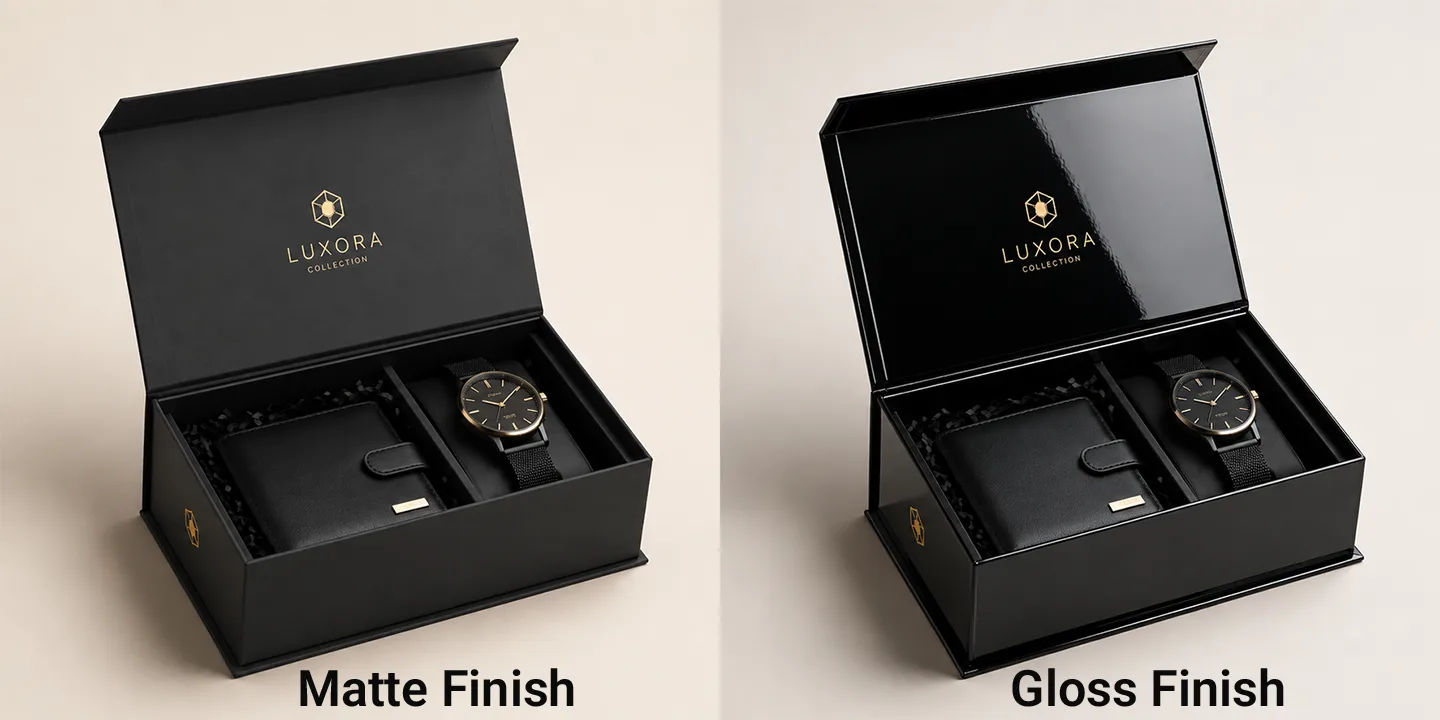
This is quite applicable to retail boxes, mailer boxes, and custom shipping boxes that must endure the shipping process without contributing to the extra cost.
Can You Combine Matte and Gloss on the Same Box?
Yes. Combining matte and glossy elements can create visual contrast and direct attention toward specific branding details.
| Combination | Effect | Best For |
|---|---|---|
| Matte base + Foil stamping | High contrast between the flat matte surface and the reflective foil, giving an eye‑catching, premium, high‑end finish | Logos and brand marks that need to stand out |
| Matte base + Spot UV | The base stays matte, while clear, glossy spots highlight specific design elements or text | Subtle, elevated branding without full lamination |
| Gloss base + Foil stamping | A uniformly shiny look where the foil blends into the gloss, creating less visual hierarchy between elements | Bold, vibrant designs where overall shine matters more than contrast |
| Gloss base + Embossing | The raised texture is preserved, but surface glare can compete with and soften the visible depth | Designs where texture is a secondary accent rather than the focal point |
How Finish Affects Foil Stamping, Embossing, and Spot UV
Special print effects will look different on different base finishes. The best background for foil stamping and spot UV is a matte surface because foil creates a reflective accent against the matte surface. Spot UV adds glossy contrast to selected areas of the design.
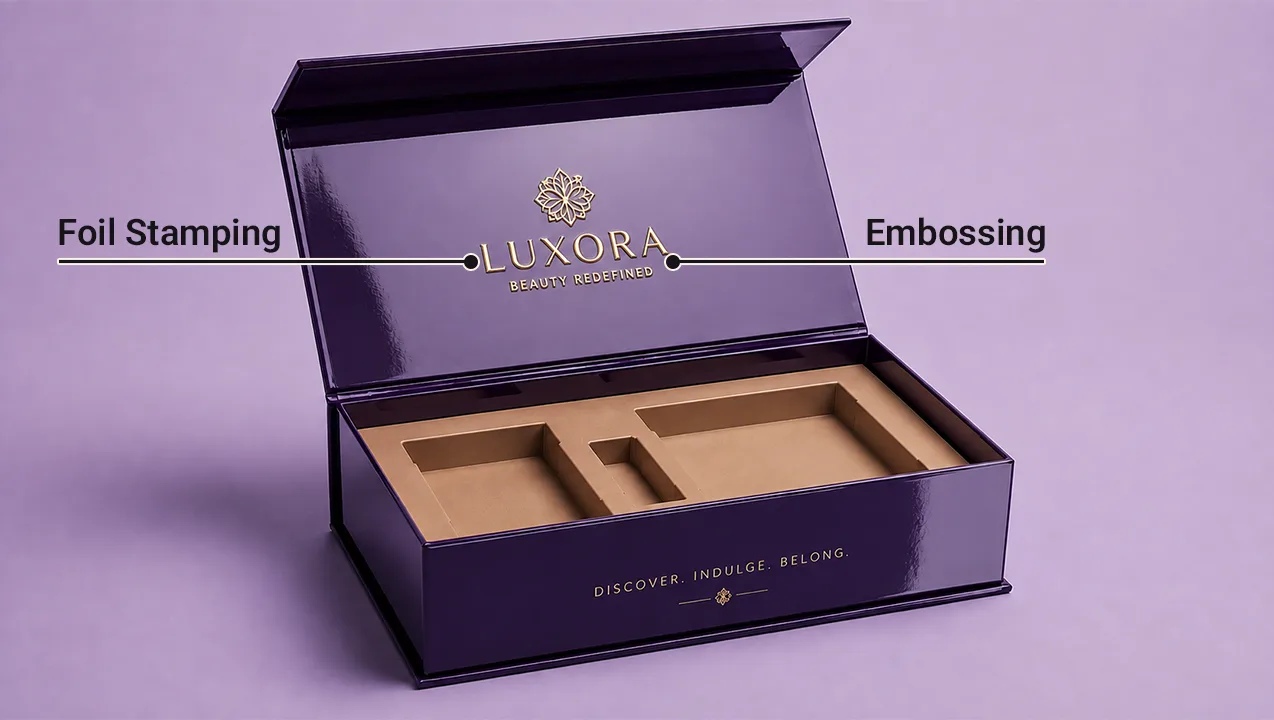
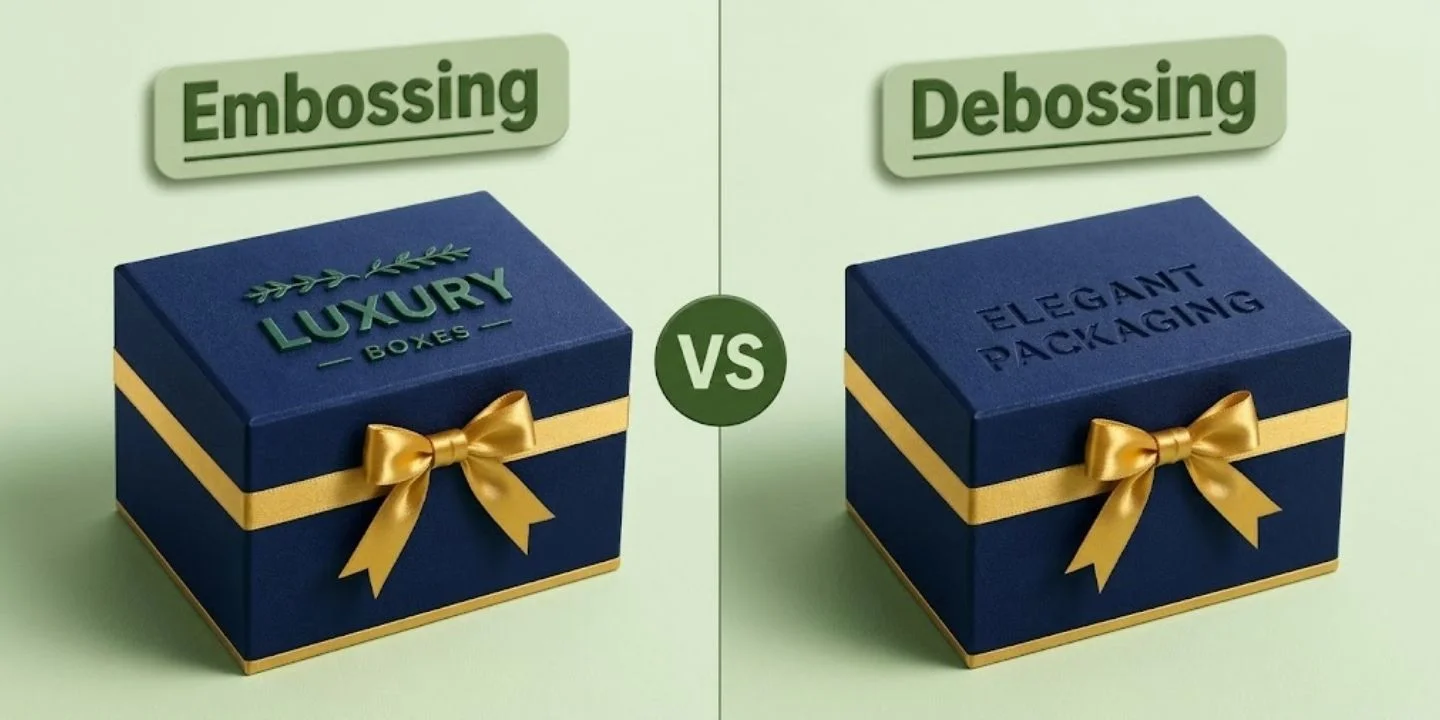
Embossing and debossing can also stand out clearly against a matte surface because the lower reflectivity allows the texture and shadows to remain visible. These effects can still be used on gloss surfaces, although reflections may compete with the three-dimensional detail.
Matte vs. Gloss: Production Volume and Order Planning
Finishes can also influence the planning of production runs. For dark-colored boxes that will receive frequent handling, an anti-scratch laminate can help reduce the visibility of scuffs and handling marks.
If that is the first time ordering a specific finish or box style, it can be practical to have a smaller test order to ensure that the coating will perform as expected when it arrives at the customer.
Does Matte or Gloss Last Longer?
Durability depends more on the coating or lamination system than on whether the finish is matte or gloss. Matte and gloss laminations generally provide greater surface protection than liquid coatings alone, while specific UV and aqueous formulations offer different levels of abrasion and moisture resistance.
Dark matte surfaces can make scuffs and handling marks more visible, while matte lamination can provide greater surface protection than a liquid matte coating.
When it comes to packaging that will be on the shelf for an extended period of time or be handled by many people before reaching the end user, matte or gloss lamination is often more successful than a simple coating.
Matte or Gloss: Which Is Better for Retail Shelf Visibility?
The performance of a finish in a retail environment is strongly influenced by lighting. Gloss reflects the light back towards the customers and will attract attention more quickly at a distance under strong overhead lighting.
Under more indirect or lower lighting (as in a boutique shop or countertop lighting), matte can work just as well. It eliminates the glare and allows embossed or foil details to pop against a light background.
Is Matte or Gloss the More Professional Packaging Choice?
There isn't necessarily one right answer because professionalism is dependent upon how well the finish matches the product category, not which is objectively better. Neither finish is inherently more professional. The better choice is the one that supports the product category, artwork, handling requirements, and intended brand positioning.
Matte vs. Gloss: Which Finish Should You Choose For Your Packaging?
At this stage, you know what each finish is used for and where it is likely to be effective. It is typically a matter of what works best for your business, not your taste. Match your priority with the finish that supports it using the table below.
| Your Priority | Recommended Finish | Why |
|---|---|---|
| Premium, high‑end brand image | Matte, often with foil or spot UV accents | Signals refinement without relying on shine |
| Maximum shelf visibility in a busy retail aisle | Gloss | Reflects light and draws the eye quickly |
| Cost‑conscious high‑volume production | Aqueous coating | Can be economical for larger production runs |
| Photography or graphic‑heavy artwork | Gloss | Can enhance color saturation, contrast, and visual detail |
| Minimal, text‑focused design | Matte | Reduces glare, keeps small text readable |
| Frequent handling | Matte or gloss lamination, depending on appearance and protection requirements | Lamination generally provides more surface protection than coating alone |
| Discreet or private packaging, such as CBD | Matte or semi‑matte | Feels understated and holds up to repeat handling |
| Standing out with both durability and branding contrast | Matte body with a glossy or foil logo | Combines protection with visual hierarchy |
If your product interacts with two or more of these priorities, which is often the case, a combination finish is often the best choice. For multiple design priorities, a matte base with foil or spot UV can combine subdued packaging with a high-contrast branding element. It allows you to maintain the luxurious matte finish and yet add a bit of contrasting visual interest to your brand.
Why Choose My Box Printing for Your Custom Packaging Finish
Selecting the appropriate finish is just half the job. The other half is working with a partner in packaging who can do it well. My Box Printing can provide matte UV, gloss UV, aqueous, semi-gloss, and semi-matte coatings to our entire custom packaging catalog, and there is no minimum order size; design assistance is free, and there are production options suitable for different order sizes.
From testing out a new finish on a small batch to ordering a large wholesale production, our staff can ensure you get the right finish for your product before you go ahead with a full run. You can obtain a free sample kit or simply get an instant quote to begin.
Frequently Asked Questions About Matte and Gloss
Is a matte or gloss finish more expensive for custom boxes?
The most inexpensive option is aqueous gloss coating, but matte and/or gloss lamination can be more expensive because of the materials and processes used.
Which finish is more durable during shipping?
Durability comes down to the coating or laminate used more than the finish itself. Gloss lamination and gloss UV coating tend to offer strong scratch resistance, but a matte finish paired with an anti-scratch laminate can perform similarly. Dark matte boxes without that added laminate are the most likely to show handling marks.
Can I request a sample before placing a full order?
Of course, having a sample kit to test both matte and gloss finishes face-to-face before committing to packaging design is a smart approach.
What finish is best for luxury or gift packaging?
Matte is commonly chosen for luxury and gift packaging because its low-sheen surface creates a subdued appearance. Foil stamping, embossing, or spot UV can then be added to create contrast.
Does the finish affect how sharp printed artwork appears?
Yes. Gloss surfaces are more likely to retain fine detail and more precise color reproduction, while matte surfaces are ideal for readability of fine print and basic logos.
Can matte and gloss be combined on one box?
Yes. This is typically done by applying a matte coating to the full box and adding foil, spot UV, or gloss only to the logo or key design elements. Instead of laminating the entire surface in two different finishes. Because it targets a smaller area, it usually adds less to production time and cost than a full dual-finish run. It is practical even for smaller order volumes.
Decision Matrix: Matching Packaging Priorities to Surface Coatings
Both matte and gloss finishes have specific applications in custom packaging. Matte works well when you want a soft, low-sheen appearance, while gloss is useful for strong color contrast and visual impact. The best option depends on your artwork, packaging material, handling requirements, and budget.
The right choice depends on the intended perception of your product, how the packaging will be handled, and the budget available for the finish. If you're still considering your options, ordering a free sample kit is one of the easiest ways to see both finishes in person before you go with a full run.
Still unsure which finish fits your brand? Contact our team for personalized guidance, or order your sample kit today.