Learn what sublimation printing is and how it works. Know everything from benefits to long lasting prints to upgrade packaging brands. Explore expert insights.Sublimation printing, what is sublimation printing, sublimation printing for small business, how sublimation printing works, benefits of sublimation, sublimation printing for custom packaging.
Sublimation printing is known to be used to produce bright and durable designs. It works on boxes, stickers, and labels. This printing method is used to print custom and print-on-demand products by many companies and artists. Printing will be easy in this article. It is both new and user-friendly for those who are beginning custom product businesses. You will find out what sublimation printing is. You will know how to do it, the most appropriate materials to use, and why many prefer it to other techniques.
What Is Sublimation Printing?
Sublimation printing involves heat to convert special ink to a gas; the gas is then bonded to a material. The result is a vibrant and permanent design that does not lie on the surface like other inks. The fashionable products in this printing style include shirts, mugs, phone covers, cushions, and more customized products.
It is especially advantageous in cases when you want colors of high intensity, smooth lines, and durability.
The Process Of Sublimation Printing
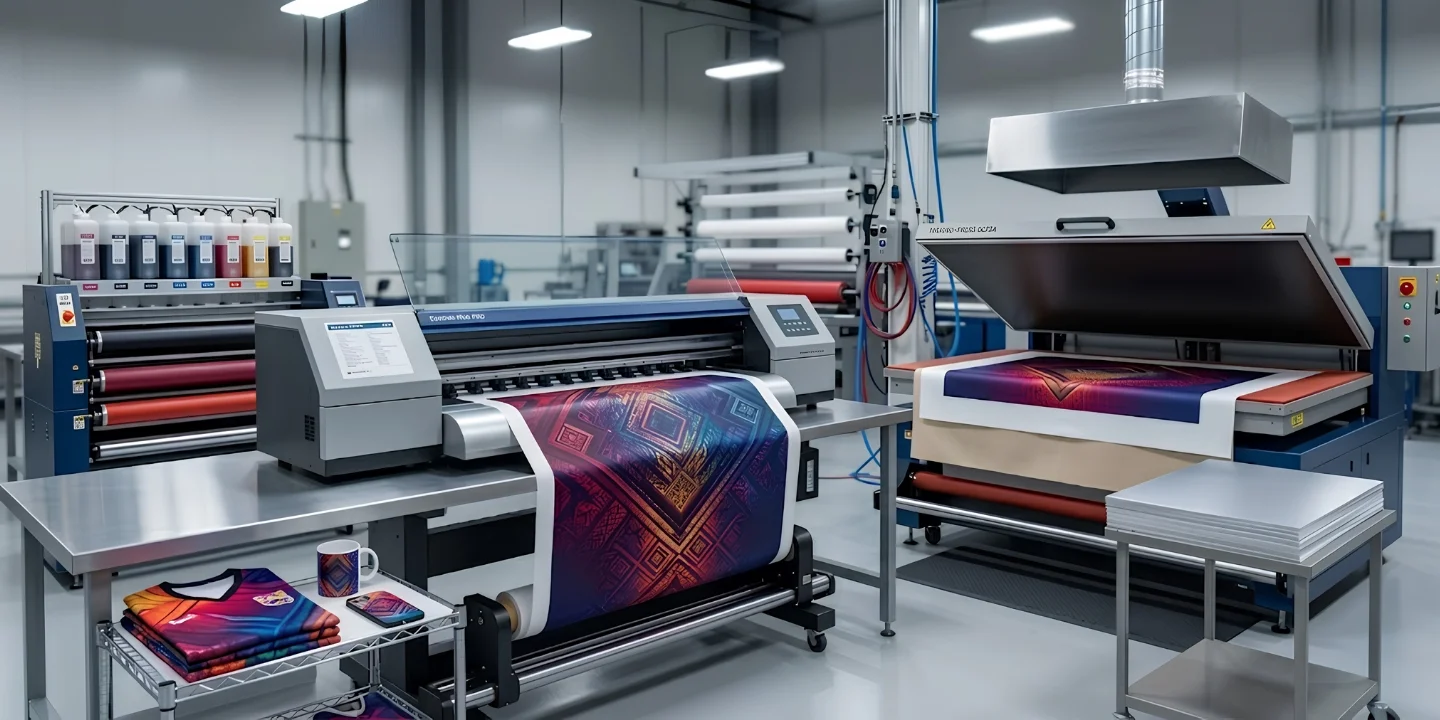
The sublimation printing process begins with a computer-made design. That design is printed on the special sublimation paper, used in sublimation. Next, you put the printed paper in the product and heat-press it. Ink is solid, but it evaporates into a gas with an increase in temperature. This gas penetrates the surface of the material and forms a part of the material. The design is not attached to the product after cooling, but is placed inside the product.
This is why sublimation prints are likely to appear bright and sharp. Neither does it fade, crack, or peel easily as compared to most other printing methods.
Types Of Sublimation Printing
Dye Sublimation Printing
The dye sublimation printing involves a special ink that becomes a gas on the addition of heat. The ink penetrates deeply into the polyester or coated surfaces and becomes inherent to the surface.
This technique enjoys popularity as it is applied to shirts, mugs, phone cases, stickers, labels, and packaging, as it provides vivid and durable outcomes.
Desktop Sublimation Printing
Small and custom orders are printed using desktop sublimation. It is easy to operate and is enjoyed by small businesses and print-on-demand stores. This variant is ideal with customized items and a limited production batch.
Large-Format Sublimation Printing
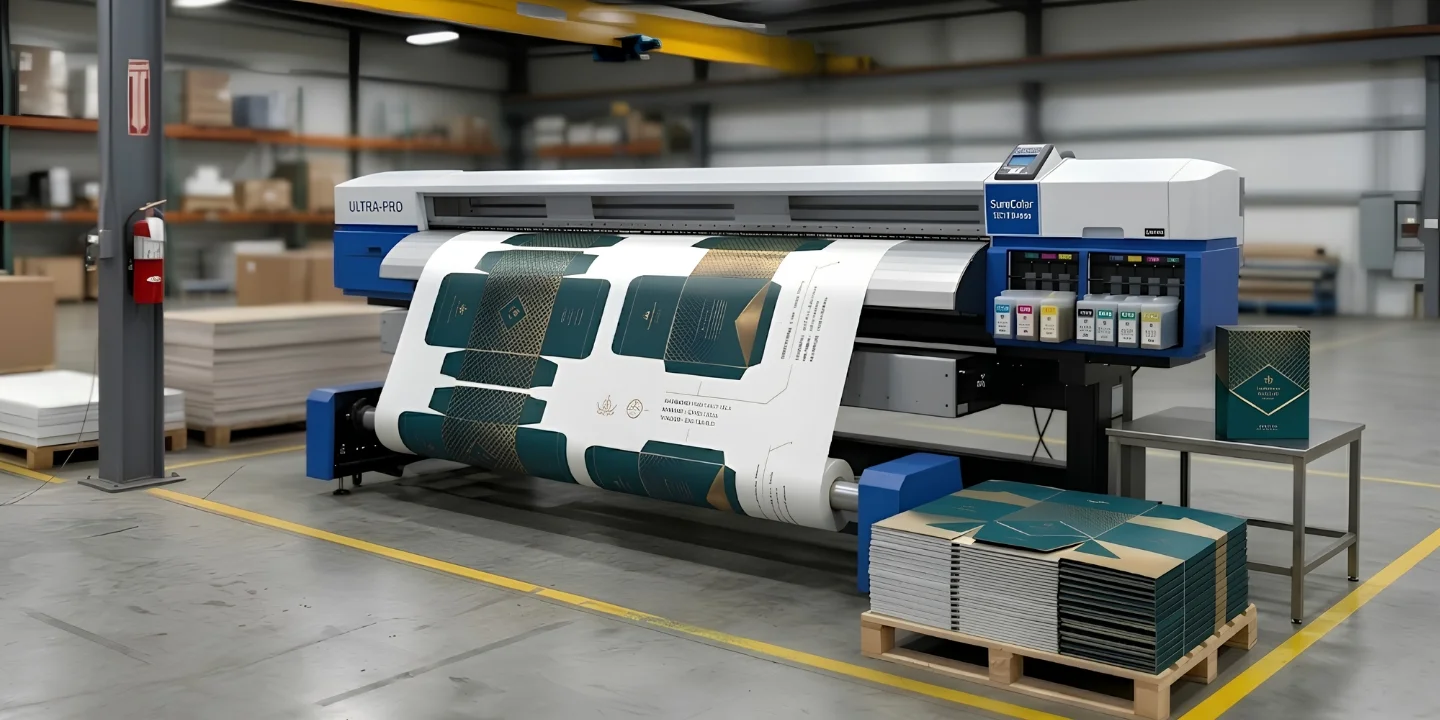
Big images, such as banners, flags, and packaging materials that require a large size, are printed in large-format sublimation. Most professional printing companies use it since it gives high-quality prints on a large scale.
Why Do People Use Sublimation Printing?
Many businesses and artists prefer to use sublimation printing due to its clean and clear results. It is highly effective with custom products, promotional products, and print-on-demand stores.
Individuals prefer this process due to its ability to generate vivid colors and smooth, quality images. The prints are also long-lasting, and they do not easily fade. On the cloth, the pattern is not hard since it is embedded in the cloth rather than being on top. It is also suitable for small custom orders as well as large production.
Sublimation printing is a good option if you desire designs that appear professional and are durable.
Sublimation Printing On Custom Packaging & Premium Materials
MyBoxPrinting is focused on printing a wide range of high-quality marketing and retail products.
We print business cards, brochures, booklets, bookmarks, and presentation folders with color accuracy and beautiful printed image quality.
We also produce stickers, labels, decals, tags, table tents, address labels, CD jackets, playing cards, and other custom promotional products that will make your brand shine.
Custom Packaging & Boxes
We offer complete custom packaging solutions to meet different business needs. We make retail boxes, product boxes, pillow boxes, book boxes, wine boxes, and other specialty boxes.
We also sell Mylar bags, corrugated shipping boxes, and rigid boxes that are used to protect and present.
Material Options
We work with durable and high-quality materials that are environmentally friendly to ensure that each product is durable and professional.
We have paperboard and cardstock to package our products in retail, corrugated cardboard to package heavy products, kraft paper to create a natural and environmentally friendly appearance, rigid stock to package our products in high-end packaging, and plastic materials such as Mylar to use in a flexible and long-term manner.
Printing & Finishing Capabilities
We offer complete personalization and high-quality printing and finishing. Our color printing is CMYK and PMS color printing through offset and digital printing to give us the correct colors. Our finishes, such as gloss, matte, soft-touch, and UV coating, are also available.
We emboss, deboss, foil stamp, and spot UV to make it look high-end. We also die-cut custom shapes, add window cut-outs, as well as inserts and other special features.
Other Compatible Materials (Extended Uses)
Finally, the use of specialty printable materials should be encouraged for an extended period: these include polyester fabrics and items covered with it, sublimation-coated ceramics mugs, metal sublimation, and potentially some plastics that are capable of being sublimation printed.
Sublimation Printing Vs. Other Methods
The process is contrary to screen printing, vinyl, and direct-to-garment printing. The benefits of sublimation are self-evident in the case of certain products, and both techniques are used.
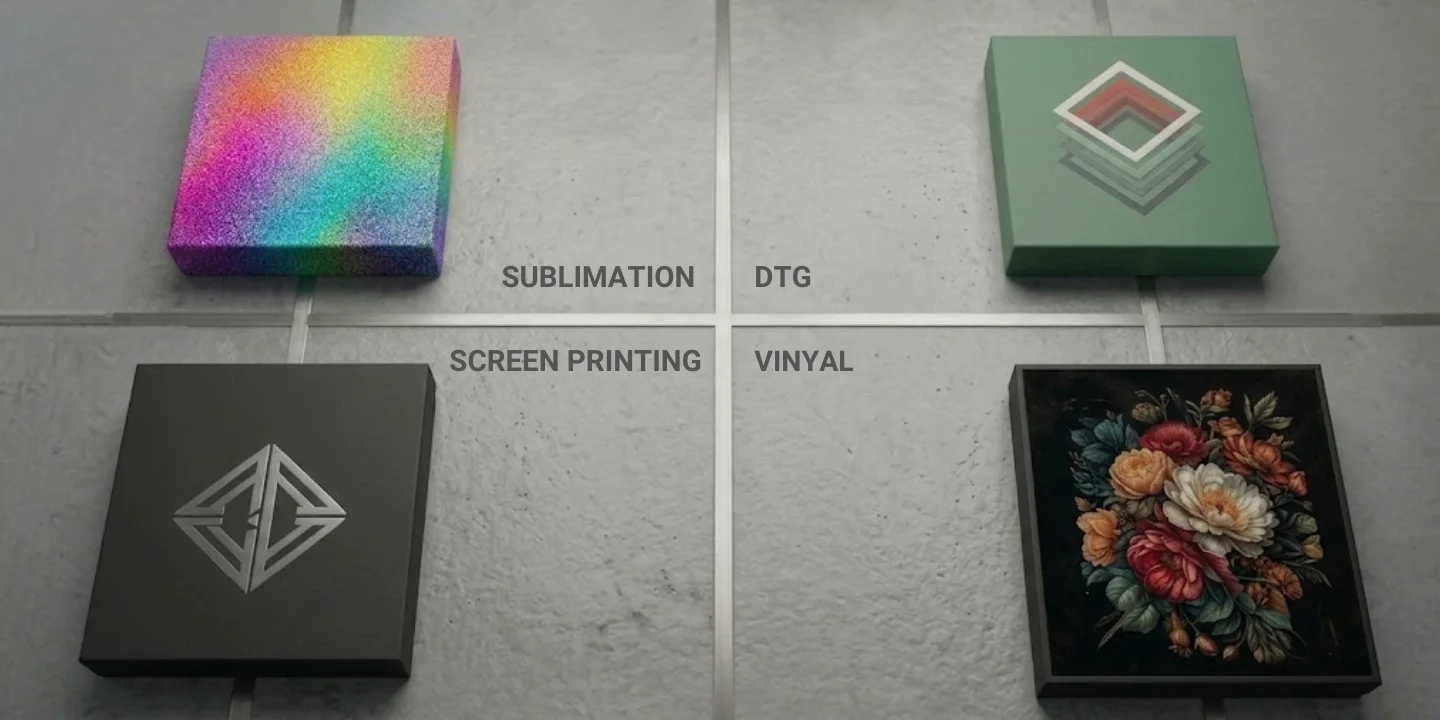
Sublimation Vs. Screen Printing
Screen printing is suitable when it is huge quantities and heavy designs. Full-image prints with numerous details that are colored are better suited for sublimation.
The ink is not absorbed into the fabric like in screen printing. Rather, it is placed on top of the material. This is contrary to sublimation, where the design is added to the fabric.
Sublimation Vs. Vinyl
Vinyl is stuck to the product by heat application. It can also become thick and can break when it becomes old. Sublimation will provide a smoother finish since it will be a part of the surface.
Sublimation Vs. DTG
DTG printing is effective on cotton clothes and other fabrics. Polyester and coated materials are susceptible to sublimation.
Sublimation Printing Vs Other Printing Methods
Sublimation usually provides a cleaner finish in case you desire bright designs on the correct material.
| Printing Methods Comparison | ||||
|---|---|---|---|---|
| Characteristic | Screen Printing | Vinyl Printing | DTG Printing | Sublimation Printing |
| Best Use | Bulk orders, simple designs | Simple logos and shapes | Cotton fabric designs | Full-color, detailed prints |
| Materials | Boxes, labels, packaging | Labels, flat surfaces | Cotton garments | Polyester, coated paperboard, mugs, packaging |
| Print Quality | Bold with little detail | Clean with little detail | Great detail on fabric | Vibrant, photo-quality |
| Durability | Long-lasting | May crack or peel | Good on cotton | Very durable, does not fade or crack |
| Finish | Slight texture | Slight thickness | Soft fabric feel | Smooth and seamless |
Sublimation Printing For Business
The use of sublimation printing is widespread in the print-on-demand and custom merchandise market. It is used by small businesses to produce customized shirts, mugs, bags, and gifts.
A good choice is when you wish to sell products using names, logos, quotes, or full-color graphics.
It can also be easily customized, which is applicable in situations where customers want special designs.
Sublimation printing produces custom products that appear professional and feel upscale. It is handy for online shops and local print shops.
Is Sublimation Printing Worth It?
Sublimation printing is worth it, provided that you want bright colors, a high degree of durability, and a clean finish. It is most effective in a product line that contains polyester or coated products.
This might not be the option when you require printing on cotton or dark paper. Another approach can be more appropriate in that case.
Sublimation is a wonderful combination of quality, speed, and style for most custom product vendors.
This is the reason why it is still among the most used printing techniques in the case of contemporary custom merchandise.
Sublimation Printing Tips To Achieve The Best Results
The following are some of the practical tips that can assist you in achieving the best out of each print:
1. 300 DPI or more images should always be used. The low resolution of the art creates pixelated or blurry prints.
2. Prefer 100% polyester blanks. The greater the polyester, the brighter and more accurate your colors will be.
3. Calibrate your heat press on a regular basis. This is due to the uneven distribution of temperatures, resulting in a disparity in color or ghosting.
4. The mirror step is not to be omitted. Always preview your design before printing, especially when you have a lot of text in your design.
5. Use heat-resistant tape. This helps to avoid slipping of the transfer paper during pressing, causing blurring.
6. Store blanks properly. Place store sublimation blanks in a clean and dry, lint-free area to avoid contamination before pressing.
7. Proofread prior to mass printing. It is always advisable to make a test run on a sample blank before making a full production order.
Advantages and Disadvantages Of Sublimation Printing
This is a word, in a brief, simple analysis of what sublimation printing is good at, and where it falls short.
Benefits Of Sublimation Printing
The colors produced by sublimation printing are bright and durable since the ink is incorporated in the material; it does not crack, peel, or fade easily. It gives a smooth and soft texture to the surface without any raised texture, and is comfortable to use in everyday use. Full-color designs, such as photos and gradients, are also easily printable. It does not require any setup cost and is suitable for both small and large orders, and generates minimal waste.
Drawbacks Of Sublimation Printing
Sublimation printing is most effective on light colored material since the ink cannot be seen on dark material. The color of the blended fabrics could be less bright. This would initially be quite expensive and you would have to buy the printer and heat press and because it does not work with white ink, anything white that is shown would be due to the bottom material.
Advantages Of Sublimation Printing To Customize Packaging
The following ways are more effective in the sublimation printing using custom packaging. You can easily print detailed designs, logos, and full-color graphics with ease. The outcome appears clean and smooth since the ink will be incorporated into the material.
It can be of great help in e-commerce packaging since brands usually desire distinctive and eye-catching packaging. You can also produce designs that are unique and that suit your brand style with sublimation printing.
It is also suitable for small and custom orders. Sublimation printing is inexpensive, but it offers flexibility when you run a print-on-demand store or sell personalized goods.
Frequently Asked Questions
What is sublimation printing used for?
Sublimation printing is used by people to create personalized products such as shirts, mugs, phone cases, and gifts. When you desire vivid colors and designs that last long, it is great.
Does sublimation printing fade?
No, sublimation printing is not easily faded. The design is incorporated in the material and therefore does not crack, peel, or fade as surface prints.
What is required to do sublimation printing?
You require a sublimation printer, sublimation ink, sublimation paper, and a heat press. Polyester or specially coated products should also be a part of you.
Which is better, sublimation or screen printing?
It depends on the product. Sublimation works best on colored and detailed designs, polyester, and coated surfaces. Big orders and some cotton goods are more favorable for screen printing.
What is dye sublimation?
Sublimation of dyes is a process in which ink is converted to a gas by heat. Then the ink is transferred to the material and is incorporated into it. This produces bright and long lasting prints.
Can sublimation printing be used for packaging?
Yes, sublimation printing can be applied to packaging, particularly coated and compatible materials. It assists in developing all-around, detailed, and long-lasting designs of custom boxes and branding.
What is good about sublimation printing as far as business is concerned?
Sublimation printing is suitable for the business, as it produces professional prints, is capable of making customized prints, and produces long lasting prints that do not fade. It is also useful in enhancing brand image and customer experience.
Is it possible to utilise sublimation printing in e-commerce stores?
Yes, online stores are investing in sublimation printing to generate personalized products, branded boxes, and customized packaging. It makes the process of unboxing more appealing and memorable to the customers.
What is the difference between normal printing and sublimation printing?
Sublimation printing is not the same since the ink does not lie on the surface but rather within the material. This smoothes out, brightens, and lengthens the print over normal printing techniques.
Final Thoughts
Now you have an idea of what is sublimation printing. It is a printing technique that involves the use of heat to transfer designs to materials. The process produces high quality, long lasting and bright images.
Polyester and coated materials are the best to use in sublimation printing. This is why they apply it to custom products such as boxes, stickers, and other personalized products.
It is an intelligent decision since it provides vivid colors and powerful outputs that are long lasting. It is also suitable to beginners and businesses.