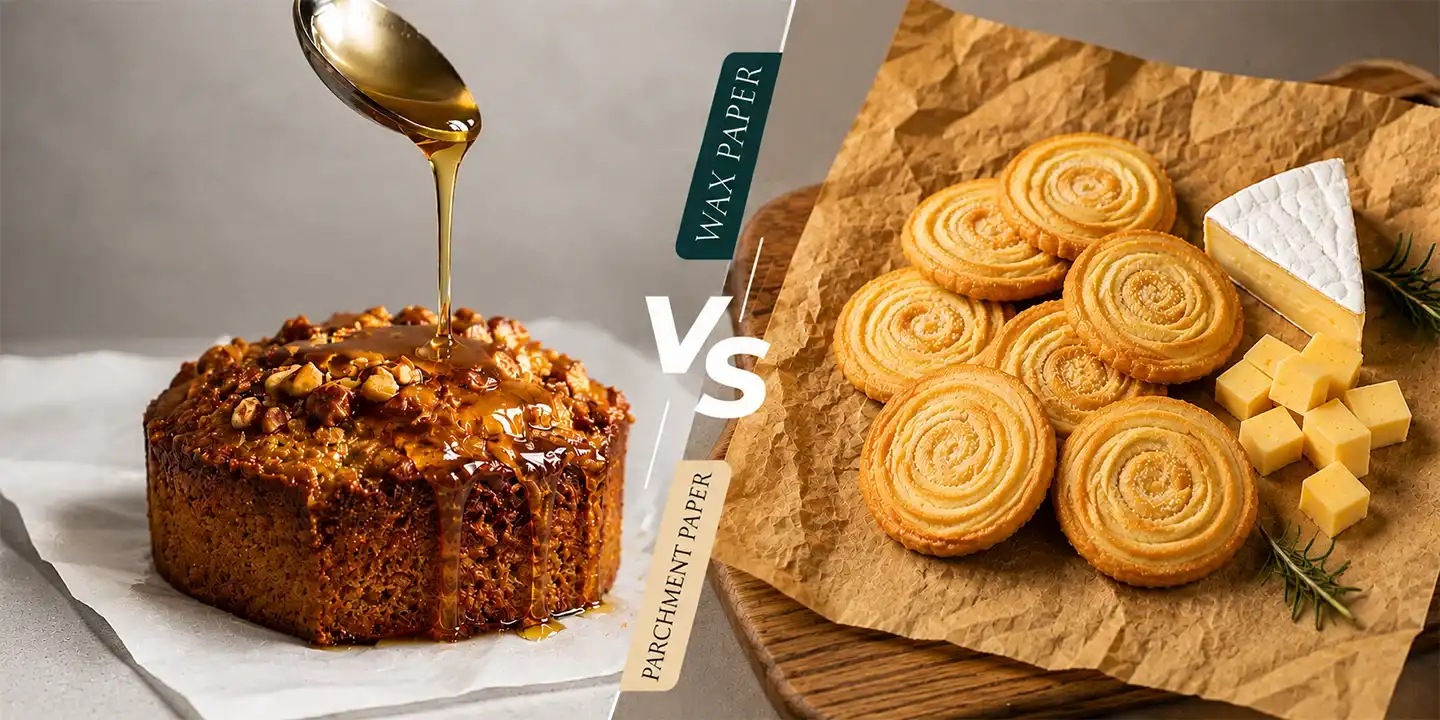
Selecting the right custom paper is essential for commercial food service brands, QSR franchises, and wholesale bakeries seeking to maintain food quality and box integrity. The main difference is that parchment paper is coated with silicone and can resist high temperatures, whereas wax paper is coated with paraffin wax and is moisture-resistant. These two papers are used for more than just baking and cooking purposes, but also come in handy in the packaging and wrapping business.
Different brands and companies, such as restaurants, fast food bars, bakeries, gift stores, and even subscription brands, use them as inserts or decorative add-ons. If you still don’t understand, learn more about them in detail from this blog.
Is Wax Paper the Same as Parchment Paper? Key Differences Explained
No, they may sound interchangeable, but their properties and usability make them very different from one another. Wax paper is used for cold storage, and parchment paper is better for hot food handling. This table will make their properties clearer:
| Aspects | Parchment Paper | Wax Paper |
|---|---|---|
| Microwave Safe | Yes (splatter guard) | Briefly at low power to prevent splatter |
| Thermal Resistant | 420°F-500°F (215°C-260°C) | Around 175°F (79.4°C) |
| Chemical-Resistant | Resists mild acids and oils better | Resists mild acids and oils less |
| Moisture/Grease Resistant | Yes | Yes |
| Surface | Non-stick, water- and grease-repellent | Non-stick, moisture-resistant |
| Coating | Silicon | Paraffin or soybean wax |
| Cooking En Papillote | Steam Locks | Not heat-safe |
| Storing Candy | Oversticks prevented | Ideal liner |
| Bakery Tray Liners | Non-stick base | Unsafe option |
| Roasting Vegetables | Heat resistant | Wax melts |
| Rolling dough | Great option | Good option |
| Covering Countertops | Heatproof sheets | Mess barrier |
| Food Packaging & Wrapping | Hot & cold foods | Cold & room-temperature foods |
| Suitable For | Baking, roasting, and heat cooking | Food prep, freezing foods, storage |
What is Wax Paper?
Wax paper is a food-safe, non-stick paper that is coated with paraffin or soybean wax. With its moisture-resistant properties, it is best suited for cold and room-temperature food storage. The safe temperature for this paper is below 120°F (48.8°C) and up to 175°F (79°C).
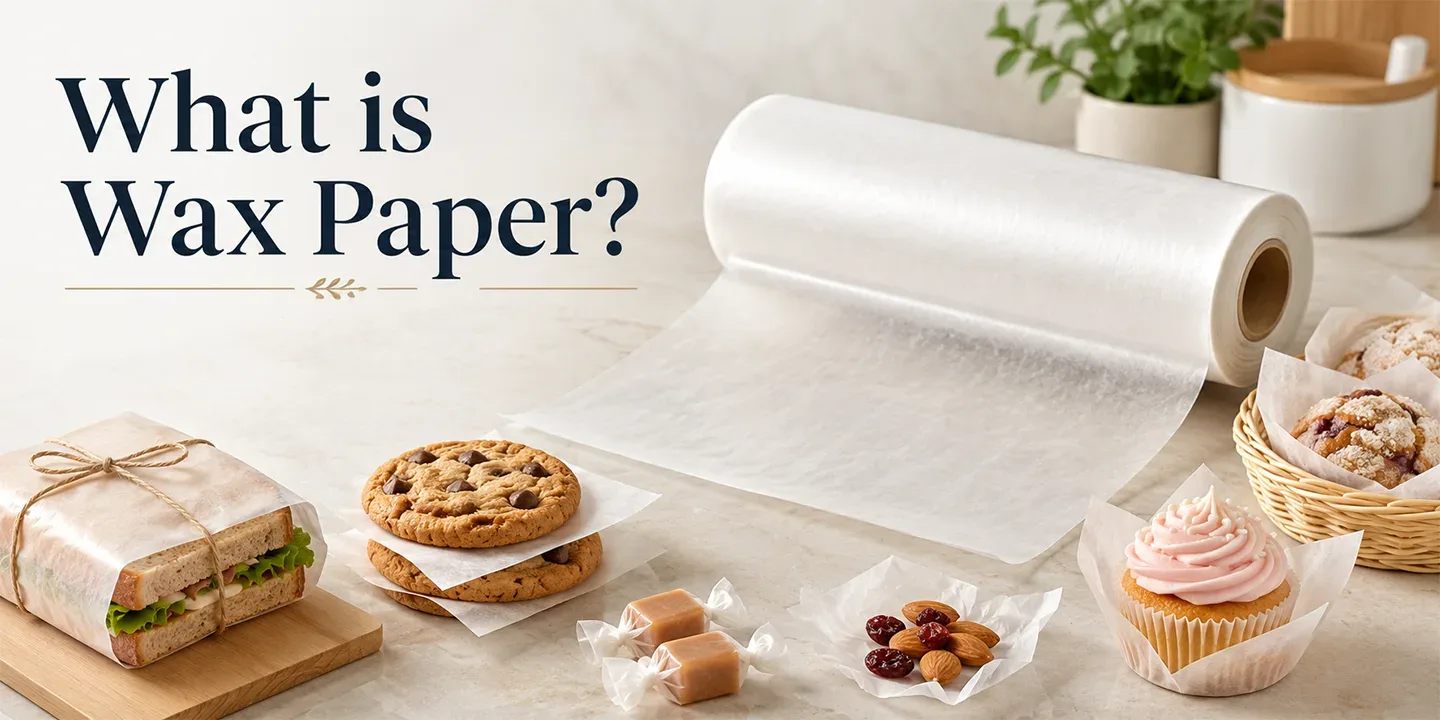
This is a low-thermal paper, and you can’t use it in a microwave at high temperatures. You can find it in rolls, pop-up sheets, bags, and special cuts around 20-30 GSM in a slightly translucent and glossier finish.
Key Properties of Wax Paper
-
Wax coating adds flexibility and water- and grease-resistant properties.
-
Coating creates a hydrophobic layer that prevents food from becoming soggy.
-
Lower thermal properties and can melt under high temperatures.
What is Parchment Paper?
Parchment paper is also known as baking paper and is a cellulose-based paper that is covered with a silicone coating. This creates a non-stick, heat- and grease-resistant surface that does not melt in microwaves, boilers, or air fryers. It can withstand high temperatures from ~420 to 500°F (215 to 260°C) and is used for baking, roasting, and cooking meals.
You can find them in two styles. Bleached parchment paper is a translucent white color, and the unbleached parchment paper has a clear tan. Bakeries, confectioneries, QSRs, and others can get it in rolls, flat squares, or circular sheets in various GSMs (40-50).
Key Properties of Parchment Paper
-
Low surface energy and easy food release from pans or trays.
-
Silicone coating blocks fats and oils and keeps food items clean and fresh.
When to Use Wax Paper vs. Parchment Paper: Commercial Food Service & Packaging Applications
It is important that you understand which paper is used where so that you can avoid a soggy or sticky mess. If wax paper is left unchecked in the oven for too long, it can lead to a fire hazard, as its coating melts all over the food item, which is toxic. As for the parchment paper, do not exceed the temperature of 420-450°F (215-232°C), or else it can cause smoking or even ignition. Therefore, go through these points and understand their specific usage:
Wax Paper:
-
Lining counters to prepare meals.
-
Wrap sandwiches, deli meats, cheese, etc., for refrigeration storage.
-
Use as a dividing layer to prevent cookies, fudge, and other sticky desserts from sticking.
-
Wax paper remains a cost-effective choice for cold food wrapping, deli service, and refrigerated storage.
-
Helpful as food packaging and used to line deli trays, bakery displays, candy boxes, etc.
-
Serves as an insert for custom boxes to separate cookies, chocolates, or frozen food.
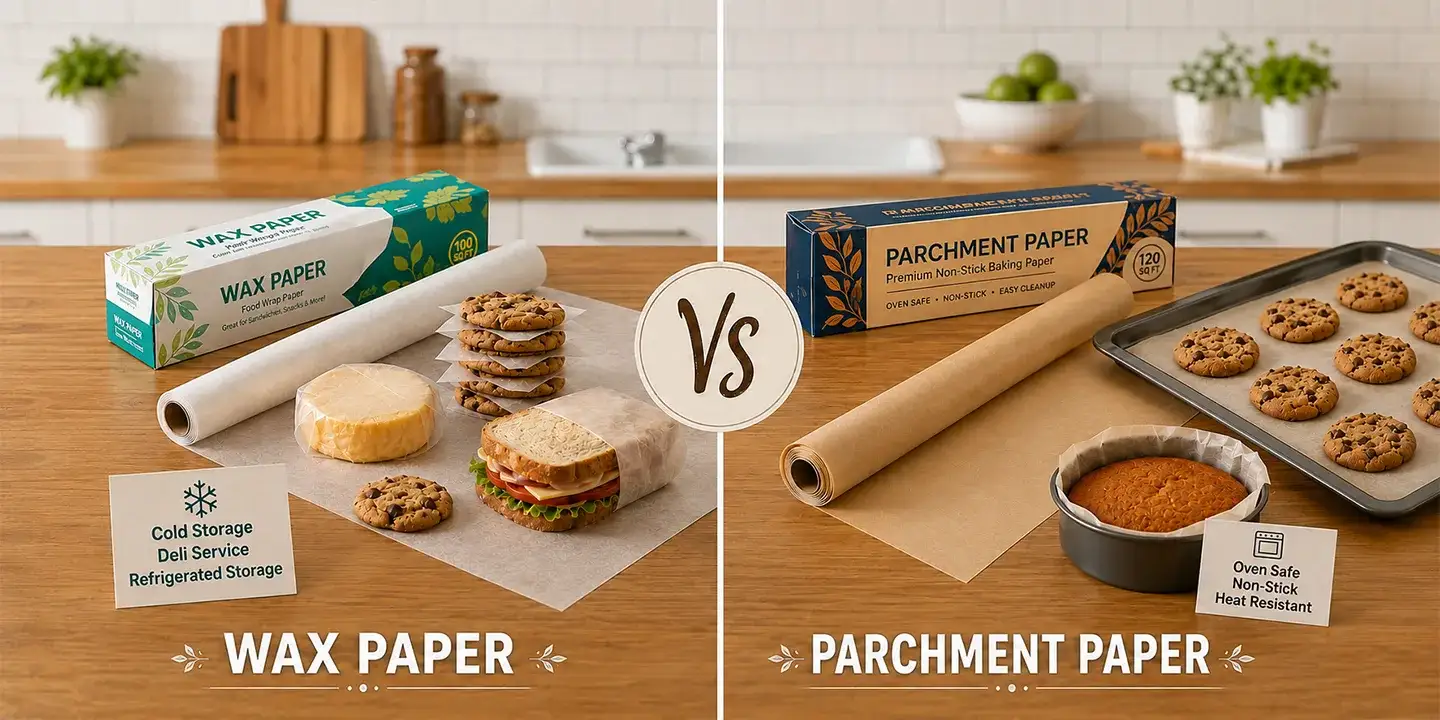
Parchment Paper:
-
Grease liner for baking pans, roasting vegetables, bread molds & cake pans.
-
Roast vegetables, fish, chicken, etc., on baking trays.
-
Steam food like fish, herbs, etc.
-
Microwave-friendly paper.
-
Parchment paper is generally preferred for hot takeaway foods and premium packaging.
-
Can be used as a liner for bakery boxes, pizza boxes, serving baskets, and trays.
-
Works as a protective insert, as a cushion for delicate treats, and as an organizer for custom boxes.
High-Heat Baking, Commercial Oven Equipment & Sheet Liners
Parchment paper works best in this regard, as you can use it as grease liners for baking pans, roasting vegetables, bread molds, and cake pans. It is even reliable for en papillote and cartouche baking and cooking methods. Wax paper should never be used in high-heat cooking or ovens, as the wax will melt and become toxic to the food.
Best Paper for Candy & Chocolate Making
Whether you are making cookies, chocolate, or candies, these two papers can’t be beaten for such purposes. They have a non-stick surface, and you can use them to wrap individual pieces or layer them for protection. Not only that, but while making fancy treats with strawberries, bananas, and dried fruits, parchment and wax paper get the job done. They help harden the food quickly (less than 30 minutes in the fridge).
QSR Deli Wrapping, Sandwich Liners & Takeout Logistics
This is where wax paper excels! The waxy coating forms a moisture-proof and airtight barrier that doesn't let the moisture escape from bread, sandwiches, and other dough. Food service operators utilize dry wax and standard wax sheets as grease-resistant interleaving dividers for bulk meat storage, QSR sandwich wrapping, and moisture-controlled box inserts.
What is Dry Wax Paper? Industrial Breathability & High-Temperature Specs
It is a type of bleached Kraft paper. This paper is infused with wax directly into the paper fibers, which creates a grease-resistant barrier and doesn’t leave behind any wax residue. Brands like fast food brands and food & beverage companies use it for its breathable nature, as it keeps the food from getting soggy.
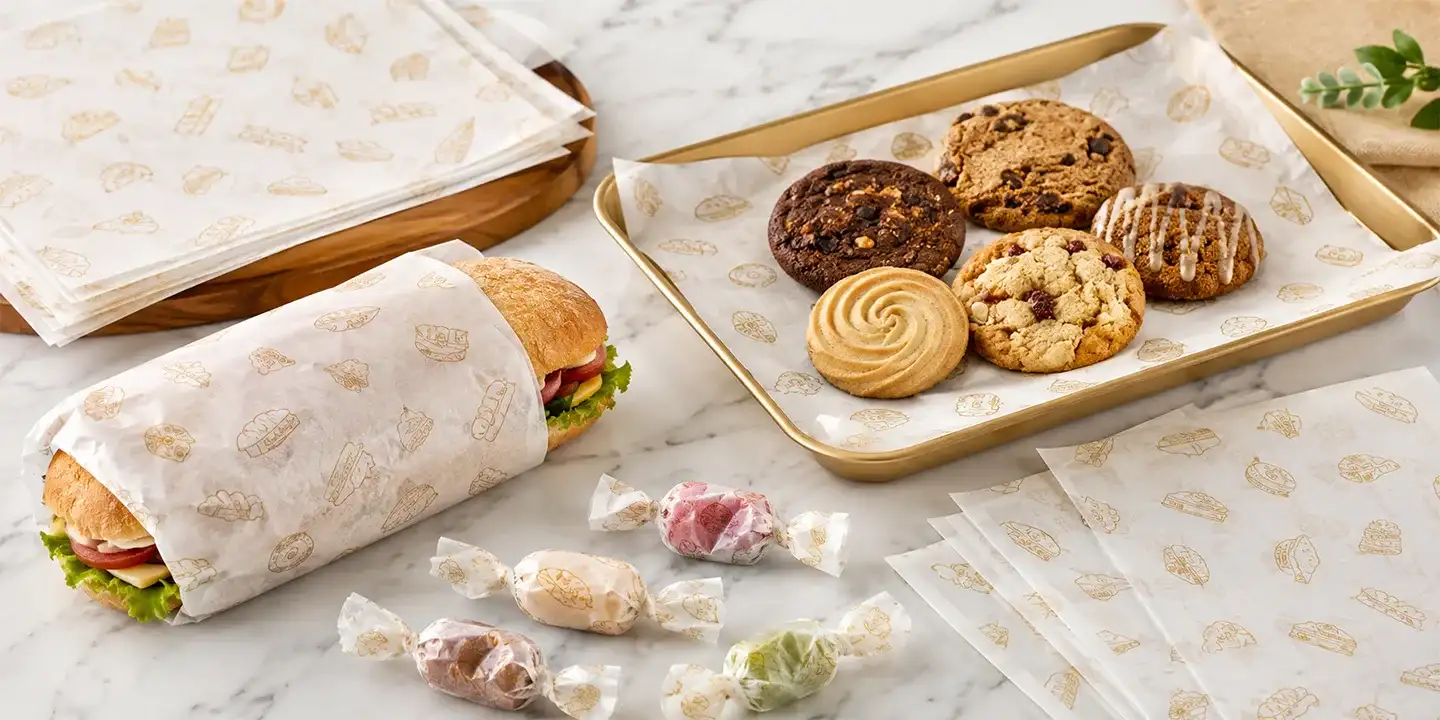
Unlike standard wax paper, dry wax paper is even oven-safe and can withstand 400°F (~204°C), but it should only be used if the paper is completely covered by a batter or dough. You should not directly expose it to oven heat, or else it could smoke or burn. Some of the common uses of this paper are as basket liners, separators, and wraps.
Can You Put Parchment Paper in the Oven?
Many people ask this question, and for them, the answer is yes! Parchment paper is meant for baking and cooking, as it is a clear winner due to its heat-resistant properties (~420-450°F). This non-stick paper is used as a baking liner that keeps food such as cookies, brownies, etc., from clinging to the pan. When it comes to an air fryer, parchment paper should not be exposed to direct flames or a broiler, or else it will set itself on fire.
Can You Put Wax Paper in the Oven?
Wax paper is not recommended for the oven because the wax coating melts well below baking temperatures and can smoke or transfer onto food. If a recipe calls for a wax-paper-lined pan, substitute parchment or dry wax paper instead. Its wax coating will melt off and is toxic when it comes into contact with the food.
Moreover, it is also not suitable for broiler temperatures, but you can leave it in the microwave for a short time. The wax paper, wrapped around the food item, will prevent splatters and hold moisture.
Parchment vs. Wax Paper: Which Is Better for a Heat Press?
In an obvious sense, parchment paper is the most certain choice for a heat press because the wax paper will just melt all over the food. Baking paper (another name for parchment paper) can withstand up to 200-250°F (93.33-121°C) more heat than wax paper. So without making any mess, you can cover your tortilla and pass it through the panini press with ease.
Moreover, if you are using any heat application, whether it’s in a kitchen or your home, use parchment paper. When you place this paper between the iron and your fabric, it prevents sticky residue from burning your iron and gives a clean result.
Parchment vs. Wax Paper: Which Is Best for Food Storage?
Wax paper works best with short-term storage, and parchment paper with general storage. Due to their coating and resistance properties, they store food differently:
Wax Paper for Freezing Foods
When it comes to storing or preserving food for a short period of time (up to about a week), choose wax paper. It is best for wrapping cold food items, between stacked cuts & meats, and keeping them in the freezer or fridge. The waxy coating resists moisture and air, which keeps the products fresh.
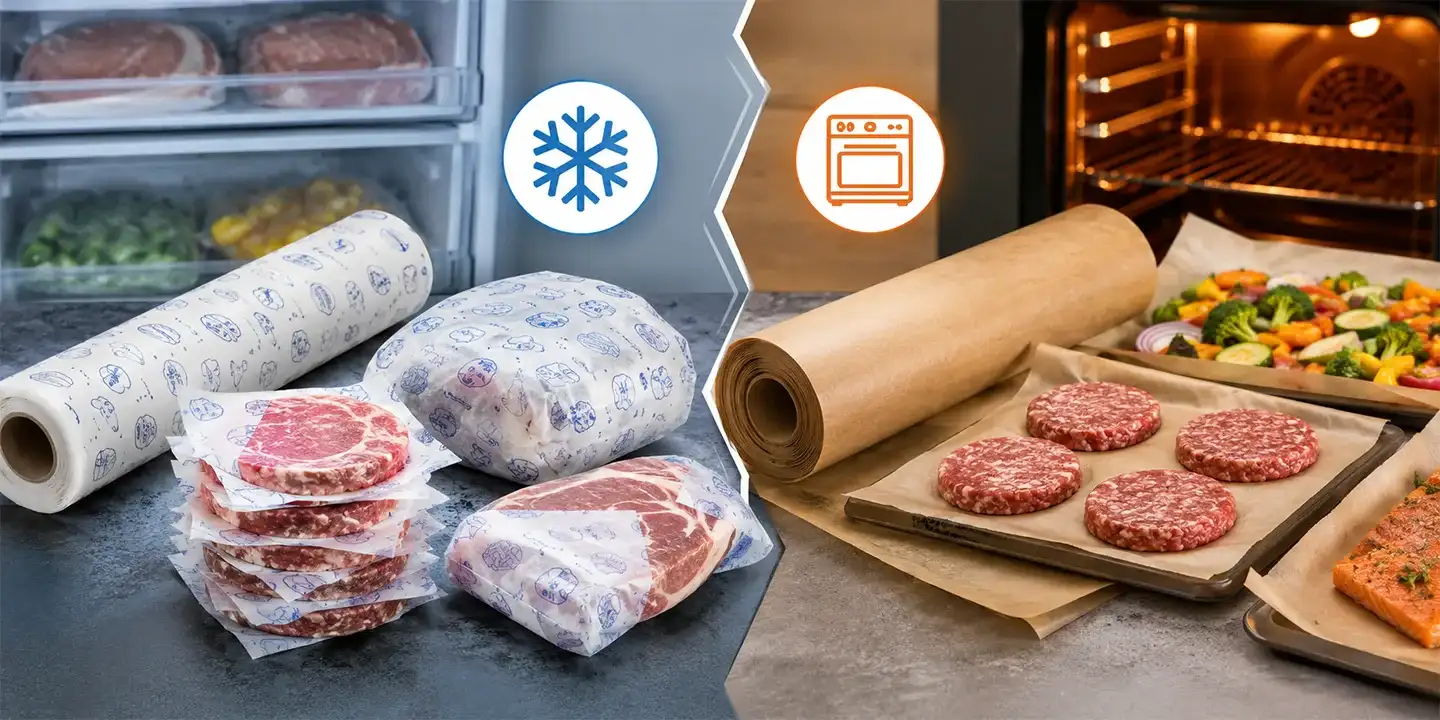
Parchment Paper for General Storage
Parchment paper can work for general storage. It is best when burger patties, different meats, and other food items are covered with lined baking sheets and go straight from the fridge into the oven.
What Are the Alternative Papers for Food Preparation?
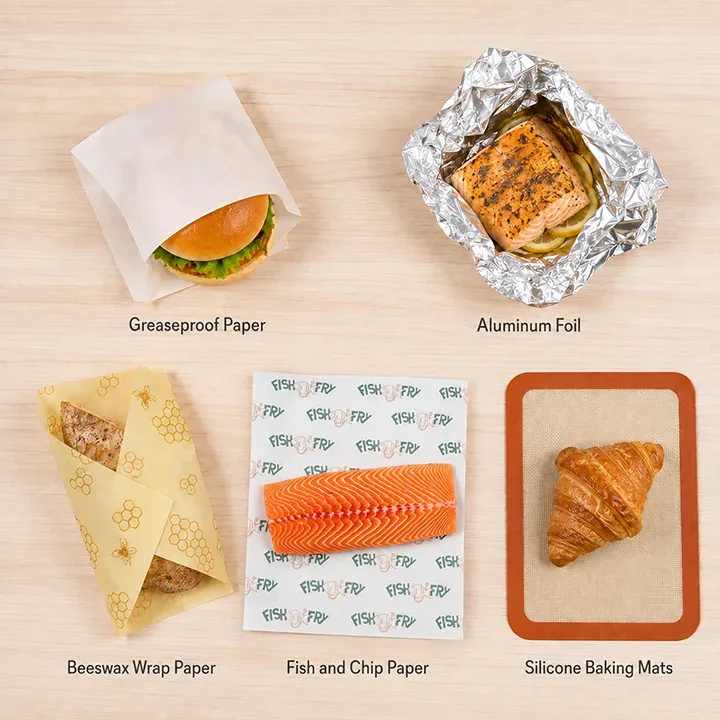
If you don’t have these two papers lying around at your place, then don’t worry. There is a wide range of other similar papers that can help you. For starters, you can use greaseproof paper, aluminum foil, beeswax wrap paper, nonstick cooking spray, and silicone baking mats. But the most used papers are these:
Wax Paper vs. Freezer Paper: Barrier Protection & Storage Duration
These two papers are considered the same type of paper. But they differ immensely from each other in various functions and properties:
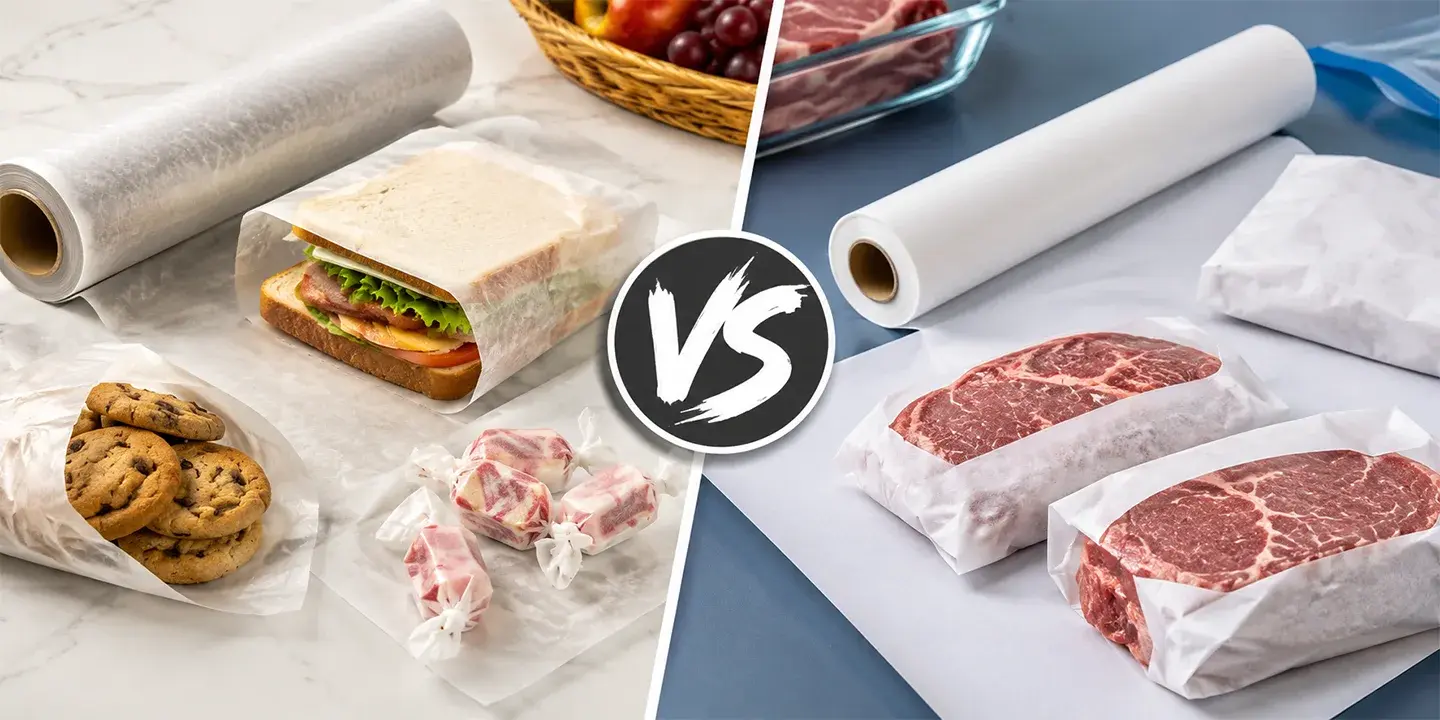
| Aspects | Wax Paper | Freezer Paper |
|---|---|---|
| Coating | Paraffin or soybean wax on both sides | Plastic/polythylene coating on one side |
| Moisture/Air Barrier | Moderate | Strong |
| Primary Use | Short-term cold storage (1-7 days) | Long-term cold storage (6 to 12 months) |
| Best For | Separating burger patties or cookie layers, wrapping sandwiches or cheese | Wrapping raw meats, poultry, fish, and bulk items |
Butcher Paper vs. Parchment Paper: Density, Breathability & Heat Ratings
They might look interchangeable, but these two papers don’t quite substitute for one another. Look at this table to understand how they differ:
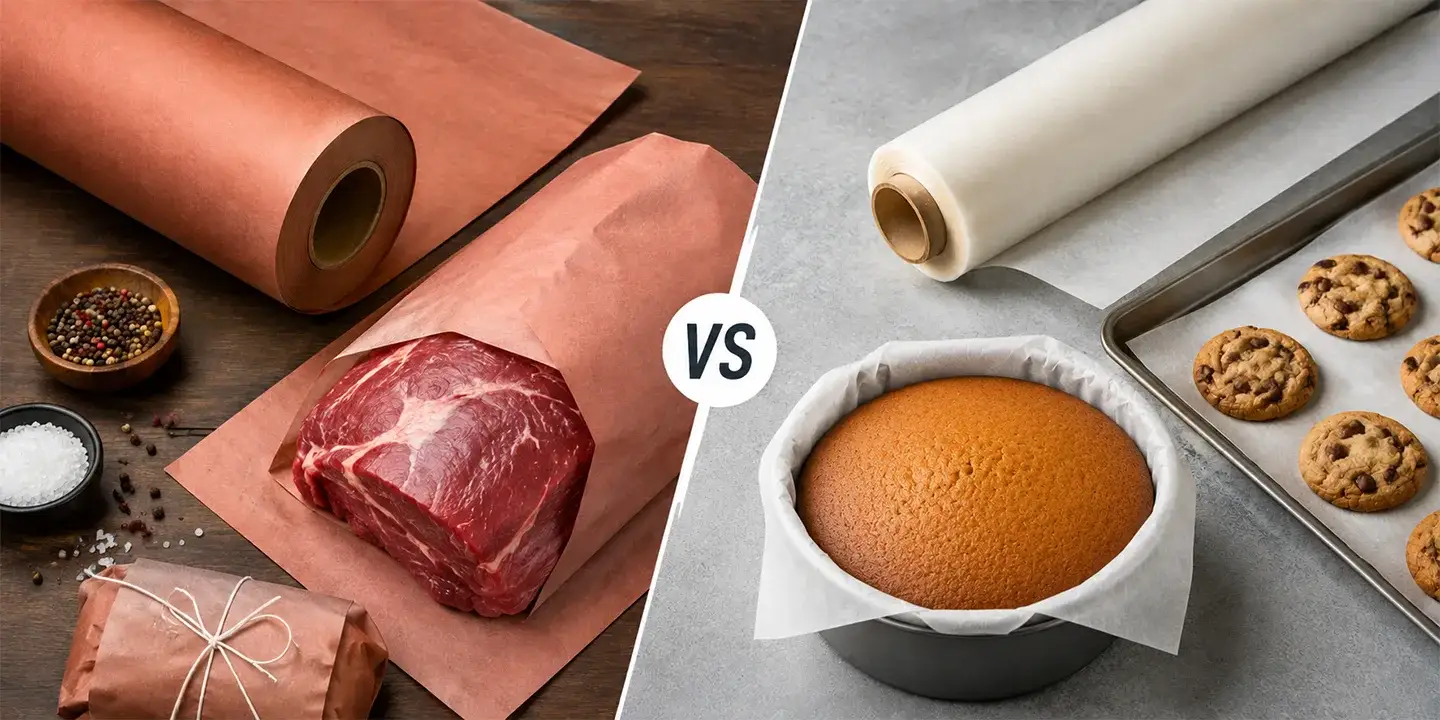
| Aspects | Butcher Paper | Parchment Paper |
|---|---|---|
| Material | Thick, uncoated kraft/wood pulp paper | Silicone-coated paper |
| Breathability | Breathable | Nonporous |
| Heat Rate | 300°F (149°C) | 450°F (232°C) |
| Strength | Heavy, durable, and tear-resistant | Thinner, lighter (easy food release) |
| Best For | BBQ smoking, wrapping raw meat/fish, short-term storage | Baking, delicate pastries, oven roasting |
Can You Reuse Parchment Paper or Wax Paper?
Yes, you can, under the right conditions, and parchment paper sheets can be used several times for baking and heating purposes. As soon as it turns greasy, leaves a burnt residue, and its corners turn dark brown or black, throw it out.
Wax paper is helpful for clean, dry, and cold tasks, and you can just wipe or wash it with cold water. Do not clean it with hot water, and discard it when it starts sticking to the food.
Which Costs More: Parchment Paper or Wax Paper?
Clearly, the parchment paper costs more than the wax paper because of its heat-resistant silicone coating and manufacturing process. The baking paper does have more versatility than other materials, such as baking, cooking, storing, and more.
Where to Get the Best Custom Parchment Paper and Wax Paper?
Do you want to get the best recyclable and customizable custom paper for your cooking and baking purposes? My Box Printing is at your service. We are the most trusted paper manufacturing partner out there with high-quality paper and FSC & FDA-approved materials.
We not only provide you with premium parchment and wax paper but also endless personalization options. They would look great as packaging and wrapping paper, or you can use them as box inserts. You can showcase your brand’s logo, pattern, or design with our eco-friendly inks and advanced printing methods.
There are no MOQs, so order as much paper as you want in bulk at our wholesale prices. Whether you’re a retail brand, gift company, or high-end food service, get your hands on custom parchment baking and wax paper rolls and sheets within days. Contact us now!
Frequently Asked Questions (Commercial Packaging & Safety Standards)
What are the essential differences between parchment paper and wax paper?
Parchment is silicone-coated and is mainly used for oven- and heat-related purposes (it can withstand up to ~450°F and ~500°F if heavy-duty). Wax paper is coated in paraffin or soy wax and melts at extremely high temperatures, which makes it best for cold storage and wrapping items.
Can I microwave parchment paper and wax paper?
Yes, of course, both papers are microwave-safe. It is better to cover the food item so that it doesn't splatter when heated. Parchment paper holds up to high temperatures, but wax paper only lasts till 120°F (49°C).
Is it safe to use the two papers for grills and smokers?
No, wax paper shouldn’t be used in grills or smokers, as it’ll melt around 175°F (79.4°C). Parchment paper is generally not recommended because when exposed to direct flames or high radiant grill heat, it will cause it to char, burn, or blow into the fire.
Can I air fry parchment paper and wax paper?
Parchment paper works great in an air fryer, as it stops foods like cheese or wet batter from sticking to the basket. But you must never use wax paper because its coating is thin, which will melt and leave harmful chemical residue behind.
What are the recommended uses of wax paper in food preparation?
You can use wax paper for wrapping sandwiches and use it as a lining for dough and as a separating layer of cookies or patties before freezing. This paper can be used in the microwave to an extent.
Is wax paper a substitute for parchment paper in oven recipes?
No, if you leave the wax paper in the oven for a long time, the wax coating will melt. That will be hazardous and toxic for food.
What brand offers eco-friendly paper?
We provide companies with FDA & FSC-certified custom paper, which you can use for baking, storing, and cooking.
Where can I buy high-quality parchment and wax paper rolls?
Amazon, Walmart, and other grocery, retail, and online marketplaces sell these rolls. However, if you want them in bulk at wholesale, My Box Printing gives you the best deals on rolls and even sheets.
Can I use either one of the papers as a liner for my cake pan?
You can use parchment paper, since it easily releases food without creating a mess. Wax paper will melt off and ruin the pan.
At what temperature should parchment paper not be used?
Standard parchment paper is rated up to 450°F; some heavier-duty brands are rated to 500°F. There is a possibility that it will catch fire.
Which paper is better for freezing and baking?
Freezer paper is best for preserving food, as it blocks air and moisture and keeps the contents fresh and crispy for 6+ months.
Can I eat food that was on wax paper in the oven?
No! If the wax melts onto your food, it is not considered food-safe to consume.
What is the difference between deli paper and wax paper?
Deli paper is uncoated and used for quick food handling and serving. Wax paper has an actual wax coating, which makes it more moisture-resistant but not food-friendly when heated.
Final Thoughts
Parchment or wax paper? Which one is best for what purpose? This blog answers your concerns by explaining the main difference. Parchment is silicone-coated and reliable for heat-related food handling, and wax paper is wax-coated, best for cold prep, wrapping, and short-term storage. If you want to order them in bulk, then contact our team. We only provide the most reliable and functional custom paper, with the desired customization, print, and format. Not only that, but bakeries, food bars, subscription brands, etc., can get them in custom wrapping or packaging designs. They are even great as a packaging insert.