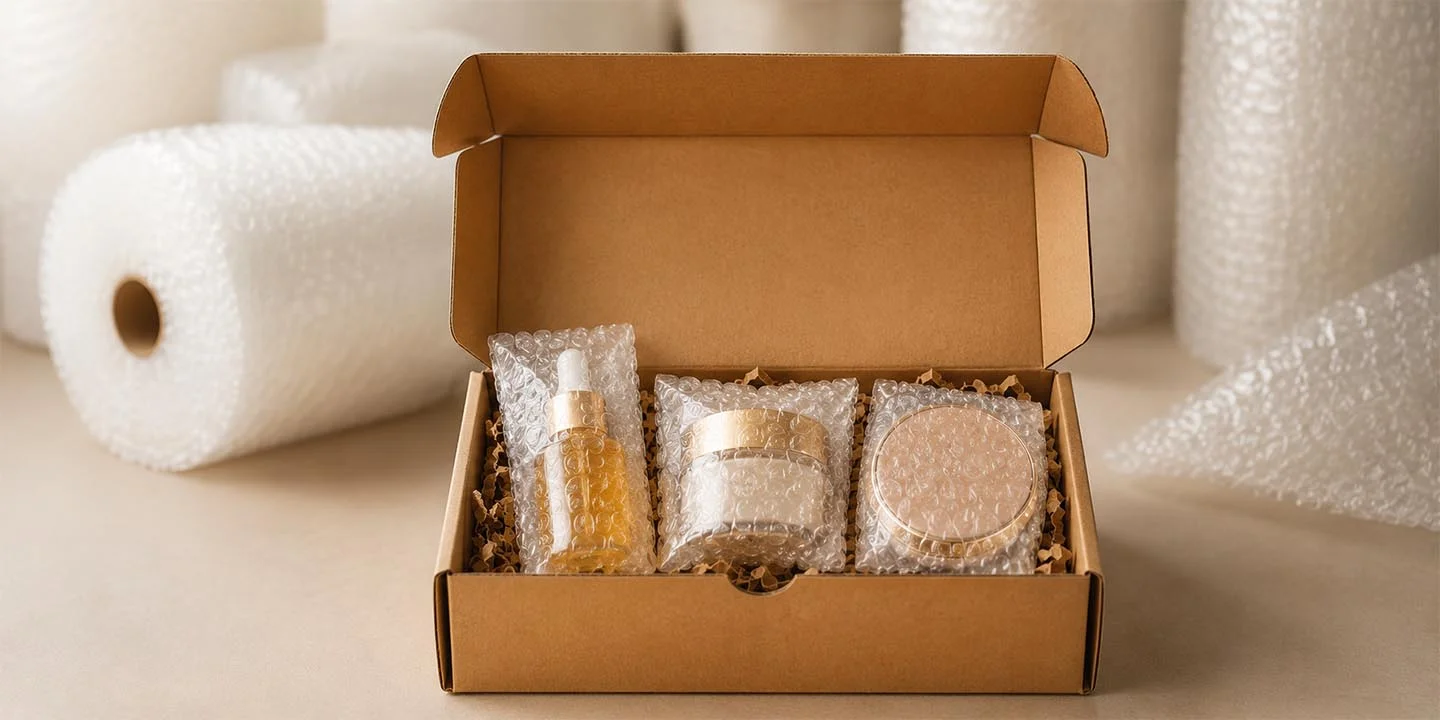
Bubble wrap is the most globally used packaging insert material. It has one goal. That is to protect its commercial stock during shipping, storage, and warehousing. It’s a sheet or roll with tiny, flexible plastic air-filled cells. The cells cushion and reduce scratches, absorb shock, and stop items from sliding around with each other.
Electronics companies rely on them. So do the cosmetics, kitchenware, and retailers. If companies that include luxurious and high value products want the most reliable packaging insert, they should go for bubble wrap.
But what is it made out of? Why does it work so well? If you want the best protective insert, then look no further!
What is Bubble Wrap? Brief Introduction
Bubble wrap is a packaging that is made from a LDPE plastic called low density polyethylene. Two sheets or layers are combined with each other with air filled in them, which creates bubbles.
Do you know what these tiny pockets of air can do? They can absorb different sorts of vibrations, impact, and harsh shipping movements. With their incredible cushioning feature, your items will stay protected. There won’t be any cracks, dents, or scratched surfaces. That’s why they are also known as bubble cushioning, bubble packaging, air cushioning, and protective padding.
They barely add any weight to the product, even when you cover them multiple times. You hear correctly. You can ship products with a ton of bubble wrap without paying an extra cent. Now that is what every industry looks for.
A little historical fact for you. This bubble wrap was accidentally invented as a packaging insert by Alfred Fielding and Marc Chavannes in the 1960s. Shippers and manufacturing companies can find them in various heights and film gauges.
What Is The Process Of Making Bubble Wrap?
Pellets of raw polyethylene resin are heated at somewhere between 450o and 512o Fahrenheit. The melt and pump at high pressure through something called a slot die. A rotation cylinder with a vacuum drum draws the melted plastic film into molds to create the cells.
Aside from that layer, a second layer of plastic is laminated, which completely seals the air pockets inside. To harden and lock the bubble material in place, a set of cooling rollers is passed over it. Then they are formed into rolls and used as giant master bubble rolls.
Bubble Wrap As A Protective Packaging?
It is similar to a shock absorber, as it protects the contents of the package. They do not face any structural damage before reaching the customer. It cushions vibrations, impact, and shock during delivery with ease.
Thus, protecting the package from damage. Also, the flexible plastic wraps around irregular item shapes. It tightly holds them in place. The void fill restricts the product from slipping and collisions during shipment.
What Are The Right Bubble Wrap Sizes?
The variation of bubble wrap height and film gauge (mils) provides different levels of protection. Small protects lightweight items and large absorbs impacts. Go through the others in the following:
Small Bubble Wrap
Size: 1/16” or 1/18”
These bubble pockets contain less air, which makes them ideal for protecting fragile items, such as glassware, ceramics, and smartphone screens. You can wrap them 2 to 3 times to create a proper barrier from surface scratches and chips.
Standard Bubble Wrap
Size: 3/16”
The most used wrap in fulfillment centers is the standard bubble wrap size. They strike a balance between flexibility and cushioning. Their small footprint helps wrap odd-shaped items, like a vase or a picture frame, and even delicate tableware.
Medium Bubble Wrap
Size: 5/16”
If the size and weight of the product increase, so does the level of protective cushioning. The medium size provides better strength and puncture resistant property. Moreover, businesses can use them as a void filler to keep items separate and avoid item collision.
Large Bubble Wrap
Size: 1/2”
It is engineered with heavy duty air pockets that keep bulky equipment, machinery, and oversized products safe. The larger air pockets protect and shield most of the impacts throughout the transit.
How Many Bubble Cushioning Categories Are There?
Different protect various levels of protection, which is why there are several variations of bubble wrap available for industries.
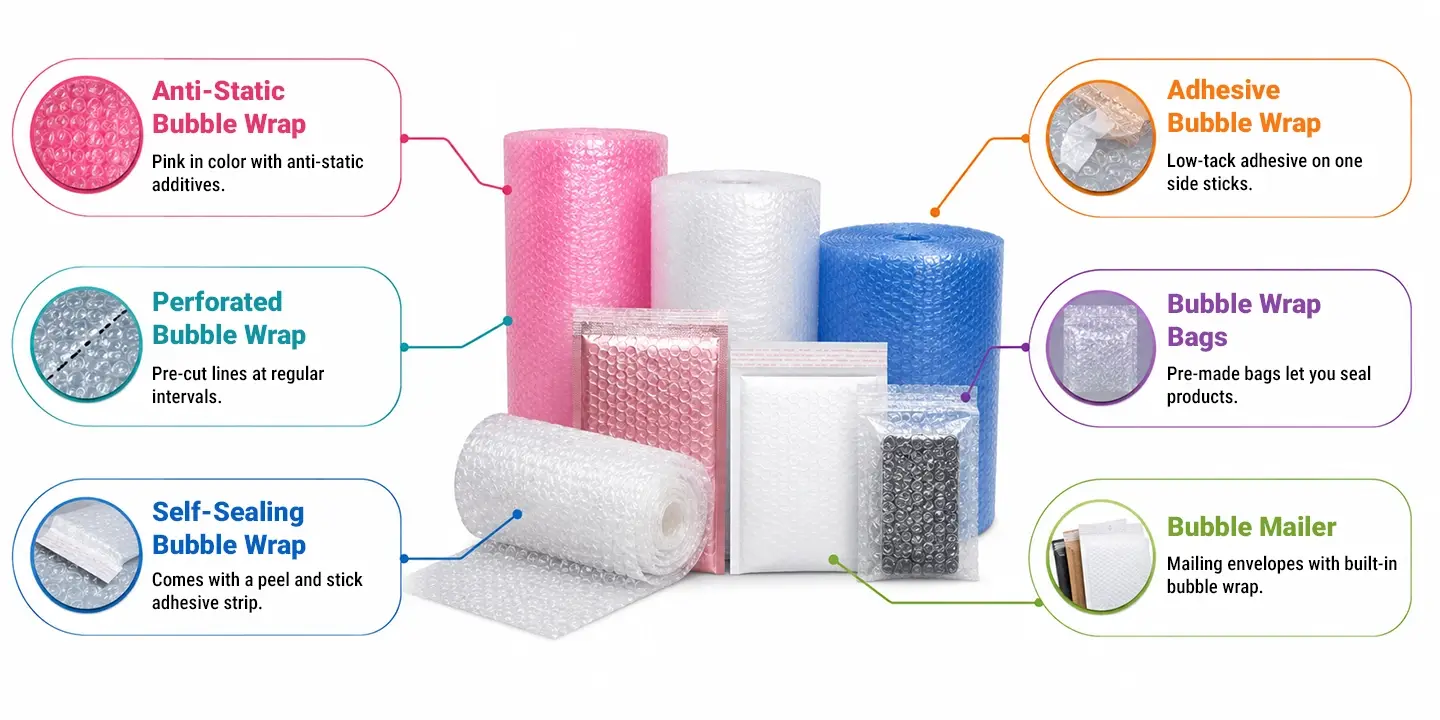
Anti-Static Bubble Wrap
The wrap is pink in color. Businesses can recognize them instantly. This includes a compound called anti-static additives, which shield electronics from ESD. It is available in rolls or tubing, bags, and foam-laminated formats.
Perforated Bubble Wrap
If your team wraps hundreds of packages daily, perforated bubble rolls can save a lot of your time. The roll has pre-cut lines at regular intervals that make it a tool free tearing experience at pack stations.
Self-Sealing Bubble Wrap
This wrap comes with a peel and stick adhesive strip built right into the material. It can actually stick to themselves without needing for tape; you can peel back the protective backing, press the edges, and get the job done.
Adhesive Bubble Wrap
This stuff has a low-tack adhesive on one side, which is great for sticking to smooth surfaces, like glass and polished metal. Also, it stops surface scratches and peels off clean at delivery.
Bubble Wrap Bags
Packaging industries don’t have to spend time wrapping items. They can simply insert the product into these pre-made bags and seal them. Those businesses that ship large order volumes, bubble wrap bags save every second.
Bubble Mailer
These are simply mailing envelopes that have a layer of bubble wrap already built in. They are a popular choice for documents, accessories, books, and cosmetics. You can pick them in poly, kraft, and metallic bubble mailers.
Bubble Wrap Worth The Investment For Businesses
There is no doubt about it; the answer is yes! It's versatile and is a staple for many industries for good reason. They have multiple protective properties, which is a big reason industries actually use it.
Products, like glass bottles, delicate electronics, framed art, mirrors, and other hardware items, can leave empty space inside shipping containers. If they’re left like that, they can slide around during shipment. That’s what bubble wrap prevents!
Companies use them to package their products from fragile electronic devices to glassware, even odd-shaped items. These bubble air rolls are available in green/blue eco-friendly alternatives.
Common Industries That Rely On Bubble Wrap
There aren’t many companies that don’t rely on bubble wrap for their packaging. The industries that use them to a large extent are given as such:
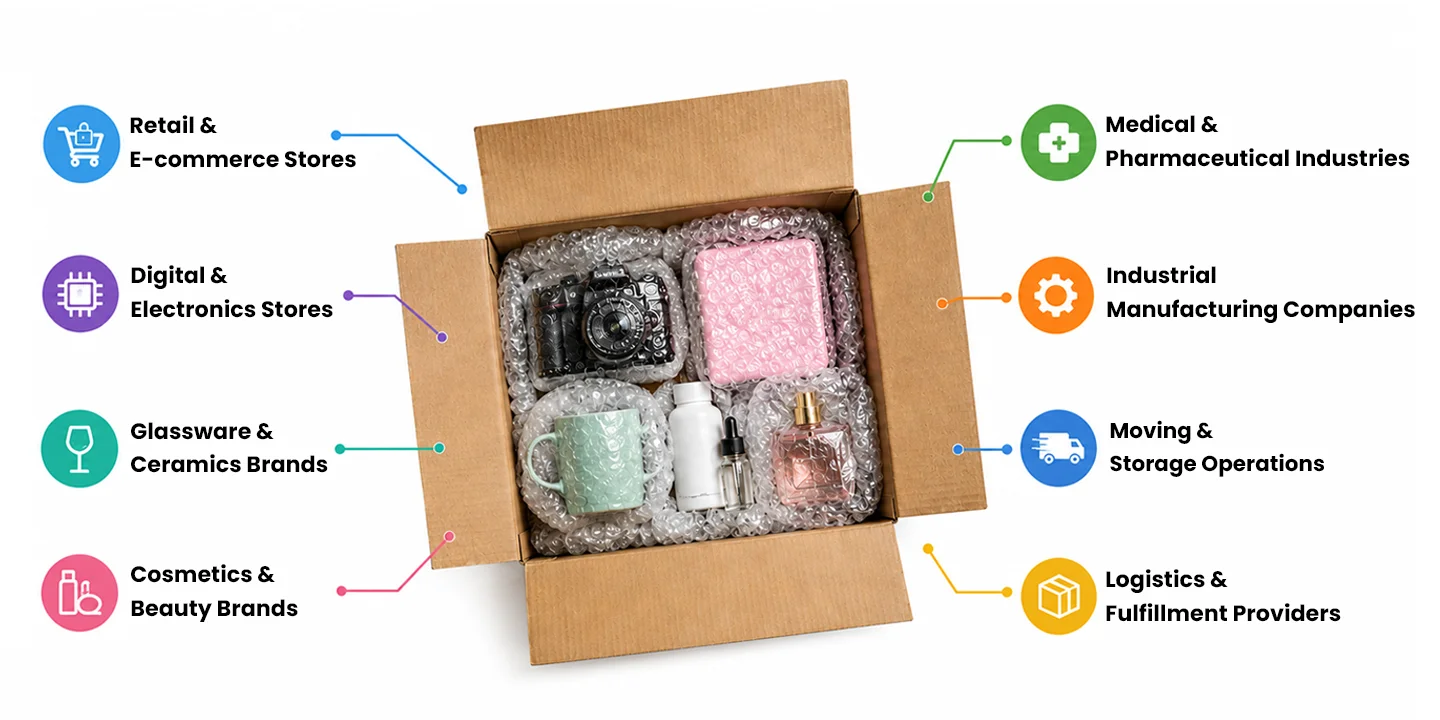
Retail & E-commerce Stores
Bubble wrap protects products from dings and scuffs as they make their way to the warehouse.
Electronics Companies
These brands needed a special bubble wrap, which is pink Anti-Static. It prevents machinery and small computer chips from ESD (Electrostatic Discharge).
Glassware & Ceramics Brands
Wrap creates a cushion between items, which prevents them from rubbing each other during shipment.
Cosmetics & Beauty Brands
This would allow businesses to sell delicate makeup and palettes without worry of damage to them or their consumers.
Medical & Pharmaceutical Industries
The bubble wrap protects and cushions the hospital’s sensitive diagnostic equipment, its crucial medications, and lab glassware from vibrations and shocks.
Industrial Manufacturing Companies
These industries use protective bubble wrapping to ensure machine parts are safe from scratches during warehousing and transport.
Moving & Storage Operations
Its flexibility makes it perfect for wrapping odd shaped furniture, unlike other rigid packaging materials.
Logistics & Fulfillment Providers
Acts as an excellent inner layer of protection in shipping containers, which allows packaging to be sorted through machines and stacking.
Environmental Impact: Is Bubble Wrap Recyclable?
Yes, you can recycle LDPE bubble wrap. But not in your regular curbside bin. It is because of the thin plastic film material it's made out of. This can get tangled in the sorting equipment, which can jam the machinery.
- Material Type: Bubble wrap is LDPE (#4 plastic), which needs to go through a specialized collector or recycler.
- Where to Dispose Them: The wrap is sent to flexible plastic recycling to scrap plastic brokers or on-site industrial balers for recycling process.
- Prepare it Properly: Before you recycle, be sure to remove any secondary adhesives or stickers, as it can cause contamination. Also, keep it clean and dry before it goes in the bin.
Which One Is Better: Bubble Wrap vs. Alternative Packaging Materials
While bubble cushioning remains a market standard, various alternative protective materials cater to specific industrial shipping requirements. But choose which one best suits your needs:
| Packaging Materials Comparison | ||||||
|---|---|---|---|---|---|---|
| Features | Bubble Wrap | HoneyComb Paper | EVA Foam Inserts | Crinkle Paper | Packing Peanuts | PE Foam Sheets |
| Shock Absorption | Very High: Excellent Cushioning | Medium: Good for impact and compression | High: Absorption for sensitive gear | Low to Medium: Limited Cushioning | Medium: Fit but shifts a lot | Low to Medium |
| Surface Protection | Low to Medium: Punctures easily | Medium: Good coverage | High: Soft closed‑cells | Medium: Protect from light scuffing | Low to Medium: Leave exposed gaps | High: Smooth foam layer protects surfaces |
| Weight | Very Low: Add minimal weight | Low: Lightweight paper | Low to Medium: Denser than paper but still light | Medium: Shredded paper adds weight | Very Low: Light loose fill | Low – 1 to 2 lb per cubic meter |
| Cost | Very Low: Inexpensive | Low: Cheaper per area | Medium to High: More expensive | Low: Budget‑friendly | Low: Cheap in bulk | Medium: More than paper, less than EVA |
| Space Efficiency | Very Low: (massive rolls at wholesale) | High: Expand upon application | Low to Medium: Pre‑cut blocks can be bulky | Medium: Loose paper takes up volume | Low: Takes a lot of space | Medium: Stacked sheets take up room |
| Moisture Resistant | Plastic film resists moisture | Paper absorbs moisture | Closed‑cell foam resists moisture | Quickly absorbs moisture | High for EPS / zero for starch | Moisture resistant |
| Flexible / Fit to Size | Very High: Wraps tightly | High: Expands well when wrapped | Medium: Die‑cut fits well | Medium: Stuffed but not tight‑fit | Low: Flows around items | Medium to High: Less elastic |
| Reusable Material | Yes | Yes | Yes | No | Yes (EPS packaging peanuts) | Yes |
| Best For | Fragile, high‑value items needing overall protection and easy wrapping | Eco‑friendly wrap for moderately fragile items and premium unboxing | Heavy or ultra‑fragile electronics, instruments, or machinery | Low‑risk items, void fill | Filling voids around boxed items, low‑to‑medium fragility | Layering between items, stacking dishes, furniture edges, and panels |
Why Is Bubble Packing Important For Packaging?
Product packaging goes through a lot before it reaches customers. It’s loaded, unloaded, sorted, and moved via vehicles from one place to another. That’s why bubble wrap offers these:
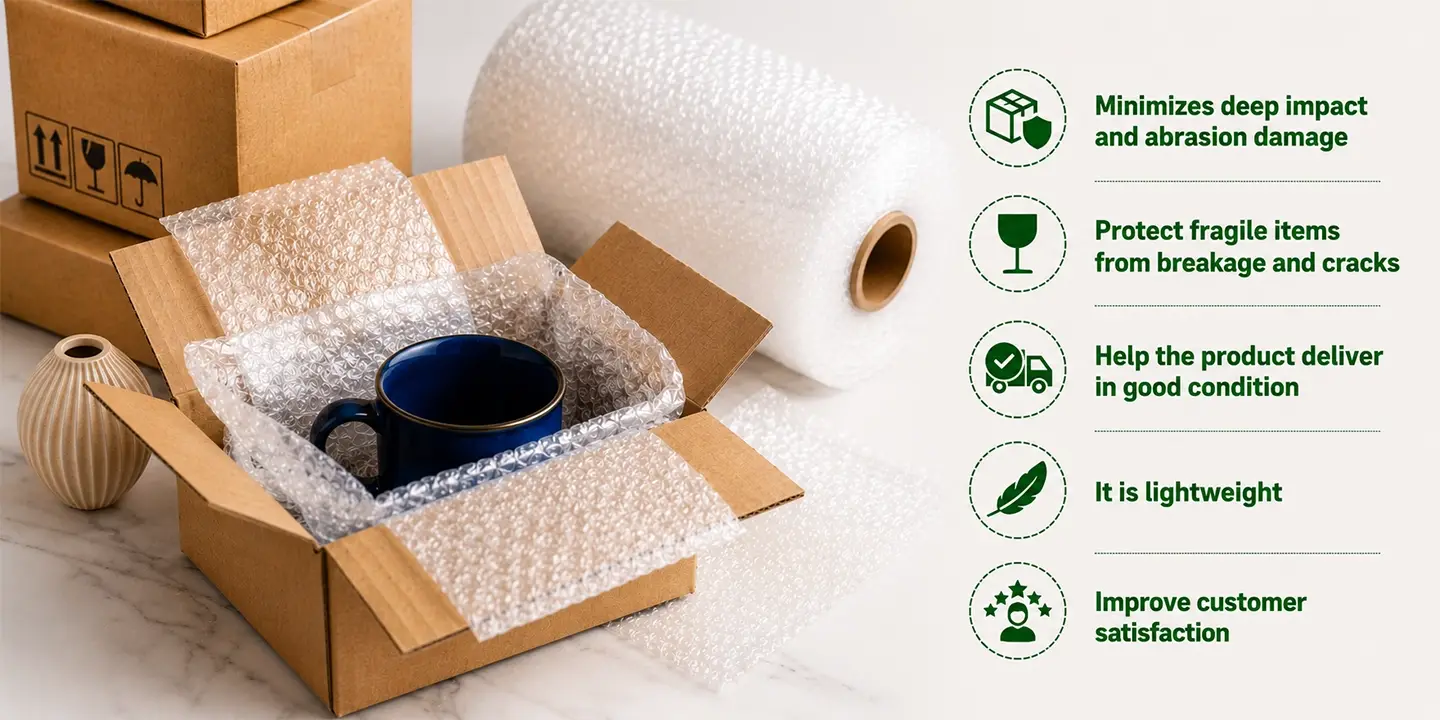
- Minimizes deep impact and abrasion damage
- Protect fragile items from breakage and cracks
- Help the product deliver in good condition
- It is lightweight
- Improve customer satisfaction
Choose Best Bubble Wrap Inserts For Packaging With MyBoxPrinting
Businesses want the best bubble wrap inserts that do more than fill an empty space. We recommend choosing MyBoxPrinting’s bubble-lined solution. Our wrap inserts are designed to provide the ultimate product protection in various shapes and sizes. They are lightweight, keep items neatly tucked in, and you can get discount offers on our wholesale option.
- Get Free delivery across all areas in the U.S.
- Offer 20% off on any amount of bubble wrap insert on a first order
- Businesses can get the best wholesale bulk rates
- Made from the highest quality and eco-friendly packaging materials
- Simple ordering process
Are you ready to level up your packaging game? Get your custom boxes with bubble inserts from MyBoxPrinting today and a truly unforgettable unboxing experience for your customers!
Frequently Asked Questions About Bubble Wrap Insert
What are the functions of bubble wrap?
Its main function is to cushion and protect products during shipping and storage. The cushion absorbs shocks, impacts, and vibrations.
What is bubble wrap material?
It is made from pliable plastic film to co-extruded Low-Density Polyethylene (LDPE) or Linear Low-Density Polyethylene (LLDPE) film.
What direction should my bubble wrap go?
Place the bubbles against the product so it absorbs the impact, while the smooth exterior slides against the cardboard box.
How many layers of bubble wrap do I use?
Brands should use 2 to 3 layers of bubble wrap for the most fragile items. Whereas delicate, heavy, or extremely valuable items require 3 to 4 layers.
What is a cheaper alternative to bubble wrap?
The most cost-effective available alternative is crumpled newspaper or used packing paper.
Is bubble wrap expensive?
It is actually very affordable, the price range going up and down a little with the roll size.
What is the best alternative to plastic bubble wrap?
If you want to go green, paper wrap is an alternative that's plastic free and perforated for easy tearing. Multiple plys or crinkled paper make the packaging eco-friendly and protective. It's worth an investment for eco conscious brands.
Conclusion
Bubble Wrap is at the top of the list of the best packaging inserts in most industrial companies. It is not only lightweight, very affordable, and offers various barrier protections. The selection of the right bubble wrap makes a huge difference. From delicate glass items and electronics to bulky industrial goods remain intact when shipped, packaged, or moved.
And what better way to get the best box insert than MyBoxPrinting? We offer free US shipping, wholesale pricing, and an easy ordering process. Contact us today, lay out your demands, and let us do the rest!