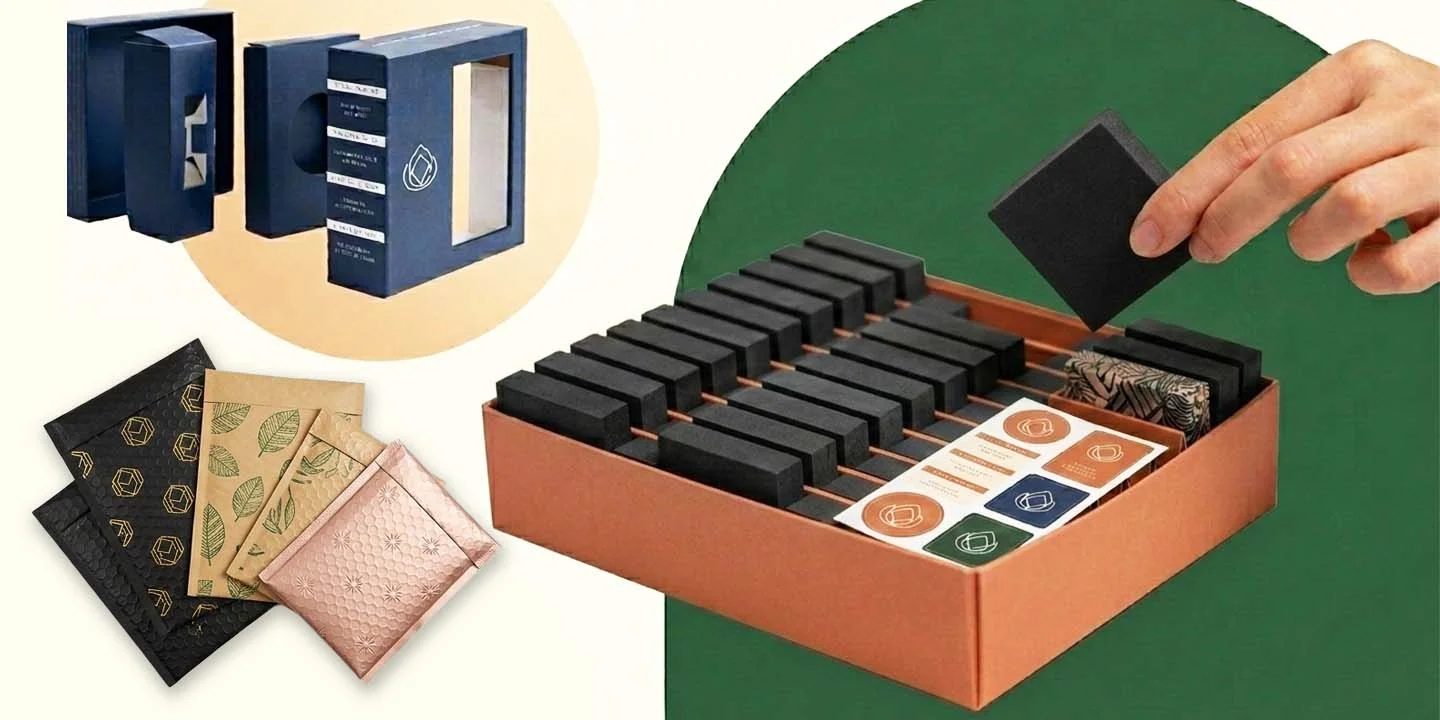
Packaging inserts are secondary elements that are placed in the packaging beside the actual products. This includes items such as small cards, notes, folded sheets, dividers, inner trays, or liners. They help to improve the unboxing experience and also keep your product safe during delivery or storage.
The inserts can prove to be a valuable tool for businesses to improve their product presentation and build brand reputation.
This guide covers everything that you know about what packaging inserts are. You’ll get to know their types, the uses, and also related legal considerations. In the end, you’ll also discover how to choose the right inserts and where to buy them. So let's dive into all the info.
What Are Packaging Inserts and What Do They Do?
Any material that is placed inside a custom box or custom-made pouch to enhance the appeal of the packaging or provide protection to the items is known as a packaging insert. This includes thank you cards, notes, discount coupons, dividers, and many more. They are commonly used for e-commerce subscription services, the gift industry, and other retail products.
The packaging inserts help to market your product in a unique way. They make the unboxing experience memorable, hence leading to your brand being recognized. Through the use of discount codes and limited deals, your product purchase is improved, which leads to increased return on investment.
Protective vs. Promotional Packaging Inserts
Packaging inserts serve different purposes depending on how they are designed. Protective inserts help secure products, separate components, and limit movement during handling and shipping. Promotional and informational inserts communicate brand messages, provide instructions, or encourage customers to explore other products. Some inserts perform both functions, such as a printed cardboard divider that organizes products while displaying a brand message. The following table shows the difference between these two categories:
| Feature | Protective Inserts | Promotional and Informational Inserts |
|---|---|---|
| Primary purpose | Secure products and limit movement inside the package | Communicate information, reinforce branding, or encourage engagement |
| Common examples | Corrugated dividers, molded pulp trays, foam inserts, fitted paperboard supports | Thank-you cards, discount cards, product guides, catalogs, QR code cards |
| Design priority | Fit, cushioning, separation, and product compatibility | Readability, message clarity, visual presentation, and brand consistency |
| Typical applications | Fragile products, multi-item sets, electronics, glassware, and shipping packages | E-commerce orders, gift boxes, subscription boxes, retail products, and product launches |
| Key consideration | Verify that the insert fits and provides sufficient protection for the intended shipping conditions | Ensure promotional claims, offer terms, and product information are accurate |
What Are Packaging Inserts Used For?
If you’re wondering about what packaging inserts are used for, there are so many reasons. They are used for protection, to improve product presentation, and to lead to great customer satisfaction. Here are some of the reasons why businesses need to invest in packaging inserts:
- Durability and Protection: The extra material is added inside the box to provide cushioning for the products and acts as a shield against damage. During shipping or handling, the inserts help to keep the item in place and thus prevent breakage.
- Customer Retention: If you include inserts, such as discount codes, QR codes, or others, it can help to engage your customers and lead to more purchases by the same customers. This proves to be valuable for subscription box services.
- Boost Brand Reputation: When you place business cards, thank you cards, tissue paper, small samples, and other inserts, it creates a kind opening experience for customers. This way, they remember your brand name and perceive it as high value.
- Cross-Selling: By placing items such as product catalogs, magazines, and pamphlets in the package, you can market your other products. Through this, your input value for ads is reduced.
- Instructions and Labels: You can place user guides and put product information, even warnings, inside the box. The proper instructions lead to better use by the buyer, and hence returns are reduced.
Although packaging inserts are not a compulsory item for product boxing, they definitely take your brand reputation and sales to the next level. That is why it is highly recommended to invest in them.
Types of Packaging Inserts by Material
The right packaging insert material depends on the product's shape, fragility, weight, presentation requirements, and shipping conditions. Compare the common options below before choosing a custom insert.
| Insert Material | Main Characteristics | Common Applications | What to Consider |
|---|---|---|---|
| Corrugated cardboard | Fluted construction provides structure and helps separate or support products | Shipping boxes, multi-item orders, glassware, and e-commerce packaging | Flute construction, insert fit, compression, and shipping conditions |
| Paperboard and chipboard | Rigid or semi-rigid structures that can be cut, folded, and printed | Product trays, dividers, cards, and retail packaging | Required rigidity, folding design, surface finish, and print quality |
| Molded pulp | Molded fiber structures with cavities shaped around products | Fragile products, electronics, glassware, and protective packaging | Cavity design, cushioning performance, moisture exposure, and fiber composition |
| Kraft paper and paper-based materials | Useful for wrapping, filling, separation, and selected insert structures | Lightweight products, retail packaging, and paper-based presentation | Required strength, intended use, material composition, and end-of-life options |
| Plastic trays | Formed plastic structures that organize products in individual compartments | Cosmetics, electronics, consumer products, and multi-component sets | Polymer type, product compatibility, required fit, and local recycling options |
| Foam inserts | Can provide shaped cushioning and support, depending on the foam type and design | Electronics, equipment, glassware, and premium product presentation | Foam type, density, thickness, product weight, cushioning requirements, and cost |
Corrugated Cardboard Inserts
Such inserts are made up of corrugated material. This usually includes a fluted layer sandwiched between the other two flat ones. They are internal dividers, trays, or support structures placed inside shipping boxes to immobilize, organize, and cushion products. They are most commonly used by the e-commerce industry for shipping purposes. They are lightweight, recyclable, and customizable.

Paperboard and Chipboard Inserts
These inserts are made from recycled paper fibers that are compressed. They are rigid, paperboard-based structures placed inside shipping packaging boxes or custom-made retail boxes to protect, separate, and present products. They are much more biodegradable as well as eco-friendly. Also, this material can be used to make cards for packaging.

Molded Pulp Inserts
These inserts are eco-friendly, three-dimensional packaging trays formed by slurrying recycled paper, cardboard, newsprint, or sugarcane bagasse fiber and pressing it into custom molds. They serve as sustainable, biodegradable, compostable, andplastic-free packaging. These inserts can be molded into any shape or size. They are super useful for providing protection for the items. In addition to that, their lightweight nature makes them highly in demand.

Kraft Paper and Paper-based Inserts
These inserts are eco-friendly, durable paperboard or paper linings placed inside boxes, packaging, or notebooks to organize, protect, and present items. They are also very eco-friendly and affordable. Kraft paper is used for a variety of purposes, from protection to wrapping and other uses, to improve the presentation inside the box.
Plastic Tray Inserts
The PET, RPET, PVC, PP, PLA, and HIPS tray inserts are custom-molded or vacuum-formed cavity trays designed to fit inside outer packaging, boxes, drawers, or bins to organize, position, and protect items. They look much more polished. Their design depends on the selected polymer and product dimensions.

Polystyrene Foam Inserts
They are typically made from expanded polystyrene (EPS). They are lightweight, rigid packaging components molded or cut to fit the exact shape of a product to absorb shock and prevent movement during transit. They are used for shock absorption, vibration resistance, and insulation. They are used for sensitive items to keep them safe. They are also sometimes used to improve the appearance of packaging.

EVA Foam Inserts
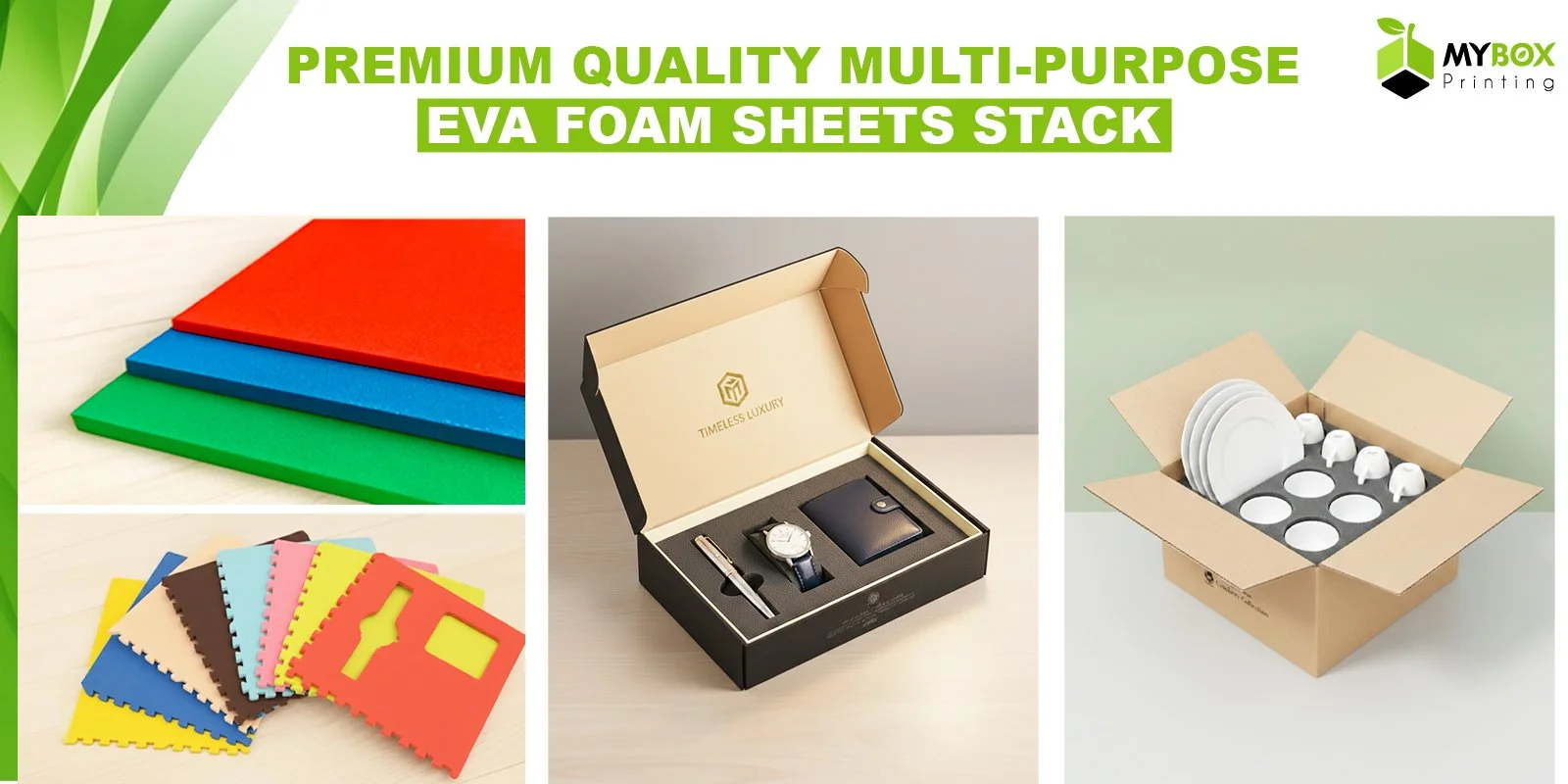
Ethylene Vinyl Acetate foam is dense, closed-cell foam pads and trays custom-cut to cushion, organize, and protect products inside boxes, cases, or display packs. But that is not all; they also look quite exquisite. They can be precisely cut in the shape of the actual product. Businesses can use custom EVA foam inserts to make the product into high-end and luxury items.

The type of material plays an important role in how it protects your items. Each one has a different visual appearance. You can choose the one that matches your preference.
Promotional Packaging Insert Ideas for Customer Engagement
If you’re wondering what inserts to use for your business, here are some of the promotional packaging insert examples that can uplift your sales and perceived brand value:
Thank-You Cards and Personalized Notes
When you add a thank-you card, it makes your customers feel highly valuable. It elicits an emotional response, which makes them buy more from your brand again.
The thank-you card inserts are one of the nice gestures to include in your package. Furthermore, the presence of personalized notes with great messages adds to the perceived value of your brand.
Discount and Referral Cards
One of the best ways to market your product is to offer something to customers that benefits them. The discount code does this job. They prove to be valuable for the customers as well as for you to improve ROI.
You can incorporate them with URLs or QR codes to make it easy to redeem the offer. In addition to that, you can add referral cards with codes that can be shared with friends or family.
Manuals and User Guides
It is important to provide manual instructions and user guides. This way, your customers can understand how to fully utilize your product.
So the chance of user error or negative reviews can be reduced. It can also minimize returns. The proper user guidelines make customers trust your product. If your manuals have multiple pages, collated printing keeps every copy in the correct page order, so customers never receive a guide with missing or misplaced pages.
Product Catalogs
This insert can act as a free advertisement tool for your brand. You can include the product catalogs that market your other products.
This can lead to cross-selling. Also, smart integration, like QR codes or scan codes, can improve online customer engagement.
Warranty and Guarantee Cards
For tech and expensive items, it is very important to include warranty cards. This makes the buyers much more confident to purchase from your store.
In some cases, the presence of guarantee cards also fulfills the legal requirement set by consumer law.
Request Review
You can also include insert cards that request the consumers to review your product. This is highly valuable for an e-commerce business. The positive reviews by clients can definitely lead to better sales.
Safety and Compliance Inserts
Such inserts are legally required for many product categories. This includes pharmaceuticals, dietary supplements, electrical goods, children's toys, and many more.
The information, such as safety warnings, age restrictions, allergen information, regulatory certifications, and usage, needs to be mentioned for such products.
Sample Products
You can include free gifts or sample products. This not only improves customer satisfaction but can also lead to marketing your product in a smart way. This particularly provides value for cosmetic brands, jewelry, electronic items, and many more.
Creativity plays an important role in choosing packaging inserts. There are so many other things that can be included in the package to add the wow factor to the packaging.
Rules and Regulations Regarding Packaging Inserts
Packaging inserts are subject to a range of regulations. This depends on the product type and industry. In the United States, the following are some of the regulations to be followed:
Federal Trade Commission (FTC) Guidelines
The FTC requires that all promotional claims made on inserts be truthful and not misleading. This is particularly important for coupon offers, guarantees, and testimonials.
Additionally, review request cards should never offer incentives to get positive reviews. You can ask for honest reviews. But you cannot offer anything in exchange.
FDA Regulations
This regulation needs to be followed specifically for food products, supplements, drugs, cosmetics, and more. The FDA requires brands to include specific labeling information.
You need to mention info like ingredients, nutrition facts, warnings, instructions, and disclaimers. All of the info related to this guideline is outlined in the FDA's 21 CFR regulation.
Patient Package Inserts for Prescription Medicines
Patient Package Inserts (PPIs) are informational documents that accompany certain prescription medicines to explain important details about their use, benefits, and risks. The FDA requires PPIs for oral contraceptives and estrogen-containing products. Requirements for other medicines depend on the applicable FDA regulations and labeling requirements.
These documents serve a different purpose from protective packaging inserts, which hold products in place or reduce movement during shipping.
Consumer Product Safety Commission (CPSC)
You have to add the safety information for the products that are sold to children. Even electronic and other similar items require safety and hazard warnings.
The CPSC clearly states all these requirements, and it is a must to follow them.
Warranty Disclosure
Any business that offers a written warranty needs to follow the Magnuson-Moss Warranty Act. According to this, the terms for warranty should be clearly disclosed before the sale. The warranty cards need to be outlined with specific information. This includes the actual duration of coverage, what is to be covered, and how one can make a claim.
It is essential to follow these regulations for packing inserts in order to avoid any penalties or legal issues.
How To Choose The Right Inserts For Packaging?
The right packaging insert should fit your product, provide the required level of support, and work with your packaging design and shipping conditions. Consider the following factors before selecting a material or ordering custom inserts.
| Selection Factor | What to Consider | Practical Recommendation |
|---|---|---|
| Product protection | Product fragility, weight, shape, and sensitivity to movement | Use fitted trays, dividers, molded pulp, or foam where appropriate. Validate protection under the intended shipping conditions. |
| Insert dimensions | Product measurements, clearances, box dimensions, and space for accessories | Measure the product and internal box dimensions. Test the insert with the actual product before approving production. |
| Material selection | Required rigidity, cushioning, presentation, moisture exposure, and product compatibility | Compare paperboard, corrugated board, molded pulp, plastic trays, and foam according to the application rather than appearance alone. |
| Product presentation | Whether the package needs to organize components or create a premium unboxing experience | Consider shaped cavities, printed cards, fitted trays, or branded dividers. |
| Printing and information | Logos, instructions, warnings, QR codes, promotional offers, and warranty details | Choose a suitable printing surface and verify that all printed claims and instructions are accurate. |
| Environmental considerations | Recycled content, material separation, local recycling access, and disposal conditions | Request specific material information and substantiate environmental claims instead of relying on broad terms such as “eco-friendly.” |
| Quantity and budget | Order volume, tooling or setup costs, unit cost, and packing labor | Compare total project costs rather than unit price alone. Confirm minimum order quantities and available production options with your supplier. |
| Production and testing | Samples, design approval, lead time, and shipping performance | Request a sample or prototype where available, check the fit, and test the complete package before approving a larger run. |
Where To Buy Packaging Inserts?
You can buy packaging inserts from My Box Printing. We are the top supplier for packaging services. We have been in this industry for over 25 years. During this time, we have provided services to many businesses, such as custom boxes, pouches, and inserts. You can expect to get the following things from us for the intended purpose:
- Custom Labelling: You can get quality labels with a variety of printing options and creative designs.
- Custom Stickers: There are a variety of stickers to choose from, be it creative illustrations or tamper-evident.
- Cards: You can get cards made from eco-friendly material. The add-on options like embossing and debossing can also be incorporated into them.
- Brochures: If you want a user manual, product catalogs, or other booklet-type stuff, you can get everything from us.
- Dividers: If you need inserts for protective purposes, you can get various options such as corrugated inserts, box dividers, and many more.
- Biodegradable Material: Sustainability is one of our core values. We offer eco-friendly materials for insert formations.
- Discount on Bulk Orders: If you place a wholesale order for packing inserts, we’ll give you a great discount.
- Free Sample: What you see is what you get. We’ll be happy to provide a sample so that you can get an idea about the quality we have to offer.
If you're still not sure what packaging inserts are or how to buy them, then you can get in touch with us. We are here to provide free customer support 24/7.
Frequently Asked Questions About Packaging Inserts
What Are Vaccine Package Inserts?
These inserts are the compulsory requirement set out by the FDA to label the vaccine items. All the information related to dosage, storage instructions, testing conditions, and other important factors must be mentioned.
Can I Ship My Product without Inserts?
It is possible, but not recommended. The inserts improve your product safety and enhance the box opening experience. Hence, it is important to choose the inserts.
What Are Eco-friendly Options for Product Inserts?
There are many options such as corrugated material, kraft paper, chipboards, molded paper pulp, and many more.
Can Inserts Be Used for Food Products?
Yes, but they must be approved by the FDA. The paper-based and eco-friendly materials are generally regarded as safe to be used with culinary and food items.
Can the inserts for Packaging Be Customized?
Of course, if you choose My Box Printing for design packaging inserts, then you can personalize them in any way possible.
What Are Patient Package Inserts?
The PPI leaflet is provided with the medication. It is approved by the FDA. It is written in plain, non-technical language. It mentions how to use the product, its purpose, dosage, potential side effects, and any warnings.
Final Thought
Packaging inserts are the additional items that are added to the box, in contrast to the actual products. They help to protect the items. Also, they provide great visual appeal and help to market your products. The quality of the inserts improves your brand image. You can include dividers, thank you notes, warranty cards, and other such items. The material choice also affects how the packaging appears. It is recommended to go for biodegradable ones. You need to specify your goals and budget requirements to choose the right insert. The best ones can be bought from My Box Printing.