Have you ever wondered how the complex designs, vibrant colors, and finishes in packaging boxes are created? Screen printing is a traditional and very reliable method of printing. It is also known as silkscreening or serigraphy. It is accurate and precise printing, and very suitable for fine designs.
What Is Screen Printing?
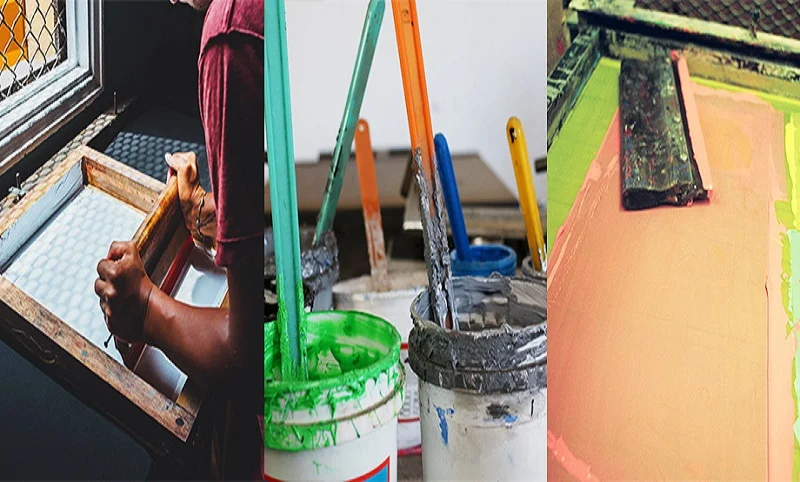
This is an old process done differently in different geographical locations. Basically, this process involves moving ink into the base layer through two main processes. The first way is through wire cloth or mold using a squeegee.
This printing method is not limited to just paperboard; rather, it can be used to print a whole lot of materials, which include glass, plastics, corrugated cardboard or rigid chipboard materials, or duplex board. This versatility is the reason for its popularity, as a single method is required to gain a printing advantage on multiple materials with the same quality.
Another reason for its mass popularity is its ability to push large quantities with an enormous range of vibrant colors and splendid finishes. Various styles are present and offered by MyBoxPrinting, which include:
| Printing Techniques Comparison | |
|---|---|
| Printing Technique | Description |
| Halftone Printing | Small dots of different sizes to create a look of shading in artwork. |
| Grayscale Printing | This method produces images using just the shades of grey. |
| Spot Color Screen Printing | Blocks of color are used to print artwork. |
| CMYK (4‑Color Printing) | Cyan, Magenta, Yellow, and Black to create full‑color images. |
| Duotone Printing | Two different ink colors, mostly black with a spot color, for a monochromatic image look. |
| Simulated Process Printing | It is for garments involving 3 to 14 colors. It's used to print detailed art layouts and designs. |
History Of Screen Printing
The creation of this method is time-consuming and requires a system. It is hundreds of years old. The beginning of its origin can be traced to the Song Dynasty, when highly woven mesh and block stencils were used to create intricate designs on fabrics.
This technology spread to other parts of Asia and reached Japan, where it involved the use of human hair as the material for the mesh and stiff brushes for painting. Afterwards, silk mesh was used, and it was referred to as silkscreen printing.
In the competitive market, custom packaging has become an important aspect of marketing. Screen printing is the most reliable method of printing on packaging boxes due to the large amount of ink. This applies to making the artwork vibrant.
How Does Screen Printing Work?
As time passes, the process may have changed, but the core idea remains the same. Our goal is to present a custom packaging solution that holds the original concept and nature of your brand and mind. Your specialized artwork is the beginning of that idea.
Design Groundwork
The artwork is prepared digitally and later separated into individual colors. Every color requires an individual screen.
Screen Arrangement
To transfer the design onto any surface, a mesh is required. It is an ink screen printing process where the type of ink is an important factor in defining the mesh type. For thick inks, coarse mesh is used, while for thinner inks, fine mesh is ideal. Further, the mesh is coated with a light-sensitive emulsion and laid out to dry.
Revealing Design
Many ways are present to expose the design on the screen, but the common one is using a positive film. The light hardens the emulsion where no image is present, whereas the positive image under the light remains soft. The image is then washed out, leaving only the stencil behind. UV light is only used on the coated screen where the design is placed.
Screen Adjustment
The screen is placed onto the printing press and aligned with the printing surface for accuracy. If the design has more than one color, then, for more precision, every separate screen needs to be placed onto the press, which allows clear printing of every color.
Ink Application
Ink is poured onto the screen to create a perfect screen print design using a squeegee that pushes the ink through the stencil opening.
Drying and Curing
Heat is used to treat the ink. This method ensures that the design remains stable and bonds securely with the material.
What Equipment Is Used For Optimal Printing
The complexity of the artwork and the quality are directly related to the quality of the equipment and machinery. A few basic pieces of equipment are required, and their maintenance would ensure consistent results.
-
Washout Booth: Wet area for degreasing screen
-
Silk Screens: High-tensile mesh over a wooden or metal frame
-
Emulsion: A photosensitive material on the screen that creates stencils
-
Scoop Coater: A tool to apply emulsion
-
Exposure Unit: LED light, UV, metal halide for exposure
-
Film Positives: Clear film printed with black ink
-
Inks: Discharge, plastisol, special FX, water-based
-
Squeegee: A rubber blade placed in a wooden or metal holder
-
Carousel: 6-14 colors, automatic, semi-automatic
-
Flash Dryer: For drying under the base
-
Conveyor: Electric or gas dryer to cure inks
Who Should Choose Screen Printing For Lasting Impact?
Both versatility and functionality go a long way. Brands thrive with not only a concrete product but also packaging that defines their identity. For a brand that wants to make a name for itself, this technique is the best solution for durable results.
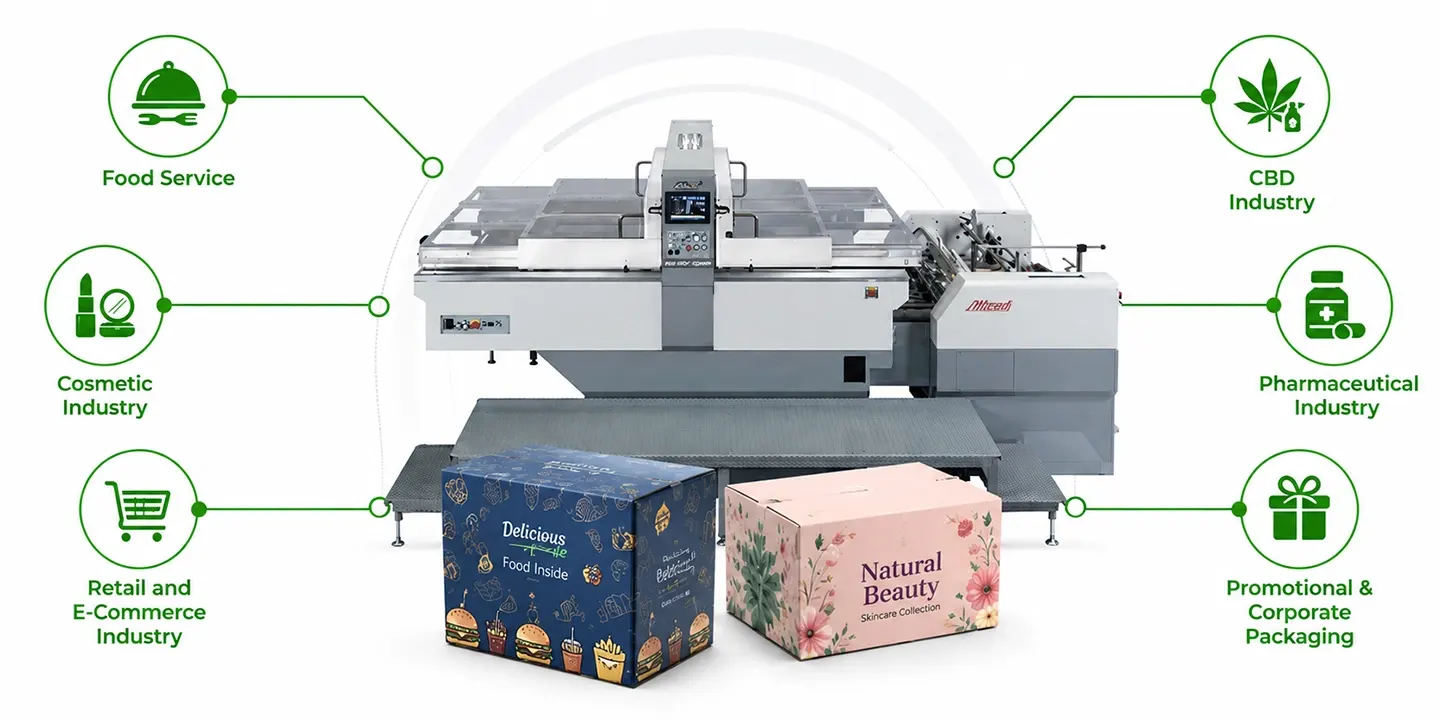
Food Service
The food industry requires printing that aligns with the safety regulations and durability measurements for strong protection against harmful elements. Perfect visual appeal is an essential part of this industry.
We use this specialized printing technique for our retail food boxes collection, where every box is a speaking image of the quality we produce with detail-centric designs.
Cosmetic Industry
Cosmetics are all about appearance, and that can immediately capture the eye of the customers. Screen printing is a go-to option for this industry, as it helps deliver fine graphic details and vibrant colors, which are ideal for beauty product packaging.
Retail and E-Commerce Industry
It is a huge industry with a prime focus on enhancing the customer experience. The branded shipping boxes carry visible and clear designs with durable logos. The screen printing technique places the ink in a stable manner, where it doesn’t budge during the harsh shipping and handling process.
The other related industries include fashion and clothing, electronics, pharmaceuticals, healthcare, luxury gift packaging, and the CBD/cannabis industry. All these industries require solid marketing and a standalone position to make their mark. The standard is achievable with this specialized printing method, with the added advantage of cost-effectiveness.
Understanding Pros & Cons To Make Right Choice For Your Packaging
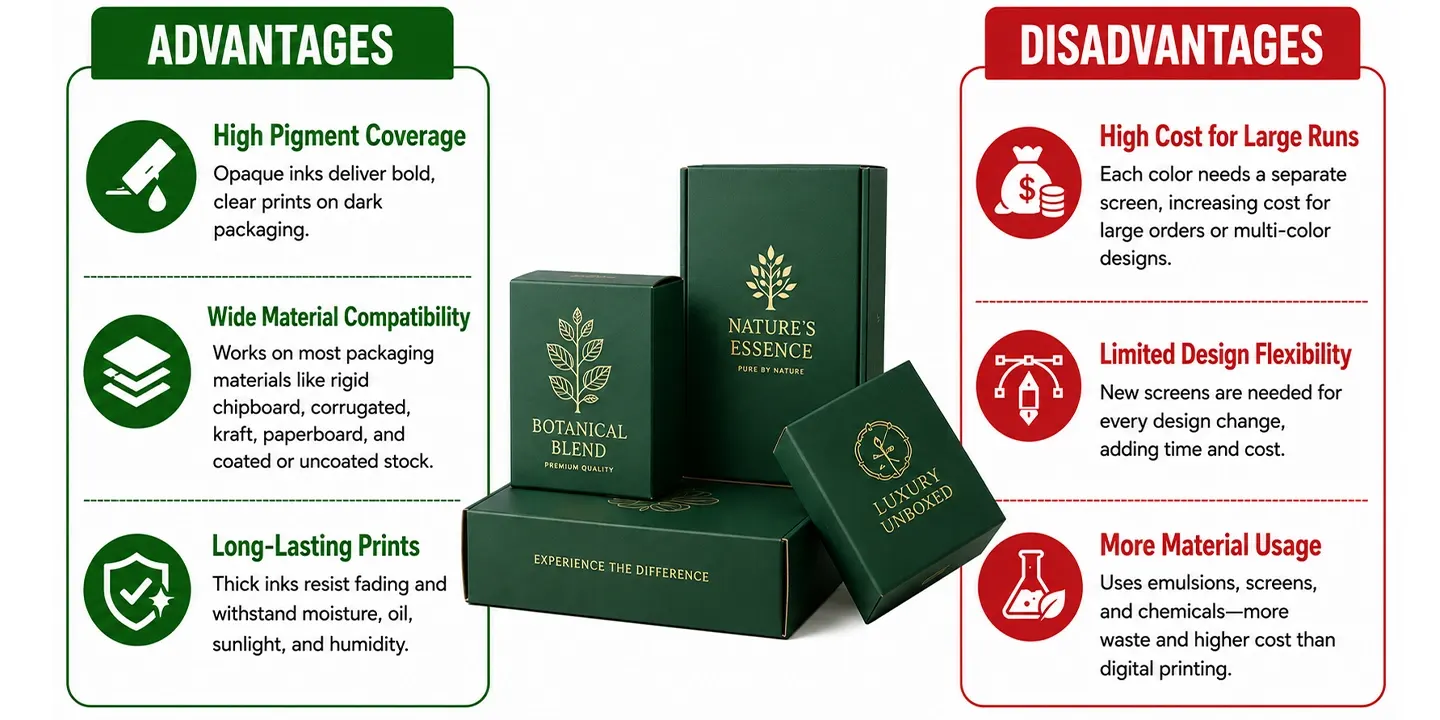
Everything that exists in this world has some advantages, but also has some disadvantages. Before selecting screen printing for your product packaging, brands and businesses need to know about the pros and cons. They help you understand whether screen printing is the right choice for custom packaging or not.
ADVANTAGES
High Pigment Coverage
Dark-colored packaging material is hard to handle; screen printing enables opaque inks to maintain visibility. They produce excellent clarity with bold logos and graphics.
Numerous Material Compatibility
It is compatible with almost all materials used for speciality packaging boxes, which include rigid chipboard, corrugated stockboard, kraft paper, paperboard, and coated/uncoated stockboard.
Timeless Print Vitality
The inks used for this printing technique are heavy and thus create prints that are highly resistant to fading. So even if the box is used for retail display or shipping, the designs and the original color vibrancy remain intact and hold strongly against environmental factors like moisture, oil spills, sun exposure, or humidity.
DISADVANTAGES
Low Cost-Effectiveness for Large Quantity Run
For an intricate, large design, every color requires a different screen, which evidently increases the production cost for large-quantity orders or multi-color artwork.
Limited Design Flexibility
Since new screens are required for each process, every design change would need the same. This limits the creativity with the designs, increasing both cost and time.
Excessive Material Consumption
This technique uses emulsion, screens, and cleaning chemicals, which, in comparison to new and modern methods like digital printing, become a little more cumbersome and costly.
Characteristics That Make Screen Printing Distinctive
| Screen Printing Features Overview | |
|---|---|
| Features | Details |
| Materials | Paperboard, rigid board, kraft paper, corrugated material |
| Ink Categories | UV‑curable, plastisol, water or solvent‑based, speciality inks |
| Color Utilization | One screen for a single color |
| Print Quality | Dense print with enhanced colors |
| Durability | Sturdy and resistant to fading |
| Finishes | Textured finishes, metallic ink, fluorescent ink, spot effects |
| Standard Production Volume | Appropriate for small or medium runs |
Frequently Asked Questions About Screen Printing
Is screen printing available for premium packaging?
Yes, we offer a screen printing facility for our premium packages as it's highly efficient to bring out bold and vibrant colors with exceptional clarity. Also ideal for luxury boxes.
Can screen printing be conducted on recycled paper material?
Yes, screen printing is efficient on recycled paperboard. This material is highly useful for proper ink bonding.
Is screen printing a better option than digital printing?
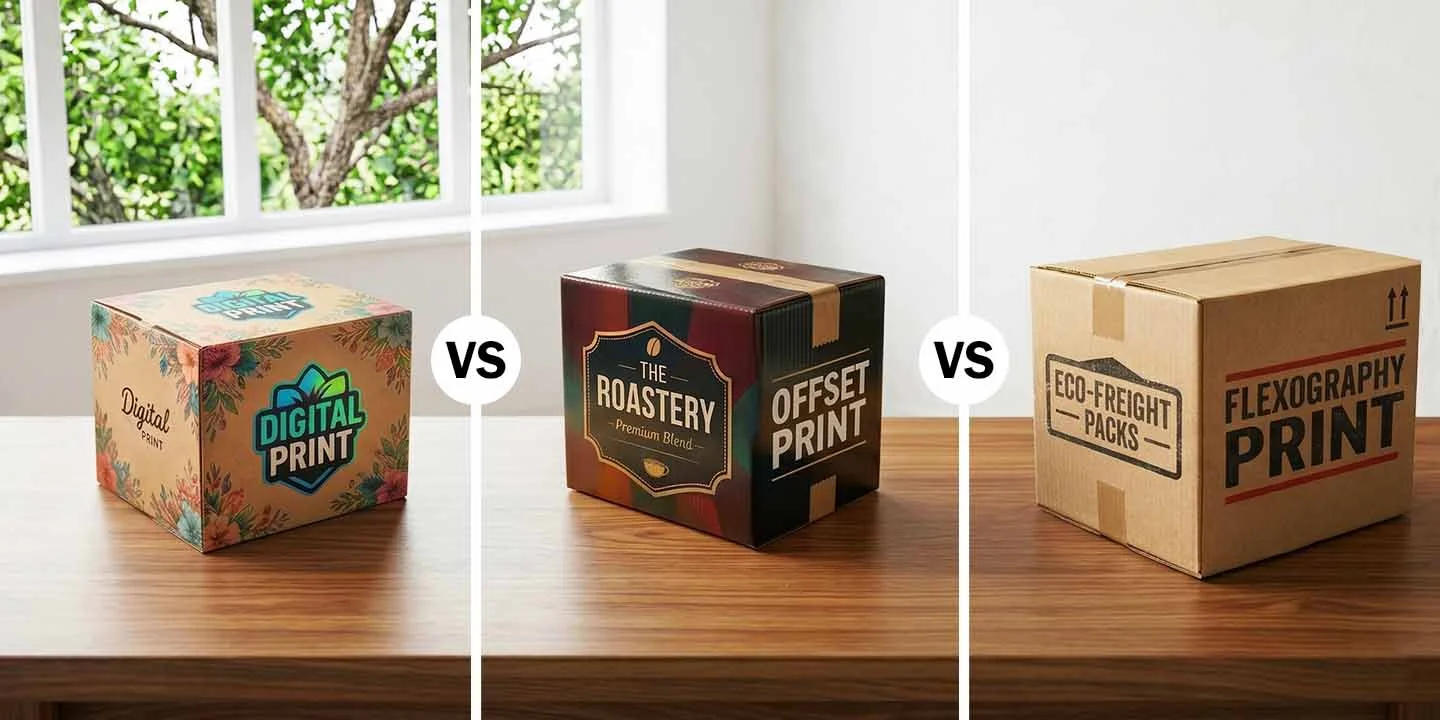
It's a dependable quality, with screen printing having a thicker layer of ink, making it more durable and long-lasting compared to digital printing. Digital printing doesn’t carry the same clarity of ink and details in designs.
Is screen printing eco-friendly?
It's eco-friendly if water-based or low-volatile organic compound inks are used for printing, as they both tend to evaporate in the air, causing no damage to the environment.
Can screen printing give distinctive finishes similar to other packaging finishes?
Yes, it can be paired with debossing, embossing, soft-touch coating, foil stamping, lamination, or spot UV.
Do you offer custom branding with screen printing?
Yes, any customized logo, design, or pattern can be printed on the packaging using screen printing.
Is screen printing a solid choice for large-quantity packaging units?
It can be of high cost for large runs due to the constant change of screens during the whole process, which would also take more time and materials.
Can special effects be created with screen printing?
Yes, textured finishes, raised effects, metallic inks, spot colors, and a distinctive appearance can be created with this technique.
Final Words About Screen Printing
It is the most trusted method out there and is ideal for many materials, including paper, glass, wood, plastic, and cardboard. Its wide material compatibility makes it a convenient technique.
Every box deserves a unique standing where it would truly present the specific purpose of its composition. So, whether you are running a promotional campaign with a limited edition or for mass commercial advertisement, this method is a dependable solution.