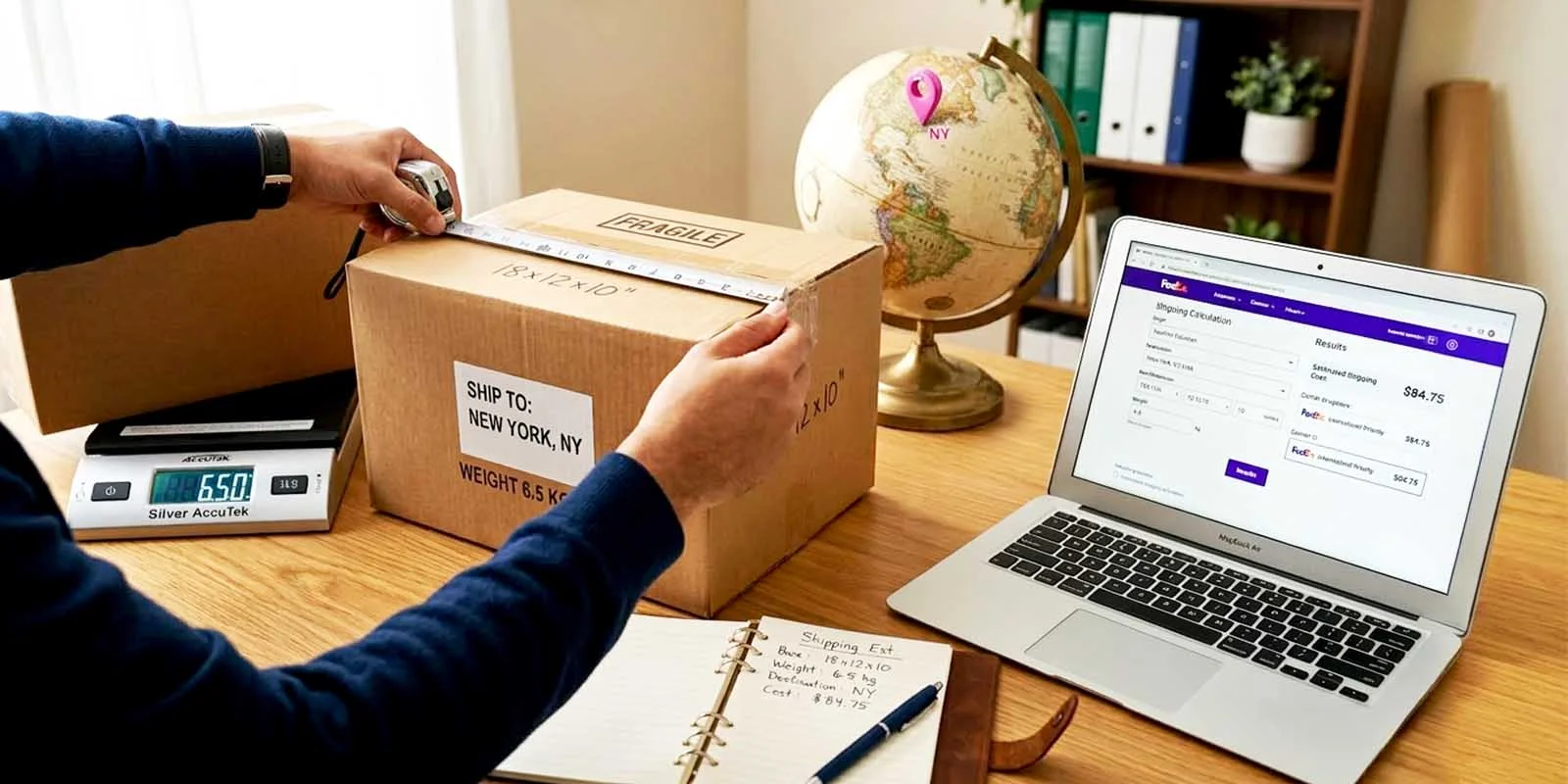
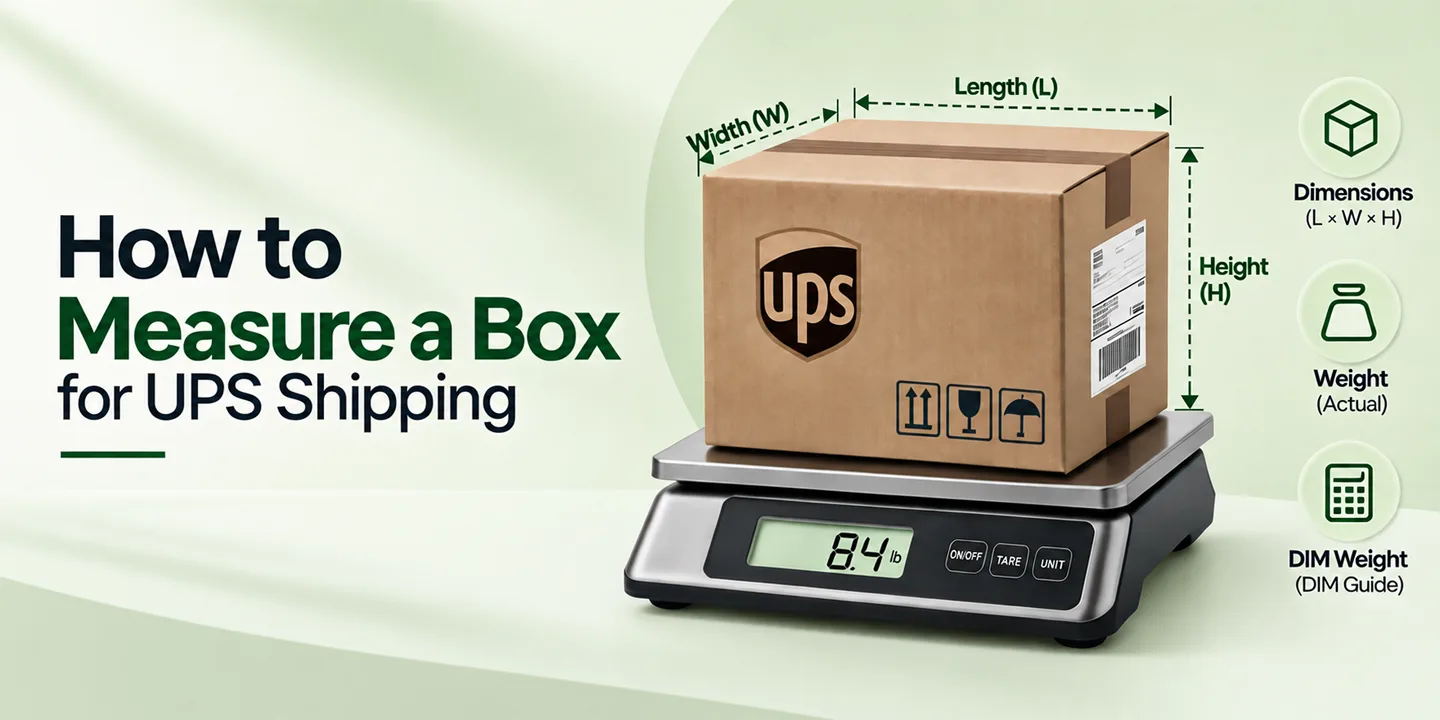
Measure the length, width, and height of the outside box. This is the standard method for measuring a box for UPS shipping. Once the measurements are taken, round the measurements up to the nearest whole inch. If it is not done properly, the shipment will charge you more for the high-dimensional weight rate.
This also increases the shipping cost. Also, if there is empty space, the products will shift during transit, which can damage them. So if you want a seamless shipping process, then manufacturers, retailers, and logistics should go through this blog.
How UPS Measures Box Dimensions
It includes the L, W, and H of a shipping container. They determine how much space the product will take and how much it will cost. There are two types of UPS shipping box dimensions:
-
Outer Dimensions (L x W x H): The exterior length, width, and height of the completed package.
-
Inner Dimensions (L x W x H): The usable interior length, width, and height of the box.
The inner dimensions tell you how well the product will fit. And the outer dimensions provide details on how much money it will cost you to ship these boxes.
Why Accurate Box Measurements Matter for UPS Shipping
Dimensions help you determine the correct dimensional weight and play a vital role in providing you with info on how much it will cost. UPS rounds package dimensions according to its measurement rules, so even a small measurement error can affect shipping costs.
So stay clear of these large package supercharges. For U.S. domestic shipments, a 'Large Package' classification can apply when length plus girth exceeds 130 inches, subject to UPS's other criteria. At My Box Printing, we can create custom-sized shipping packaging designed to fit your product accurately. So you can rely on us!
How to Measure a UPS Shipping Box
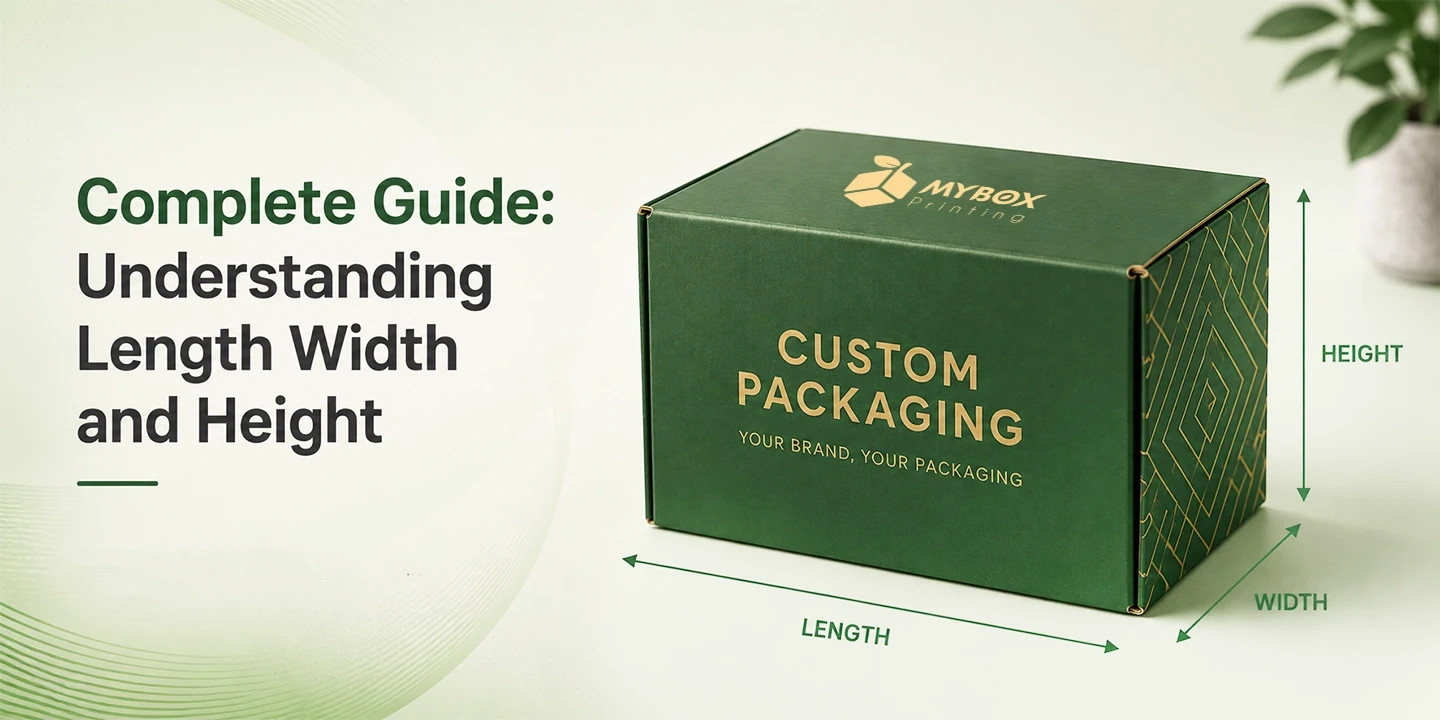
It is all about taking measurements of the box L x W x H and rounding them up to get a whole number. The following steps explain how to measure each dimension accurately:
Measure the Length
You need to start with the longest side of the box. This side is the length as per UPS, so measure it from end to end. Record the outside edges of the package to ensure accuracy.
Measure the Width
For the width, measure the longest side of the box that is less than its length. You should ensure that the box stays in the same position.
Measure the Height
The remaining side is the height. When it comes to shipping, UPS uses the outer dimensions of the box. So you need to measure the full outside height and any packaging material or insert that adds to it.
Round the Package Dimensions
At the end of all recorded values, you should round them all to the nearest whole inch. It helps avoid billing and provides a safer estimate of DIM weight.
Tools for Measuring a UPS Shipping Box
There is a high chance that your box measurements can suffer from human error. But here is a list of proper measuring tools that will give you precise measurements.
All you need is
-
Rigid Ruler (about 18-24 inches)
-
Yardstick
-
Digital Scale
-
Locking Tape
-
Marking Pen
-
A Stable Table
These tools can help you take accurate measurements and prepare packages for the common carrier requirements of UPS, FedEx, and USPS.
Step-by-Step Comprehensive Measurement Process Example
You need to ensure that whenever you want to measure a shipping box correctly, ensure it matches the carrier's calculations. Let us take it one step at a time:
Step 1. Rotate the box 90 degrees and take a measurement of the longest side of the box. Assume it is 15.7 inches.
Step 2. Do not change the position of the box and take note of the shortest side. Say it is 10.2 inches.
Step 3. You should add any bulges or added packaging inserts and measure the remaining vertical side, which is, say, 7.8 inches.
Step 4. Now, round all the measurements:
Length: 15.7" = ~16"
Width: 10.2" = ~10"
Height: 7.8" = ~8"
As per Length x Width x Height = 16 × 10 × 8 inches
Note. It is important that you measure the outside of the box and not the inside.
Types of UPS Shipping Boxes
There is a whole range of UPS boxes. They are designed for specific sizes, contents, and transit requirements. It is important to choose the right box that can help protect the products and optimize costs.
UPS Tubes and Specialty Packaging
Think of them as shipping special posters, architectural drawings, and maps without getting concerned that they will fold or crease during transit. You do not need average triangular-shaped packaging that would not even fold your sensitive paper.
UPS Express Boxes
Any late-night or early-morning deliveries? That is where UPS Express Envelope comes in. It is intended for contracts, legal paperwork, and certificates. Different businesses use it for overnight delivery.
UPS Express Pak
This is a tear-resistant and watertight container, which you can use as an alternative to corrugated boxes. It is ideal for sensitive documents and items, and this type offers optimal protection with padding. You can even choose to package clothes, catalogs, and flat goods within predictable limits.
UPS 10 KG and 25 KG Boxes
These are heavy-duty types of packaging that have fixed weight pricing tiers according to UPS Worldwide Express. If your items stay within the weight limit, the cost will be reasonable. The 10 kg box is for medium-weight international cargo, and the 25 kg box is for heavier global shipments.
Standard Shipping Boxes
You can use them for general purposes, and they are found in corrugated brown cartons (small to large). You can use them for any products, from consumer goods to apparel to packaging and subscription products.
Common UPS Box Sizes and Weight Limits
This table breaks down the dimensions of the different UPS-branded boxes. You can go through this reference and understand how each box type differs in dimensions and how much weight it can carry.
UPS Package Size and Weight Limits
| Box Type | Dimensions (Inches) | Weight Limit |
|---|---|---|
| Small UPS Express Box | 13 × 11 × 2 | Up to 30 lb |
| Medium UPS Express Box | 15 × 11 × 3 | Up to 30 lb |
| Large UPS Express Box | 18 × 13 × 3 | Up to 30 lb |
| Extra Large UPS Express Box | 18 × 13 × 6 | Up to 30 lb |
| UPS 10 Kg Box | 17 × 13 × 11 | 22 lb |
| UPS 25 Kg Box | 19 × 17 × 14 | 55 lb |
| UPS Express Tube | 38 × 6 × 6 | 50 lb |
| UPS Pallet Box (small) | 16.5 × 13.25 × 10.75 | 22 lb |
| UPS Pallet Box (large) | 19.75 × 17.75 × 13.25 | 55 lb |
| UPS Pak | 16 × 13 × 1 | 70 lb |
| Custom | Custom | Custom |
UPS Simple Rate Cubic Volume Tiers
| Simple Rate Size | Cubic Volume |
|---|---|
| Extra Small | 1-100 in³ |
| Small | 101-250 in³ |
| Medium | 251-650 in³ |
| Large | 651-1,050 in³ |
| Extra Large | 1,051-1,728 in³ |
How to Calculate Length and Girth for UPS
UPS uses length and girth to determine whether the package will fit within its shipping limit or not. The formula is simple: girth is twice the width plus twice the height. Once you have the girth, add it to the length to get the total length-plus-girth figure UPS uses for sizing.
2 × width + 2 × height
The maximum size limit for small packages is up to 165 inches (400 cm). Sometimes a tiny inaccuracy in the length and girth of the shipping box can label it as a large package. Let us take the previous values as examples again:
Length = 16
Width = 10
Height = 8
Girth = 2 × width + 2 × height
Girth = 2 (10) + 2 (8) = 36 in
Girth + Length = 36 + 16 = 52 in
The total will be equal to 52 inches.
UPS Package Weight and Size Limits
The shipping charges are determined by using billable weight, which is the actual package’s weight and dimensional weight. UPS weight limits for small packages are
-
Maximum package weight: 150 lb (68 kg) per package.
-
Maximum package length: 270 cm (108 in).
-
Maximum length + girth: 400-419 cm (157-165 in).
It is necessary to estimate the shipping cost more accurately, stay within the UPS size and weight limits, and keep the product safe.
How UPS Dimensional Weight Works
The DIM weight is a package’s density that is measured by the amount of space it occupies in a truck or plane. The basic formula for this is
Dimensional Weight = (Length × Width × Height) ÷ DIM Divisor
If you use this formula, it will be easier to ensure large and light packages pay a fair price for the cargo space they consume. You should measure the box correctly and round the dimensions so that it works within the UPS shipping limits.
Example:
(Here, use UPS’s common divisor, which is 139.)
Dimensional Weight = (16 × 10 × 8) ÷ 139
That will be equal to 9.2086, estimated at ~10 lb.
Note. The DIM divisor varies by rate type. For U.S. UPS shipments, UPS currently lists a divisor of 139 for daily rates and 166 for retail rates. Therefore, the dimensional weight calculated for the same package can differ depending on the applicable rate type.
How Box Dimensions Affect UPS Shipping Costs
When you want to ship a package, UPS does not calculate rates based only on the package weight but also on the space it occupies. An oversized shipping box increases the DIM weight. You can keep the shipping cost under control by:
-
Use the smallest box that easily fits your product.
-
Measure the L x W x H of the box with great accuracy before creating a shipping label.
-
You should leave room for cushioning without using a large box.
Common UPS Box Measurement Mistakes
Mistakes happen during shipment, but a measurement error can cost you extra fees and delays in deliveries. These are some of the most common mistakes you should avoid while measuring a shipping box:
-
Ignoring the inside measurements of the box.
-
Not rounding the fractions of an inch to the nearest whole number.
-
Overlooking protruding edges, handles, and bulging sides.
-
Taking the longest side of the box as width or height.
-
Forgetting to calculate girth value for large packages.
-
Not measuring the final package when inserts, tape, or flaps are added.
Where to Buy the Most Suitable UPS Shipping Boxes?
There are UPS shipping boxes available at their online store. UPS offers a range of standard shipping packaging. However, businesses that need packaging tailored to specific product dimensions or branding can choose custom-sized boxes.
At My Box Printing, we have an experienced team that helps you create your shipping container with pinpoint accurate measurements. The boxes can be customized with different styles and finishes. We only use FSC-certified materials. Get yours today by filling out the quote.
Frequently Asked Questions About UPS Box Measurements
What is the Maximum UPS Package Size?
UPS and FedEx have a limit of 165 inches in length and girth combined and up to 108 inches in length. If you have larger packages or shipments, it requires freight services.
What Is Dimensional Weight?
It is a pricing technique that is used by shipping carriers to calculate costs based on how much space a package occupies. Its basic formula is L × W × H / DIM Divisor.
What Is the Largest UPS Box Size?
Its Express or Specialty box (19" × 17" × 14") weighs around 25 kg. There are many other larger box sizes at the official UPS Store.
Does UPS Provide Free Boxes?
Yes, the UPS Express shipping services provide envelopes, packs, and more. If you want customized boxes, contact our services.
Can I Use My Own Box for UPS Shipping?
Yes! You can, as long as it meets UPS packaging guidelines and size and weight requirements. Brands should use new and undamaged boxes to package their goods. It is better to use strong duct tape to seal the rugged edges so nothing falls out.
What Size Box Is Cheapest to Ship?
Generally, a smaller box can help reduce shipping costs because it takes up less space and may have a lower dimensional weight. However, the cheapest option depends on the package’s actual weight, dimensions, destination, service, and applicable UPS rates.
What Are the Best Practices for Packaging an Item?
You should use a strong material box and include package cushioning. It is also important to seal it securely with packing tape such as duct or masking tape, and measure and weigh the package accurately before shipping.
Why Is Choosing the Right Box Size Important?
There are several uses:
-
It reduces shipping costs
-
You can prevent product movement
-
Accurate size lowers the risk of product damage during transit
-
Improve customer delivery experience and satisfaction
How Do I Measure a Crushed Box?
It is better to reshape it as close to its original form as possible first. Now measure the package at its widest and longest points and account for the bulges.
Does UPS Charge by Weight or Box Size?
It is based on your package’s actual weight or dimensional weight. The more space your package takes, the more costly it will be.
Final Thoughts on Measuring a UPS Shipping Box
These measurements (L x W x H) matter a lot when you want to ship a box for UPS. Accurate measurements are what allow you to send deliveries at affordable prices.
Remember: measure the outside of the box, round each dimension, and check girth and dimensional weight. If you are shipping products regularly, a custom-sized box can make packing easier. So rely on My Box Printing! You can choose whatever box you want in perfect dimensions.