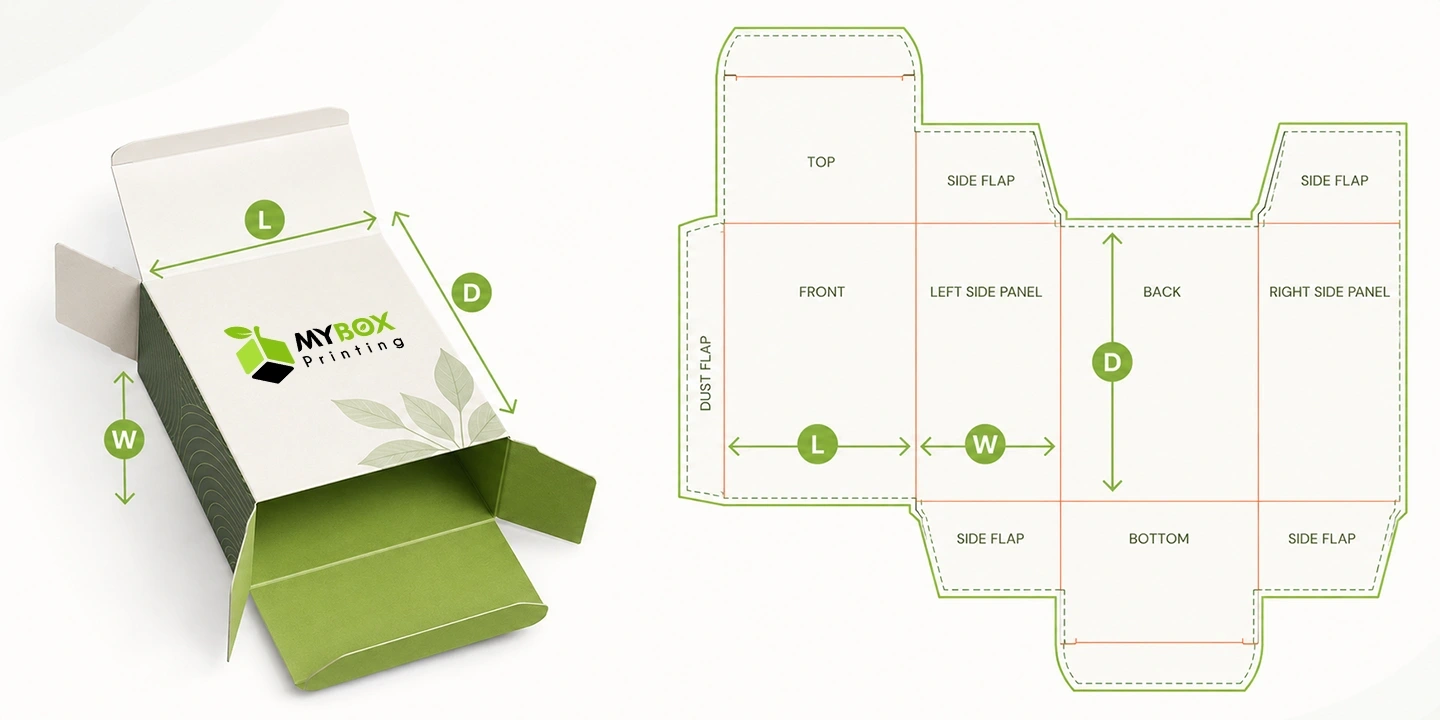
Whether you are redesigning the existing packaging or trying to introduce a brand-new product in the market, there is only one document that can make or break the presentation of your final result, and that is a dieline.
In the world of packaging and printing, a dieline helps to mark all the cut lines, fold lines, and crease lines on the flat surface. These lines can be created by die-cutters, graphic designers, or a printer. They are used in the production of many types of product packaging.
Here, the question arises: why is creating a dieline important in packaging? So, the answer is that the dieline matters a lot in the packaging industry, as it helps to find even the smallest problem or error in the production process very easily before it goes into the manufacturing process. Doing so, you can save money, time, and materials during the production process.
This is exactly why it plays an important role in the production of packaging. Understanding the dielines process properly helps you to give the confidence that your packaging will turn out as you expected or planned with accurate dimensions, folds, and artwork.
So rather than leaving it to chance, let's walk through what you need to know to make smart decisions about your packaging design.
What Is A Dieline?
"A dieline is a flat, two-dimensional technical blueprint that outlines the exact layout and dimensions of a package before it goes into production". All the elements, such as the fold lines, cut lines, bleed lines, and safe zone, are marked perfectly on the flat surface of the product before the production process.
Just having a look at your box, you can easily see each and every side of the box clearly. It provides a clear visual blueprint, and graphic designers can map artwork precisely across every panel, flap, and fold of the structure.
Why Is A Dieline Important In The Packaging Industry?
The dieline plays a crucial role in the packaging industry from the beginning to the final stage of product manufacturing. It serves as the universal language between the designer, printer, and die-cutter, translating creative concepts into exact production specifications.
It also helps to guide the process of die-cutting and make the layout neat and clean. It helps find errors in the artwork, typography, structure, and dimensions easily before sending the finalized product design. So, to get the actual results as expected or planned before manufacturing, go through multiple cross-checking processes and refinements.
Once the dieline has been perfected, the very next step is just to look at the final outcome of your design using the 3D software.
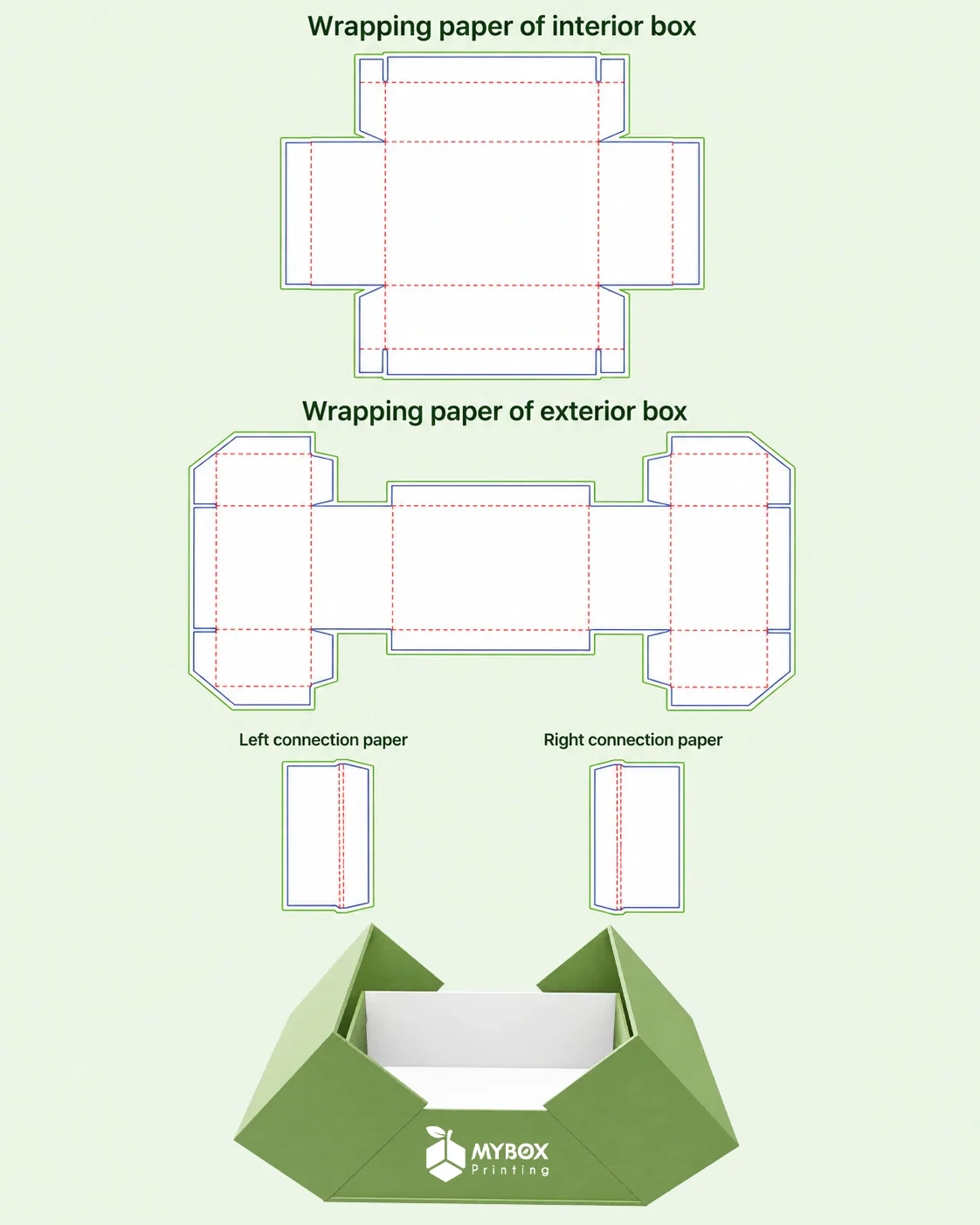
3D Dieline Visualization Before Printing
You can use tools like the Pacdora 3D packaging designing tool or the Esko Studio 3D packaging design plugin to change the dieline into a 3D preview. This helps you to see what your packaging will look like before it is printed or put together. It can catch problems that are really hard to find out on a flat 2D model.
A 3D mockup also helps you to check if your design actually works in real life. And finally, sharing these 3D mockups with customers or clients makes it much easier to communicate with them. It helps you to get more sales and business as well.
Die Cutting
After printing, your packaging substrate goes through the die-cutting process, where it is cut into its final shape.
To do this, manufacturers use your dieline to make a custom die board. This layout is then sent to a laser engraver, which helps to mark it onto the material for a clean and perfect cut.
Your dieline needs to be fully complete and mistake-free before moving to this final step.
Prototyping
Before you move into mass production, ask for a sample that is based on your dieline. This will help you to check the basic structure one last time.
Just imagine that you have placed an order of 20,000 custom boxes, and later you notice that the logo is cut off or the side panels do not match perfectly. A physical sample lets you test the unboxing experience in real life. You can verify paperboard thickness, latch mechanisms, and panel fit before committing to full-scale production.
That is why a well-designed dieline is very important. It will help you to find out the errors earlier before sending it for printing.
How Does A Dieline Work?
A dieline changes a packaging concept into a manufacturing design. When the final structure of the box is finalized, a packaging engineer makes a dieline by using professional design software.
After doing this, the designers put the artwork in the right place on the packaging and follow the exact guidelines for safe area and perfect printing.
The typical workflow includes:
-
Pick up a packaging style.
-
Make the basic structure of the product.
-
Add the cutting, printing marks, and measurement lines.
-
Try to keep the design inside the template lines.
-
After doing all this, review the final outline, and then approve it for the final file.
-
Print, cut, assemble, and fold the packaging all together
Since every step depends on the dieline being correct, even one small error can damage the final product.
Key Elements of A Packaging Dieline
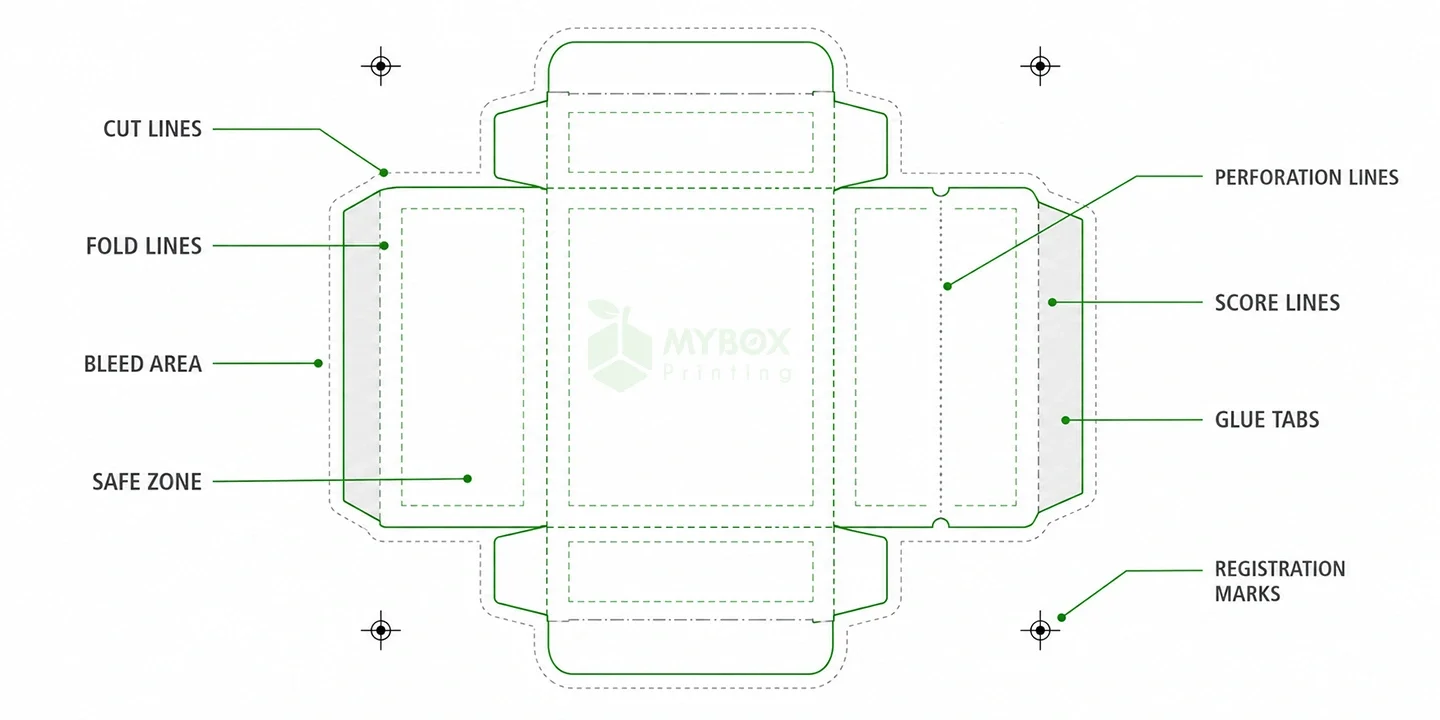
A professional die-line includes important markings that help the manufacturing process to keep the final result error-free. Understanding these parts carefully makes it easier to work with your packaging partner and create an artwork that is ready to print.
-
Cut Lines: The solid black lines tell the cutting machine where to cut. They create the final size and shape of your packaging design after the process of trimming.
-
Fold Lines: The fold lines are marked as the red lines. These lines show where the crease and fold lines are marked on the packaging in its final 3D form.
-
Bleed Area: The bleed area is known as the extra printed area that is extended beyond the final cutting line. The purpose of this bleed area is to protect from unwanted white edges after the trimming process. Most of the projects of packaging use a bleed of 3 mm normally.
-
Safe Zone: Safe zone lines that are marked as green dotted lines. They save the area for the important design elements, such as your logo and text. It keeps all the important elements inside these lines so it does not get cut off during trimming.
-
Glue Tabs: The glue tabs are shown as green criss-cross tabs. These lines indicate where the glue should be applied in the construction of the packaging.
-
Perforation Lines: The perforated lines are black dotted lines. They show where the covering should be folded or torn easily. These black dotted lines are created to show easy opening or separation.
-
Score Lines: Score lines are the lines that help the packaging to fold easily. These lines prevent the material from cracking and make neat and clean folds for better-looking packaging.
-
Registration Marks: Registration marks help printers to line up the different colors correctly during the printing process. These registration marks ensure that all the design elements are accurate and match properly with each other and prevent uneven prints.
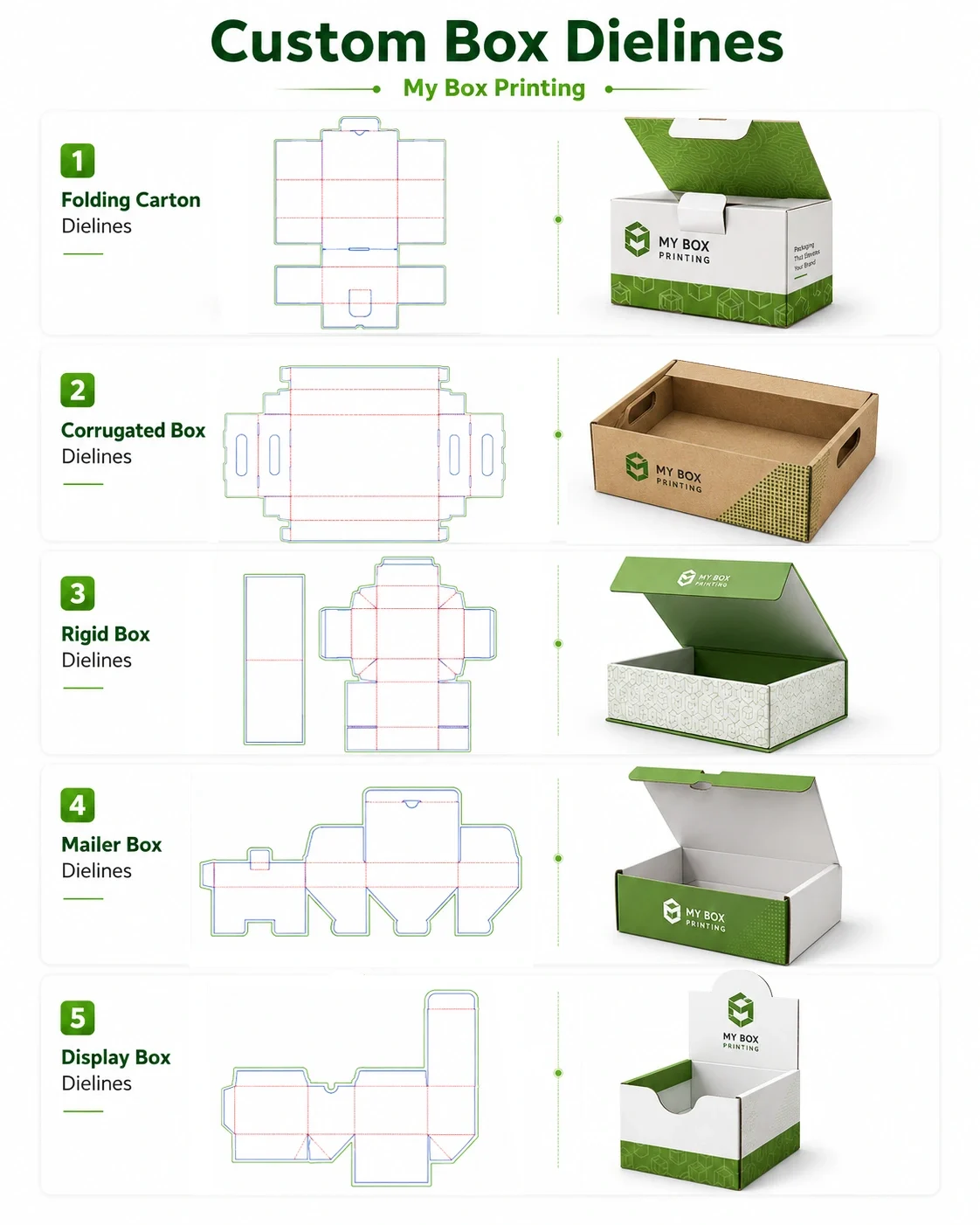
Types of Box Packaging Dielines
Every product requires the same structure of covering. A dieline is customized properly according to the style of the box, product dimensions, materials, and how the package will be utilized. Understanding the different types of dielines helps businesses to choose the covering that secures their items while giving a better customer unboxing experience.
Folding Carton Dielines
Folding cartons are the most commonly used packaging solutions for multiple products such as food, electronics, cosmetics, pharmaceuticals, and personal care items. Their dielines add various panels, glue tabs, tuck flaps, and fold lines.
This allows the carton to be delivered on a flat surface and can be assembled quickly. As these boxes are printed on paperboard, precise artwork alignment is important to make sure that the graphics flow seamlessly across all panels.
Corrugated Box Dielines
The corrugated packaging is made for storage, shipping, and heavy-duty protection. These dielines are structurally stronger, and they include larger flaps and stronger packaging to protect them during shipment.
The corrugated dielines are mainly used for subscription boxes, electronics packaging, retail packaging, industrial products, and e-commerce boxes. They experience more handling during transportation.
Rigid Box Dielines
Rigid boxes are linked with high-end products, for example, luxury cosmetics, jewelry, smartphones, watches, and premium gift packaging. The rigid boxes are made using thick chipboard that is covered with special material or paper. Their dielines focus on different wrapped components instead of a single folding structure.
Mailer Box Dielines
Mailer boxes have become popular among DTC and e-commerce brands. These dielines are made with self-locking mechanisms and dust flaps. That decreases the need for extra tape while providing an excellent unboxing experience to the customers.
Display Box Dielines
The retail boxes are designed to protect the products and to grab more customers. Their dielines normally include the tear-away sections that allow the shipping box to change into a display stand. They are commonly used for cosmetics, snacks, and promotional items.
Comparison Between Different Entities: Dieline vs. Template vs. Mockup
These three terms are normally confusing, but each term serves a different purpose during packaging development.
| Dieline vs. Template vs. Mockup Comparison | |||
|---|---|---|---|
| Aspect | Dieline | Template | Mockup |
| Purpose | Required for production | Helpful during design | Not used in manufacturing |
| User | Used by manufacturers | Used by designers | Used for presentations and marketing |
| Format | Technical production blueprint | General layout guide | Realistic 3D visualization |
| Details | Includes cut, fold, bleed, glue, and score lines. | May not include production marks | Shows the finished package |
A dieline tells the manufacturer how to create the package. The template supports the designer to place the artwork correctly, and a mockup shows the final look of the product packaging visually. That is the reason professional packaging brands use all these elements throughout the designing and manufacturing process.
How To Create A Dieline?
To make a production-ready dieline, you need both the design skills and the technical knowledge. Simple packaging can be created manually, but the most professional businesses choose packaging companies that make sure the dieline is perfect and works correctly.
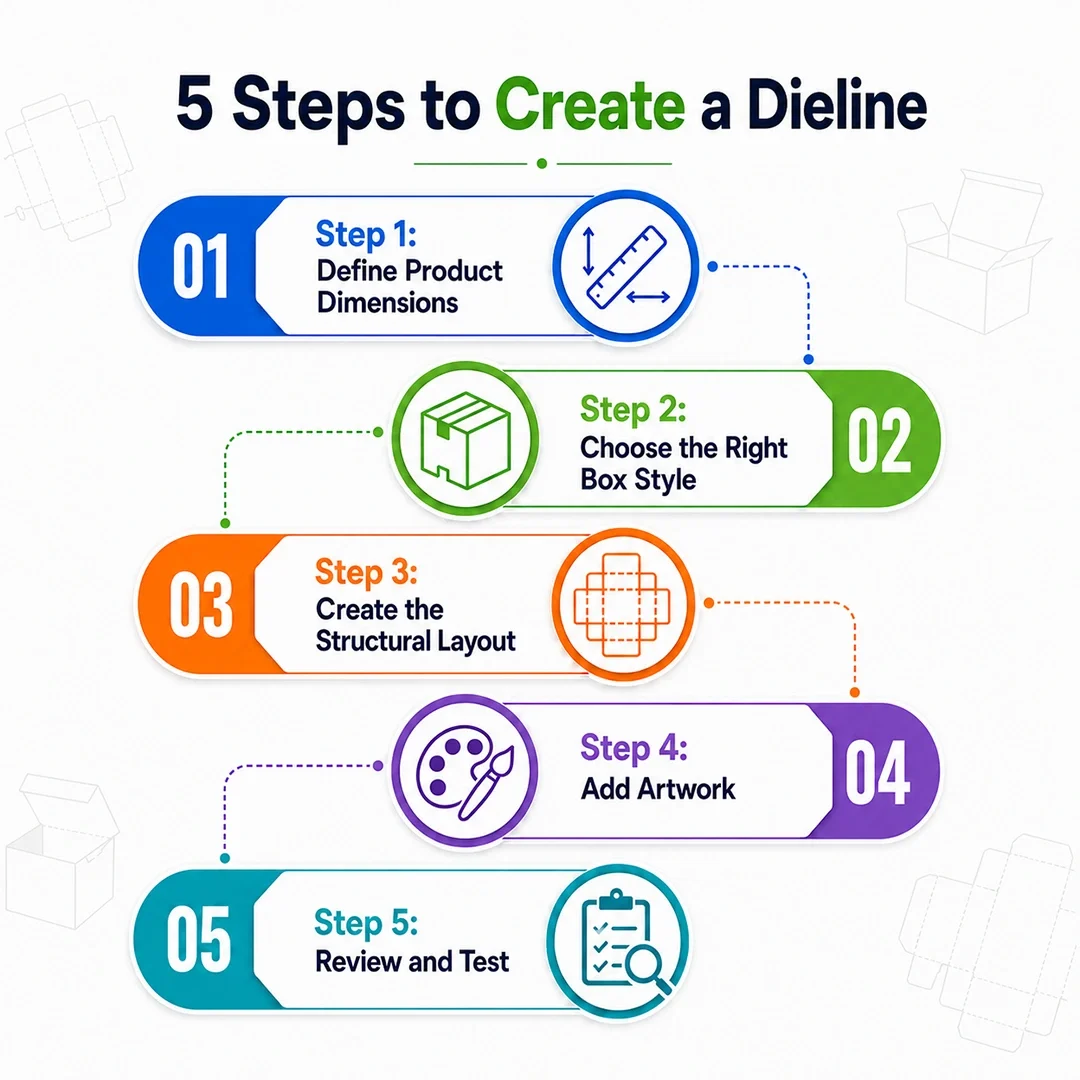
Step 1: Define Product Dimensions
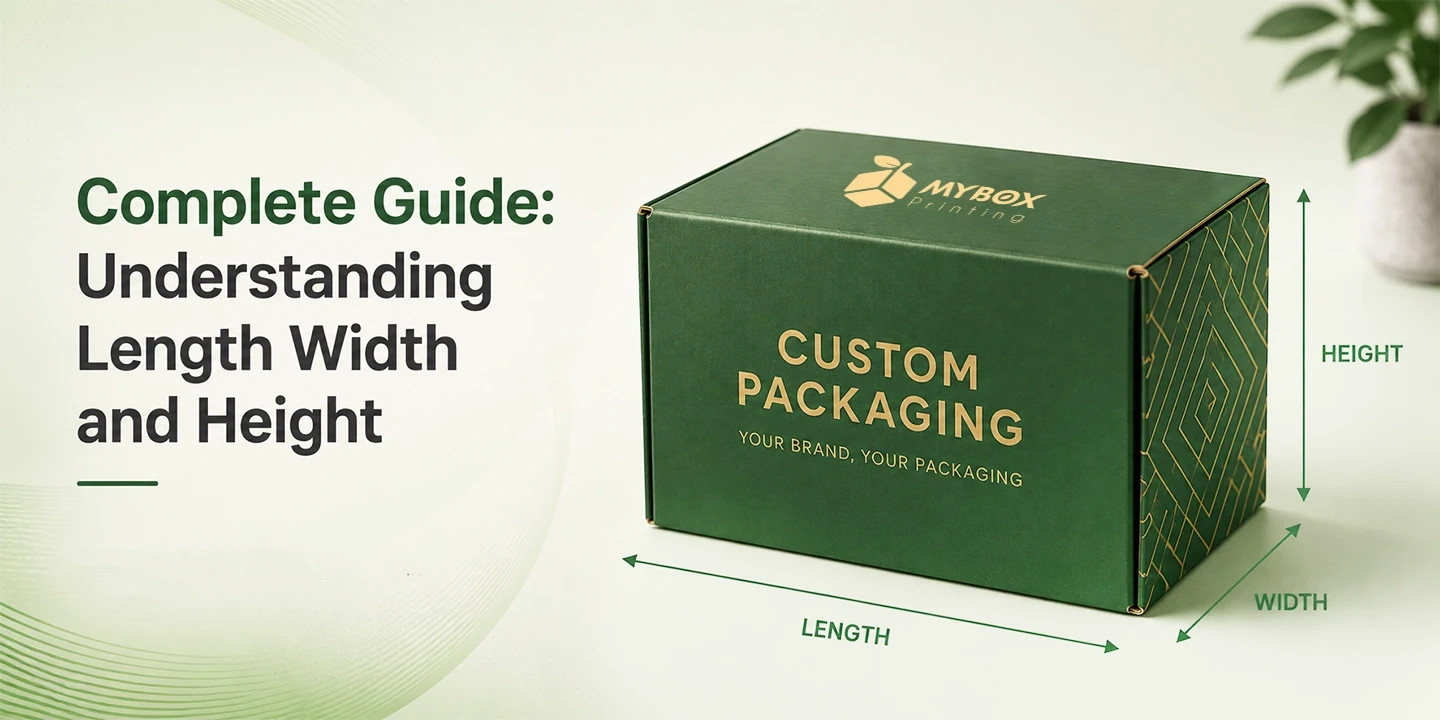
To define the product size, measure the product dimensions carefully, including its length, width, and height. Measure any additional packaging inserts or protective materials. Even a few millimeters of error can affect the final result of the product.
Step 2: Choose the Right Box Style
Select a packaging structure that is based on the product's weight, safety desires, and marketing goals. For example, skincare products normally use folding cartons, luxury products use rigid boxes, and shipping products require corrugated boxes.
Step 3: Create the Structural Layout
Using professional software, designers create the flat layout that includes: Cut lines, fold lines, glue tabs, bleed, safe areas, and dimensions. This becomes the master production file. This step is normally done using software such as ArtiosCAD, Pacdora, or Adobe Illustrator.
These are widely used for structural packaging design, and the color scheme that is used by this software is mostly CMYK. Below are the uses of this software in dieline designing:
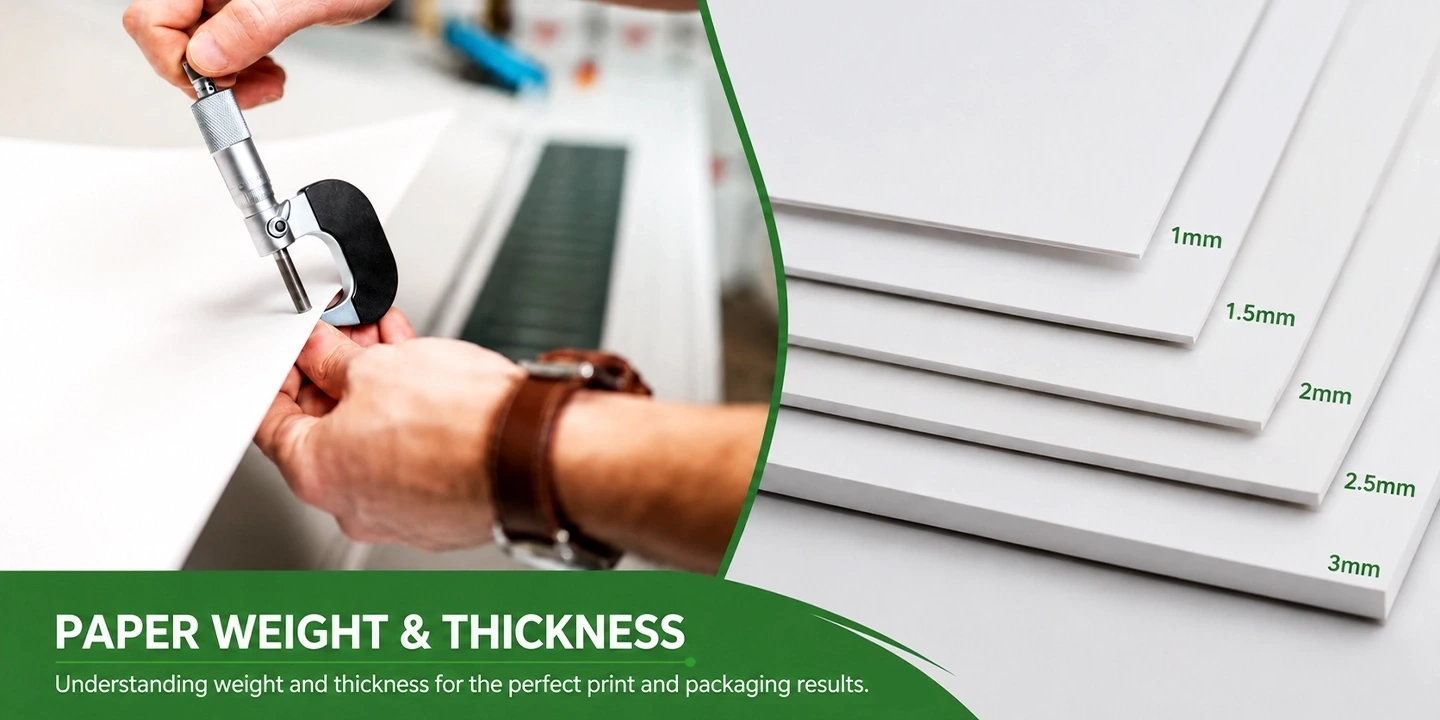
- ArtiosCAD software is used by designers to make complex packaging structures, taking into account factors like material type and paper weight & thickness.
- Whereas Pacdora provides a large collection of templates that help you to create dielines and mockups easily.
Step 4: Add Artwork
Once the structure is complete, the designers place the product image, text, scannable codes, logos, nutritional panels, and the regulatory information within the designated artwork panels. All content must be placed inside the safe zone. While the backgrounds should be extended to the bleed area.
This step is normally done by using software like Adobe Illustrator, Photoshop, or CorelDRAW. Mostly, the final artwork is saved in print-ready formats such as PDF, AI, or EPS.
Step 5: Review and Test
Before the bulk production, the dieline should be reviewed properly for structural accuracy. Testing allows the brands to analyze the potential issues before investing in the larger production.
Common Dieline Mistakes That Increase Production Costs
Even the most experienced manufacturers can make mistakes during the production process that can affect the final results. Steering clear of these technical oversights ensures your files move straight to pre-press without manufacturing delays or reprint halts. The common die-line errors that can increase the price of production.
If you ignore the bleed area, use low-resolution graphics, skip the physical prototype, write the text on the edge of the bleed areas, and use incorrect measurements of the box.
Which Industries Are Using Dielines For Their Packaging?
So now, we will briefly discuss some huge industries that are using dielines all over the world.
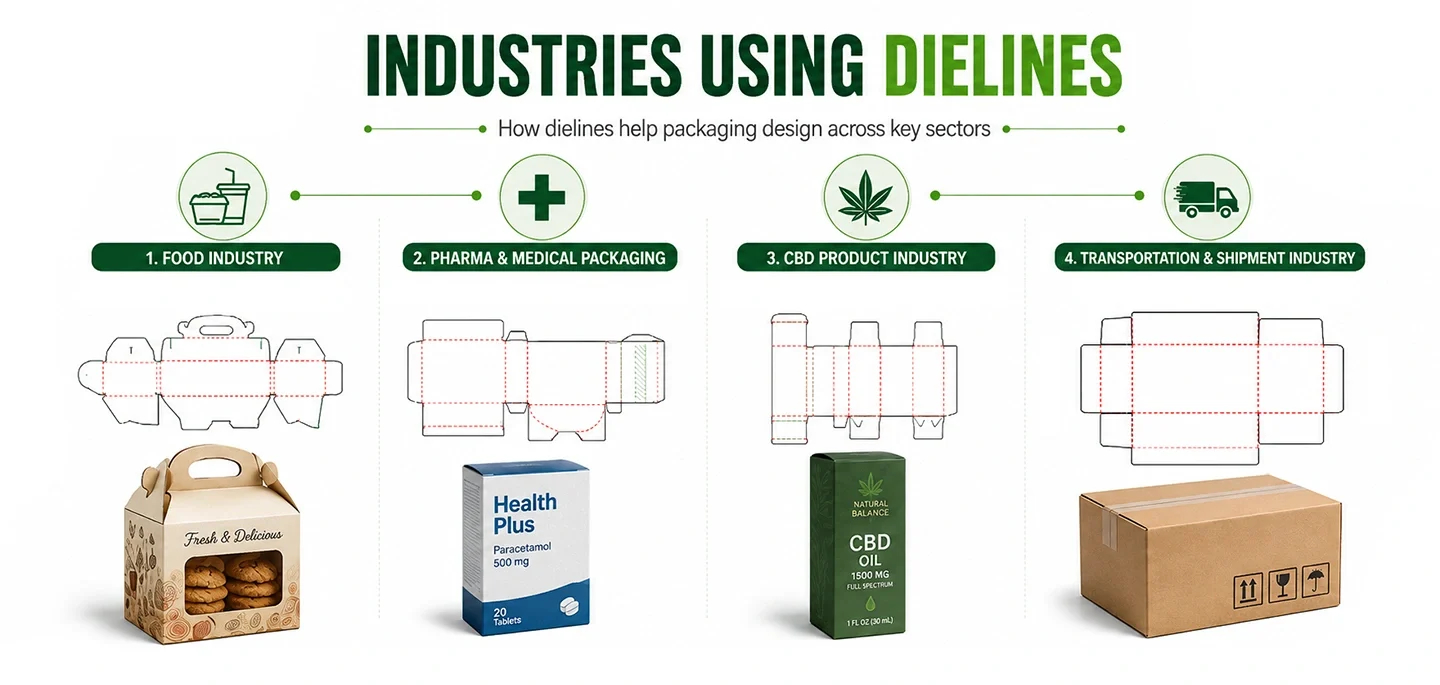
Food Industry
The food industry was known as the largest industry in 2021 for packaging and was valued at USD 2323.29 billion, which was around 118 billion U.S. dollars worldwide. The most commonly used materials in food manufacturing are cardboard & kraft paper.
These are common and high-holding media for securing your food. These industries use dielines for cake boxes, gable boxes, bakery packaging boxes, popcorn buckets & tubes, bottle boxes, etc.
Pharma & Medical Industry
The medical industry also uses many custom pharmaceutical boxes for the covering of medical tools, pills, etc. It usually comes in rectangular shapes, fulfilling the requirements of the pharmaceutical box standards.
Some medicines require some extra protective layers, such as child-resistant packaging and special locks to make them more secure. For this type of covering, there should be innovative cutouts for boxing.
CBD Product Industry
This industry needs high verification for shipment and protection to keep them safe and secure from environmental factors. Some common examples in this space include hemp oil cartons, cigarette packs, and supplement boxes.
Moreover, these products have highly designed cardboard box dielines in various styles and unique colors to grab the attention of the buyers instantly.
Transportation and Shipment Industry
The transportation industry is a big field. Products rely on durable corrugated shipping packaging to remain protected during global transit. The mailer box design plays a very important role in the packaging, yet virtually every brand and company mostly rely on the durable covering to get their items where they need to go.
During the shipment, there are a lot of chances to damage the product; these corrugated boxes are perfect for shipping due to their strong structure.
Frequently Asked Questions About Dielines
What is the purpose of a dieline?
A dieline provides the technical dimensions to the manufacturer for packaging. It tells printers exactly where to cut, fold, crease, perforate, and glue the material to make the final package.
Is a dieline the same as a template?
No. A template is generally used to help place artwork, while a dieline contains the production specifications required to manufacture the package accurately.
What file format is best for a dieline?
Most packaging manufacturers prefer editable vector formats such as AI, PDF, or EPS because they preserve precise dimensions and print quality.
Can I create a dieline myself?
Basic packaging structures can be designed using software like Adobe Illustrator. However, complex packaging projects often require structural design expertise to ensure the package functions correctly during production.
Why are bleed and safe zones important?
The bleed prevents unwanted white edges after trimming, while the safe zone protects important text and graphics from being cut off during production.
What industries use dielines?
Dielines are used across nearly every industry, including food and beverage, cosmetics, pharmaceuticals, electronics, apparel, retail, luxury goods, and eCommerce packaging.
Looking for Production-Ready Custom Packaging?
No need to navigate packaging specs, design dielines, and prep for pre-press alone. Whether you are going to launch a brand-new product or rebrand an existing retail packaging, you have to work with an experienced packaging partner. A master partner who ensures your design translates perfectly into physical production.
At MyBoxPrinting, we specialize in structural designs with high-precision, production-ready dielines. They are also personalizable to meet your exact box dimensions, box styles, and material specifications.
Are you ready to bring your packaging design to life? Contact us today to get a free consultation with our design team and get an instant custom quote!